

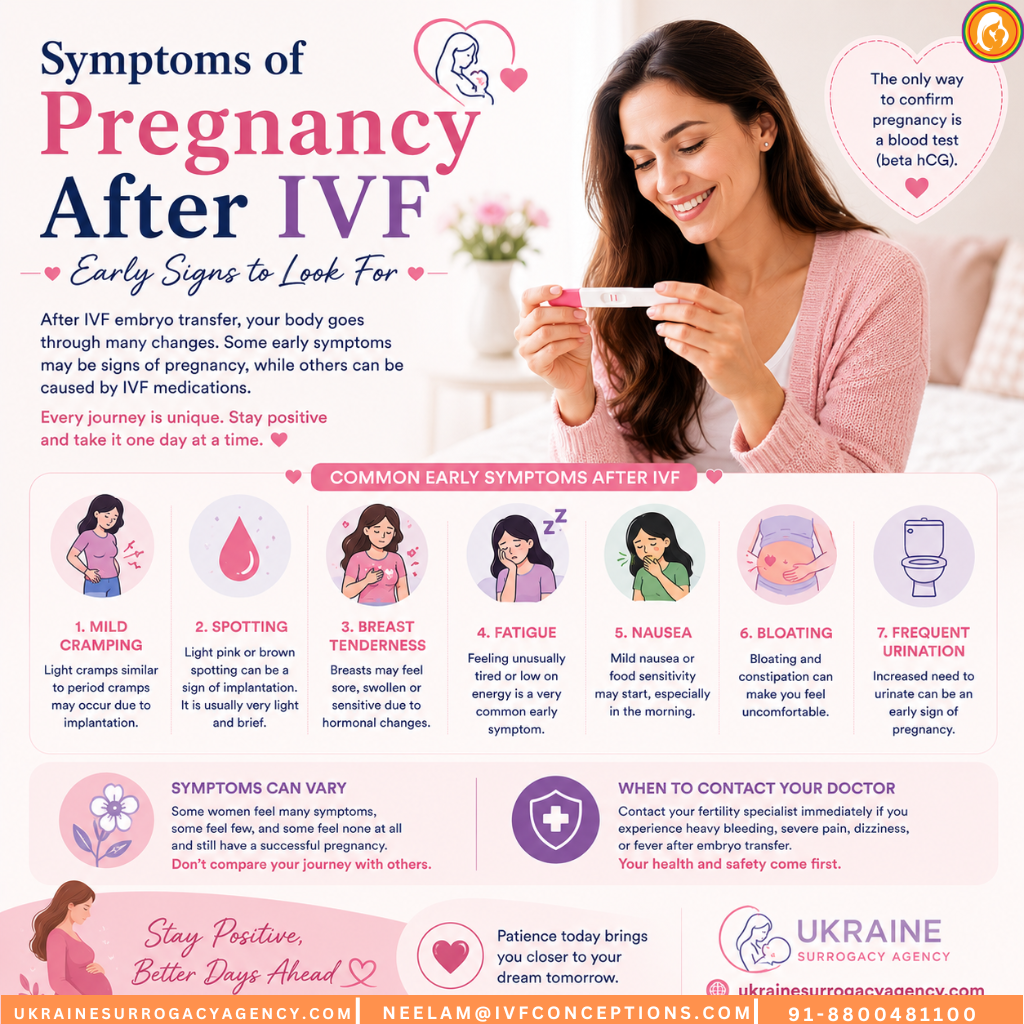
Symptoms of Pregnancy After IVF can feel similar to early signs of natural pregnancy, although some symptoms may also be caused by fertility medications used during the IVF process. Many women notice mild cramping, implantation bleeding, breast tenderness, fatigue, nausea, or missed periods within days after embryo transfer. However, symptoms vary from person to person, and the most accurate way to confirm pregnancy after IVF is through a beta hCG blood test. Understanding the Symptoms of Pregnancy After IVF can help intended parents know what to expect during the early stages after embryo transfer.
| Symptom | Description | When It May Appear |
|---|---|---|
| Mild Cramping | Light uterine cramping similar to period pain | 6–12 days after embryo transfer |
| Implantation Bleeding | Light pink or brown spotting | Around implantation time |
| Breast Tenderness | Swollen or sensitive breasts | Early pregnancy stage |
| Fatigue | Feeling unusually tired or sleepy | Due to hormonal changes |
| Nausea | Morning sickness or mild nausea | 2–4 weeks after transfer |
| Missed Period | No menstrual cycle after IVF | Common pregnancy sign |
| Frequent Urination | Increased need to urinate | Early hormonal response |
| Bloating | Mild abdominal fullness or swelling | Progesterone-related symptom |
| Mood Swings | Emotional sensitivity or mood changes | Hormonal fluctuations |
| Positive Pregnancy Test | Confirmed through a blood or urine test | Usually 10–14 days after transfer |
This comprehensive guide walks you through everything you need to know. We cover early signs, timelines, and what makes an IVF pregnancy different. You will learn when to take a pregnancy test. We explain which symptoms matter most. Our fertility experts share insights to help you through your wait.
Understanding Pregnancy After Embryo Transfer
The embryo transfer marks a critical milestone in your IVF journey. Your doctor places one or more embryos into your uterus. The procedure takes only a few minutes. After this, you enter the waiting period. This time between transfer and your pregnancy test feels long for most patients.
Your body begins working right away if implantation occurs. The embryo needs to attach to your uterine lining. This process usually happens within three to five days after transfer. Some embryos take a bit longer. The type of transfer you had matters, too.
Fresh vs Frozen Embryo Transfer Differences
Fresh embryo transfer happens during your treatment cycle. Your body produces many hormones in response to fertility medications. These hormones can create symptoms even without pregnancy. The progesterone levels run high. This often causes breast tenderness and bloating.
Frozen embryo transfer uses embryos stored from a previous cycle. Your hormone levels tend to be more stable. The clinic gives you progesterone supplements to support the uterine lining. You might experience fewer side effects compared to fresh transfers. Both types can result in a successful pregnancy.
The Role of Progesterone in Your Body
Progesterone plays a vital role after embryo transfer. Every patient receives progesterone supplements. This hormone helps prepare your uterus for pregnancy. It keeps the lining thick and healthy. The embryo needs this environment to implant and grow.
The progesterone you take creates many sensations. You may feel tired or emotional. Your breasts might become tender. Some women notice mild cramping or bloating. These are all normal effects of the medication. They do not always mean you are pregnant.
What Happens During Implantation
Implantation is when the embryo attaches to your uterine wall. This critical step must occur for pregnancy to continue. The process takes several days to complete. Your body starts producing hCG hormone once implantation succeeds.
- The embryo hatches from its protective shell
- Attaches to the uterine lining
- Burrows into the endometrium
- Begins releasing the hCG hormone
- Establishes blood supply connection
Timeline After Transfer
Understanding the timeline helps manage expectations. Each day brings you closer to knowing the result. The embryo follows a specific development pattern. Your clinic will tell you exactly when to take your pregnancy test.
- Days 1-2: Embryo continues developing
- Days 3-5: Implantation typically begins
- Days 6-8: hCG production starts
- Days 9-12: hCG levels become detectable
- Days 13-14: Official pregnancy test day
Early Signs of Pregnancy After IVF Transfer

Recognizing early pregnancy signs after IVF can be challenging. The symptoms often overlap with medication side effects. Some women notice subtle changes within days of transfer. Others experience nothing unusual until much later. Your body responds in its own unique way.
The most reliable sign is a positive pregnancy test. Blood tests detect hCG levels earlier than home tests. Your clinic schedules this test about two weeks after embryo transfer. Waiting for this official result proves difficult for many patients. Some symptoms may appear before test day.
Common Early Pregnancy Symptoms
Many women wonder what they might feel during the two-week wait. The symptoms vary widely from person to person. Some experience several signs at once. Others notice only one or two changes. Here are the most frequently reported early signs.
- Breast tenderness or swelling that feels different from the medication effects
- Mild cramping similar to period cramps but gentler
- Fatigue that feels more intense than usual tiredness
- Light spotting or pink discharge around implantation time
- Nausea or food aversions starting after the first week
- Increased urination frequency even before missing a period
- Bloating and mild abdominal discomfort
- Heightened sense of smell or taste changes
- Mood swings beyond typical progesterone effects
- Mild headaches or dizziness
Implantation Bleeding and Spotting
Some women notice light spotting during the first week after transfer. This might be implantation bleeding. It happens when the embryo burrows into your uterine lining. The spotting appears light pink or brown. It lasts only a day or two in most cases.
Not everyone experiences implantation bleeding. Its absence does not mean the transfer failed. Many successful pregnancies occur without any spotting at all. Heavy bleeding warrants a call to your fertility clinic. They can assess whether this is normal or needs attention.
Concerned About Your Symptoms?
Our experienced fertility team understands the anxiety of the two-week wait. We provide personalized guidance based on your specific symptoms and treatment protocol. Get expert support when you need it most.
When Symptoms Start Appearing
The timing of symptoms varies significantly among women. Some notice changes as early as three days after embryo transfer. Others feel nothing until weeks later. The progesterone medication complicates matters further. It creates sensations that mimic early pregnancy.
Most genuine pregnancy symptoms begin after implantation occurs. This typically happens between days three and five post-transfer. The hCG hormone needs time to build up in your system. Noticeable symptoms usually appear around days seven to ten. Some women remain symptom-free throughout the entire first trimester.
When to Take a Pregnancy Test After IVF

Timing your pregnancy test correctly matters for accurate results. Testing too early leads to false negatives. This happens because hCG levels remain too low to detect. Your clinic provides specific instructions about when to test. Following their guidance ensures the most reliable outcome.
Most fertility clinics schedule the blood test around 10 to 14 days after embryo transfer. The exact timing depends on the type of embryo transferred. A day 3 embryo requires a different timeline than a day 5 blastocyst. Your doctor factors in these details when setting your test date.
Blood Test vs Home Pregnancy Test
Blood tests provide the most accurate pregnancy results after IVF. They measure exact hCG levels in your bloodstream. Even small amounts of the hormone show up in blood work. Your clinic uses this method to confirm pregnancy officially. The results come back within hours or the next day.
Home pregnancy tests work by detecting hCG in urine. They are less sensitive than blood tests. Some women test at home before the official clinic appointment. This can provide peace of mind or cause unnecessary stress. False negatives occur frequently when testing too early at home.
Important Note: Resist the urge to take pregnancy tests before your scheduled date. Early testing often produces inaccurate results. The emotional rollercoaster of false negatives can add stress during an already anxious time. Trust your clinic’s timeline for the most reliable answer.
Understanding hCG Levels
The hCG hormone indicates pregnancy in your body. Levels start very low after implantation occurs. They double approximately every 48 to 72 hours in early pregnancy. Your first blood test establishes a baseline number. A second test a few days later confirms the pregnancy is progressing.
Different women have different starting hCG levels. A number above 5 mIU/ml generally indicates pregnancy. Numbers above 25 mIU/ml confirm it more definitively. The exact value matters less than how it increases over time. Your fertility clinic interprets these numbers in the context of your specific situation.
| Days Post-Transfer (5-day blastocyst) | Typical hCG Range (mIU/ml) | What This Means |
| 7 days | 2-10 | Very early detection possible |
| 9 days | 5-50 | Pregnancy likely if above 5 |
| 11 days | 17-100 | Strong positive expected |
| 13 days | 33-200 | Confirmed pregnancy |
| 15 days | 70-400 | Progressing pregnancy |
The emotional challenge of waiting cannot be understated. Many patients find this period the hardest part of IVF. You want answers immediately. Every day feels like a week. Stay busy with activities you enjoy. Reach out for support when needed. Your fertility team remains available for questions during this time.
IVF Pregnancy Symptoms vs Medication Side Effects
Distinguishing between medication effects and real pregnancy symptoms proves incredibly difficult. The progesterone supplements you take create sensations identical to early pregnancy. This overlap confuses most women during their wait. Both progesterone and pregnancy affect your body in similar ways.
Your breasts may feel sore from the hormones you take daily. Fatigue sets in from the stress and medication combined. Bloating is a common side effect of progesterone. These same symptoms also indicate early pregnancy. No reliable way exists to tell them apart before your test.
Common Medication Side Effects
Understanding what your fertility medications do helps manage expectations. Progesterone remains the primary culprit for most sensations. It prepares your uterus for pregnancy whether or not implantation succeeds. The hormone affects your entire body in various ways.
Progesterone Effects
- Tender and swollen breasts
- Increased tiredness and fatigue
- Bloating and water retention
- Mood changes and emotional sensitivity
- Mild cramping sensations
- Headaches or dizziness
- Changes in appetite
True Pregnancy Signs
- Intensifying breast tenderness over time
- Nausea particularly in mornings
- Increased urination frequency
- Heightened sense of smell
- Specific food aversions or cravings
- Metallic taste in mouth
- Darkening of nipples
Why Symptoms Are Not Reliable Indicators
Medical experts agree that symptoms alone cannot confirm pregnancy after IVF. Too much overlap exists between medication effects and genuine pregnancy signs. Some women with successful pregnancies feel nothing unusual. Others with negative results experience strong symptoms from the medications.
Your mind also plays a role during this anxious waiting period. Hyperawareness of your body leads to noticing every small sensation. You might interpret normal bodily functions as potential pregnancy signs. This happens to nearly everyone going through IVF treatment. The only definitive answer comes from your blood test result.
Expert Insight: Focus on caring for yourself rather than symptom spotting. Stress and anxiety do not help your outcome. The embryo either implanted or it did not. Your symptoms will not change this result. Practice self-care activities that bring you peace during the wait.
Managing the Two-Week Wait After Embryo Transfer

The days following embryo transfer test your patience like nothing else. You want to know the outcome immediately. Every sensation gets analyzed and questioned. Sleep becomes difficult when your mind races with possibilities. This experience feels universal among IVF patients going through the wait.
Finding healthy ways to cope makes these two weeks more bearable. You need distractions that keep you occupied without causing stress. Light activities work better than intense physical exertion. Your clinic provides specific guidelines about what activities to avoid. Following their advice protects your potential pregnancy.
Recommended Activities During the Wait
Staying busy helps time pass more quickly. Choose activities that bring you joy and relaxation. Avoid anything too strenuous that might cause concern. Many women find comfort in gentle routines that occupy their mind. Here are some helpful options to consider during your two-week wait.
- Take short walks in nature to clear your mind and get gentle exercise
- Watch favorite movies or binge a new series to stay entertained
- Read books that capture your attention and transport you elsewhere
- Practice gentle yoga or meditation to reduce stress and anxiety
- Spend quality time with supportive friends who understand your journey
- Work on creative projects like crafts, cooking, or journaling
- Maintain your regular work schedule if it does not cause excessive stress
- Join online support groups with others in the same waiting period
- Plan future activities to look forward to regardless of outcome
- Practice gratitude exercises to maintain a positive mindset
What to Avoid During This Time
Your fertility clinic provides specific restrictions after embryo transfer. These guidelines protect your potential pregnancy. Most restrictions ease after the first few days. Some continue throughout the entire two-week wait period. Always follow your specific doctor’s instructions above general advice.
Activities to Avoid: Heavy lifting, intense exercise, hot tubs, saunas, sexual intercourse (if advised), alcohol consumption, smoking, excessive caffeine, and high-stress situations. Your clinic may have additional specific restrictions based on your individual case.
Emotional Support Strategies
The emotional toll of waiting often exceeds the physical demands. You may feel anxious, hopeful, scared, and excited all at once. These conflicting emotions are completely normal. Allow yourself to feel whatever comes up without judgment. Seeking support makes this time easier to navigate.
Talk to people who understand your IVF journey. Your partner can provide crucial support during these days. Friends who have been through fertility treatment offer valuable perspective. Professional counselors specializing in fertility issues help many patients. Online communities connect you with others experiencing the same wait right now.
Need Guidance During Your Wait?
Our compassionate fertility specialists provide support throughout your entire IVF journey. We understand the emotional challenges of the two-week wait. Schedule a consultation to discuss your concerns and get personalized advice for your specific situation.
Understanding Your Pregnancy Test Results

The day of your pregnancy test brings intense emotions. You have waited for this moment since your embryo transfer. The result determines your next steps forward. Understanding what the numbers mean helps you process the information. Your fertility team walks you through the results carefully.
A positive result means hCG was detected in your blood. This confirms pregnancy has begun. The specific number matters for tracking how your pregnancy progresses. A negative result means no hCG was found above baseline levels. Sometimes results fall in an uncertain gray area requiring additional testing.
What a Positive Result Means
Seeing a positive pregnancy test result brings overwhelming joy and relief. Your embryo was successfully implanted and began developing. The hCG hormone in your blood proves pregnancy has started. Your clinic likely schedules a second blood test in two to three days. This follow-up confirms your hCG levels are rising appropriately.
Early pregnancy after IVF requires close monitoring. You continue taking all your prescribed medications. Progesterone supplements remain essential for several more weeks. Your clinic schedules ultrasounds to track development. The first ultrasound usually happens around six to seven weeks after transfer. You can see the gestational sac and potentially hear the heartbeat.
Dealing with a Negative Result
A negative pregnancy test after IVF feels devastating. You invested so much time, money, and emotional energy into this cycle. Allow yourself to grieve this loss fully. The sadness you feel is valid and normal. Take time to process your emotions before making decisions about next steps.
Many couples successfully conceive after one or more failed IVF cycles. Your fertility doctor reviews what happened during this attempt. They look for factors that might improve in future cycles. Changes to medication protocols, embryo selection, or timing might help. Most people who continue trying eventually achieve pregnancy.
The Gray Area: Borderline Results
Sometimes test results fall in an uncertain range. Your hCG level might be very low but above zero. This creates confusion about whether pregnancy occurred. Your clinic orders repeat testing to see if levels increase. Rising levels suggest an early pregnancy that implanted late. Falling or static levels indicate the pregnancy did not continue.
These ambiguous results extend your waiting period. You need additional blood tests over several days. The uncertainty feels frustrating after already waiting two weeks. Try to stay patient while your medical team gathers more information. They want to give you the most accurate answer possible about your pregnancy status.
Factors That Influence IVF Pregnancy Success
Many factors determine whether an IVF cycle results in pregnancy. Some elements you can control while others remain beyond your influence. Understanding these variables helps set realistic expectations. Your fertility doctor considers all these factors when creating your treatment plan.
Age stands as one of the most significant predictors of IVF success. Younger women typically have higher success rates than older patients. Egg quality declines as age increases. The uterine environment also changes over time. These biological realities affect outcomes regardless of treatment quality.
Key Success Factors
Patient Factors
- Age of egg source
- Ovarian reserve levels
- Overall health status
- Body mass index
- Previous pregnancy history
- Lifestyle habits
Treatment Factors
- Embryo quality grade
- Fresh vs frozen transfer
- Number of embryos transferred
- Genetic testing results
- Protocol medications used
- Timing of transfer
Environmental Factors
- Clinic expertise level
- Laboratory quality standards
- Stress management
- Nutrition and supplements
- Support system strength
- Follow-up care quality
Optimizing Your Chances
While you cannot change your age or egg reserve, you can improve other factors. Maintaining a healthy weight helps hormone balance and implantation. Reducing stress through relaxation techniques benefits overall outcomes. Proper nutrition supports your body during treatment and potential pregnancy.
Following your medication schedule exactly as prescribed remains crucial. Missing doses of progesterone or other medications can impact results. Attend all monitoring appointments so your doctor can adjust protocols if needed. Avoid alcohol and tobacco completely during treatment cycles. These substances reduce success rates significantly.
The Importance of Quality Care
Choosing an experienced fertility clinic matters for your outcomes. Clinics with high success rates typically have better laboratory facilities. Their embryologists use advanced techniques for embryo selection and culture. The medical team has refined protocols based on thousands of cycles.
Personalized treatment plans work better than one-size-fits-all approaches. Your doctor should consider your unique medical history and test results. They adjust medications and timing based on how your body responds. Good communication with your care team ensures everyone works toward the same goal.
When to Contact Your Fertility Clinic

Knowing when to call your fertility clinic provides peace of mind during the wait. Some situations require immediate medical attention. Others can wait until business hours. Your clinic gives you emergency contact information at discharge. Keep these numbers easily accessible throughout your two-week wait.
Most clinics have nurses available to answer questions during your waiting period. They hear similar concerns from patients every day. Do not hesitate to call if something worries you. They would rather address your concern than have you stress unnecessarily. Your medical team wants you to feel supported throughout this process.
Urgent Symptoms Requiring Immediate Contact
Call Your Clinic Right Away If You Experience:
- Heavy vaginal bleeding soaking through pads
- Severe abdominal pain that does not resolve
- High fever above 101°F (38.3°C)
- Severe dizziness or fainting episodes
- Difficulty breathing or chest pain
- Severe vomiting preventing medication intake
Common Questions to Discuss with Your Team
Many concerns fall into the normal range but still cause anxiety. Your clinic welcomes questions about symptoms and medication. They can help you distinguish between normal sensations and potential problems. Here are common reasons patients contact their fertility team during the wait.
- Light spotting or discharge changes
- Mild cramping or abdominal discomfort
- Concerns about medication dosing or timing
- Questions about physical activity restrictions
- Unusual symptoms that seem different from expectations
- Anxiety or stress management support needs
- Clarification about test timing or procedures
Your fertility clinic team remains your best resource during this waiting period. They know your specific medical history and treatment details. Generic online information cannot replace their personalized guidance. Building a strong relationship with your care team improves your overall experience and outcomes.
Expert IVF Support When You Need It
Our dedicated fertility specialists provide comprehensive care throughout your IVF journey. From embryo transfer through pregnancy confirmation and beyond, we offer personalized support tailored to your unique needs. Contact us today to discuss your symptoms, concerns, or questions about the process.
Frequently Asked Questions About Pregnancy After IVF
How early can I take a pregnancy test after IVF?
Your fertility clinic schedules your official blood test about 10 to 14 days after embryo transfer. Testing earlier often produces false negative results because hCG levels remain too low to detect. While home tests can be used a day or two before your scheduled appointment, blood tests at your clinic provide the most accurate and reliable results. Wait for your scheduled test date to avoid unnecessary stress from premature testing.
Can I feel implantation after embryo transfer?
Some women report feeling mild cramping or pinching sensations during the implantation window. This typically occurs three to five days after a five-day blastocyst transfer. However, many successful pregnancies happen without any noticeable implantation sensations. The progesterone medication you take can also cause similar cramping feelings. There is no reliable way to confirm implantation based on physical sensations alone.
What does spotting mean after embryo transfer?
Light spotting can occur for several reasons after transfer. It might indicate implantation bleeding, especially if it appears pink or brown and lasts only one to two days. Spotting can also result from the progesterone suppositories irritating vaginal tissue. Not all spotting indicates a problem. However, heavy bleeding similar to a period warrants immediate contact with your fertility clinic for evaluation.
Are symptoms different with IVF pregnancy compared to natural conception?
The pregnancy symptoms themselves remain the same whether conception happened through IVF or naturally. However, IVF patients take progesterone and sometimes estrogen supplements that create additional sensations. These medications cause breast tenderness, fatigue, and bloating that overlap with early pregnancy signs. This makes it harder to distinguish between medication effects and genuine pregnancy symptoms during the waiting period.
What if I have no symptoms after IVF transfer?
Many women with successful IVF pregnancies experience no symptoms during the two-week wait. The absence of symptoms does not indicate failure. Some people simply do not notice early pregnancy changes until much later. Others have high symptom tolerance or bodies that respond differently to hormonal shifts. Only your pregnancy test reveals whether implantation succeeded, not the presence or absence of symptoms.
How long after transfer can I get a positive test?
Blood tests can detect pregnancy about 9 to 11 days after a five-day blastocyst transfer. For three-day embryo transfers, testing typically happens 11 to 13 days post-transfer. Home pregnancy tests require higher hCG levels and work best around 12 to 14 days after transfer. Your clinic provides specific timing instructions based on your embryo type and transfer date for optimal accuracy.
Can stress affect IVF implantation success?
Research shows mixed results about stress and implantation outcomes. Severe chronic stress may impact fertility treatment success through hormonal effects. However, normal anxiety during the two-week wait likely does not prevent implantation. If an embryo is healthy and your uterine lining is prepared, implantation will occur regardless of temporary stress. Focus on self-care and stress reduction for your overall wellbeing rather than worrying stress will harm your chances.
When do pregnancy symptoms start after IVF?
Genuine pregnancy symptoms typically begin after implantation occurs and hCG starts building in your system. This usually happens around seven to ten days after embryo transfer. Some women notice changes earlier while others experience nothing for weeks. The progesterone medication creates sensations from the first day after transfer. Distinguishing medication effects from pregnancy symptoms proves nearly impossible before your test date.
Moving Forward After Your Embryo Transfer
The two-week wait after embryo transfer challenges even the most patient people. You have done everything possible to give this cycle the best chance. Now you must wait while your body does the rest. Remember that symptoms do not predict your outcome reliably. Both pregnant and non-pregnant women experience similar sensations from the progesterone medication.
Ready to Start or Continue Your IVF Journey?
Our experienced fertility specialists provide comprehensive IVF care with personalized treatment protocols. We support you through every step, from initial consultation through embryo transfer and pregnancy confirmation.

Highly esteemed, authoritative, and trusted professional with a 14-year of experience in international surrogacy. Advocate for Secure, Legal, and Affordable International Surrogacy.
Neelam Chhagani, MA (Counselling Psychology) and Holistic Infertility and Third-Party Reproduction Consultant.
Member of European Fertility Society, Best Surrogacy Blogger of 2020, with 300 dedicated blogs, and top contributor on Quora for Surrogacy.
Add Your Comment