
Surrogacy Services in Ukraine

Before the Russian invasion of Ukraine, thousands of international couples traveled to Ukraine each year to pursue surrogacy programs. Although the situation has changed due to geopolitical conditions, many fertility specialists and agencies connected to Ukrainian programs continue to support intended parents through clinics operating in safer regions or through relocated programs in nearby countries.
For families considering cross-border surrogacy, understanding the legal framework, medical process, and available services is essential before starting a journey in Ukraine.
Planning surrogacy abroad?
Read our complete Surrogacy in Ukraine Guide to understand the process, costs, legal rules, and timeline for international intended parents.
Quick Overview: Surrogacy Services in Ukraine
| Aspect | Details |
| Surrogacy Type | Gestational surrogacy programs |
| Legal Recognition | Intended parents listed on birth certificate |
| IVF Expertise | Highly experienced reproductive clinics |
| Typical Timeline | 12–18 months |
| Success Rates | Often 65–85%, depending on the clinic |
| Ideal For | Couples needing affordable international surrogacy |
Get Expert Guidance on Your Surrogacy Journey
Our experienced team provides personalized consultation to help you explore the safest, most reliable surrogacy options for your family. Connect with us today for honest answers to your questions.
Important Considerations for International Intended Parents
Because of ongoing geopolitical developments following the Russian invasion of Ukraine, intended parents should carefully evaluate:
- Safety and travel conditions
- Clinic location and operational status
- Legal documentation for newborn citizenship
- Alternative surrogacy destinations, if necessary
Many intended parents now explore other countries with similar programs while still considering Ukrainian expertise.
Surrogacy services in Ukraine have historically offered structured legal programs, experienced fertility clinics, and relatively affordable costs for international intended parents. However, given evolving circumstances, professional guidance is essential to determine whether Ukraine remains the right option or whether alternative destinations should be considered.
Alternative to Ukraine due to ongoing military action:
What are the alternatives to surrogacy in Ukraine in the current situation? Let’s explore below.
Ukraine vs Georgia vs Colombia Surrogacy Comparison
| Factor | Ukraine | Georgia | Colombia |
|---|---|---|---|
| Legal Status | Legal for married heterosexual couples | Legal for married heterosexual couples | Legal and more flexible |
| Eligibility | Married couples with medical need | Married heterosexual couples only | Couples, singles, and LGBTQ+ |
| Average Cost | $50,000 – $60,000 | $50,000 – $80,000 | $60,000 – $85,000 |
| Success Rate (approx.) | 60% – 70% | 65% – 75% | 65% – 80% |
| Parental Rights | Intended parents listed on birth certificate | Intended parents listed on birth certificate | Legal process required but IP rights recognized |
| Surrogate Matching Time | 3 – 6 months | 3 – 6 months | 3 – 6 months |
| Best For | Affordable European programs | Clear legal protection & lower cost | Inclusive programs for singles & LGBTQ+ |
| Key Consideration | The political situation may affect travel | Only available for married heterosexual couples | Legal process may take longer |
Quick Insight:
-
Georgia is popular for its clear legal framework and affordability.
-
Ukrainehistorically offered strong programs, but availability can be affected by regional issues.
-
Colombia is becoming attractive because it allows single parents and LGBTQ+ families.
Who Can Opt for Surrogacy in Ukraine?
Surrogacy programs in Ukraine historically served specific categories of intended parents. Understanding eligibility criteria helps couples determine whether Ukrainian surrogacy would have been appropriate for their situation. The legal framework traditionally established clear requirements for participation in these programs.
Who Can Access Surrogacy in Ukraine
Under Ukrainian family law, gestational surrogacy is primarily designed for:
- Married heterosexual couples
- Couples with a medical reason preventing pregnancy
- Intended parents are able to provide genetic material (at least one parent)
Ukraine historically provided one of the clearest legal frameworks for surrogacy, allowing intended parents to be recognized as the legal parents from birth.
Medical Indications for Surrogacy Programs
Female Medical Conditions
- Absence or malformation of the uterus (congenital or acquired)
- Repeated IVF implantation failures despite good embryo quality
- Recurrent pregnancy loss after multiple attempts
- Medical conditions making pregnancy dangerous to maternal health
- Cervical incompetence or severe uterine abnormalities
- Previous hysterectomy or uterine surgeries
Documentation Requirements
- Detailed medical history from treating physician
- Recent fertility evaluation results and test outcomes
- Marriage certificate (legally certified translation required)
- Valid passport copies for both intended parents
- HIV, hepatitis, and infectious disease screening results
- Psychological evaluation from a licensed mental health professional
Important Consideration: Single intended parents and same-sex couples faced significant legal barriers in Ukrainian surrogacy programs and are not allowed to do surrogacy in Ukraine. The legal framework and most clinics required heterosexual married couples, limiting access for other family configurations. Many intended parents in these situations explored alternative destinations with more inclusive surrogacy laws.
How Much Does Surrogacy Cost in Ukraine: Comprehensive Overview
SURROGACY COST IN UKRAINE is in the range of $55,000 to $80,000.
One reason Ukraine became a major surrogacy destination was its competitive cost compared with Western countries while maintaining strong medical expertise.
📊 SURROGACY COST BREAKDOWN
| Cost Component | Estimated Cost (USD) | What It Covers |
| IVF Treatment | $8,000 – $15,000 | Egg retrieval, fertilization, embryo transfer |
| Surrogate Compensation | $15,000 – $25,000 | Compensation and support |
| Medical Monitoring | $5,000 – $10,000 | Prenatal care and medications |
| Legal Services | $3,000 – $6,000 | Contracts and documentation |
| Delivery & Hospital | $3,000 – $7,000 | Birth and newborn care |
Estimated Total Program Cost: $55,000 – $80,000
Costs may vary depending on:
- IVF cycles required
- Use of donor eggs
- Program guarantees or additional medical care
Complete Program Cost Breakdown
| Cost Component | Typical Range (USD) | Description |
| Agency Coordination Fees | $8,000 – $15,000 | Program management, matching services, and coordination support throughout the journey |
| Surrogate Compensation | $15,000 – $20,000 | Base compensation for surrogate mother, pregnancy allowance, maternity clothing |
| Medical and IVF Services | $10,000 – $18,000 | IVF procedures, embryo transfer, prenatal care, delivery, and medical monitoring |
| Legal Services | $3,000 – $6,000 | Contract preparation, birth certificate registration, parental rights documentation |
| Surrogate Medical Insurance | $1,500 – $3,000 | Pregnancy insurance, delivery coverage, complications protection |
| Medications and Supplements | $2,000 – $4,000 | Fertility medications, prenatal vitamins, hormone support, pregnancy supplements |
| Accommodation and Living | $3,000 – $6,000 | Surrogate housing during pregnancy, intended parent accommodation during visits |
| Travel and Transportation | $4,000 – $8,000 | International flights, local transportation, multiple trips for procedures and birth |
| Miscellaneous Expenses | $2,000 – $4,000 | Document translations, courier services, unexpected expenses, contingency fund |
Additional Services and Optional Costs
Beyond base program costs, intended parents often incur additional expenses for specific services or circumstances. Egg donation programs added ten thousand to fifteen thousand dollars to the total costs. Preimplantation genetic testing added two thousand to four thousand dollars per cycle.
Multiple embryo transfer attempts increased costs significantly. While many programs included one or two transfer attempts, additional cycles required extra medical fees and surrogate compensation. These contingency costs could add fifteen thousand to twenty-five thousand dollars to program expenses.
Payment Structure and Timeline
Typical Payment Schedule
- Initial deposit at contract signing (twenty to thirty percent of total)
- Medical screening and matching completion payment
- Embryo transfer procedure payment
- Pregnancy confirmation payment installment
- Second-trimester milestone payment
- Third trimester and delivery preparation payment
- Final payment at birth and document completion
Financial Protection Considerations
- Escrow accounts for surrogate compensation security
- Money-back guarantees for program non-completion
- Insurance coverage for pregnancy complications
- Clear refund policies for cycle cancellation
- Transparent fee structures with detailed breakdowns
- Written contracts specifying all financial obligations
Get Your Personalized Cost of Surrogacy in Ukraine Estimate
We help you understand all expenses and find programs that match your budget while prioritizing safety and success.
Surrogacy Timeline in Ukraine: Process Overview
Understanding the surrogacy timeline helps intended parents plan appropriately for this significant journey. The process involves multiple stages, each with specific requirements and typical duration ranges. While individual circumstances vary, the general timeline provides useful planning guidance.
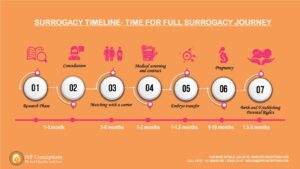
Step-by-Step Surrogacy Process in Ukraine
International surrogacy programs in Ukraine typically follow a structured medical and legal process.
Surrogacy Process Timeline
| Step | Stage | Outcome |
| Step 1 | Initial consultation and medical review | Determine eligibility |
| Step 2 | IVF treatment and embryo creation | Embryos prepared |
| Step 3 | Surrogate matching and screening | Surrogate medically approved |
| Step 4 | Legal contract signed | Program officially begins |
| Step 5 | Embryo transfer | Pregnancy attempt |
| Step 6 | Pregnancy monitoring | Prenatal care and checkups |
| Step 7 | Birth and legal registration | Parents recognized legally |
Most journeys take 12–18 months from consultation to birth.
Phase One: Initial Consultation and Medical Evaluation
| Stage | Duration | Key Activities |
| Initial Consultation | 1-2 weeks | Program overview, eligibility assessment, questions answered, preliminary planning |
| Medical Evaluation | 2-4 weeks | Fertility testing, health screening, medical history review, treatment planning |
| Legal Consultation | 1-2 weeks | Legal requirements review, contract discussion, citizenship planning, rights explanation |
| Program Selection | 1-2 weeks | Package selection, financial planning, contract signing, initial payment |
The initial phase establishes the foundation for the entire journey. A thorough medical evaluation ensures intended parents understand their fertility status and any necessary treatments. Legal consultation prevents future complications by addressing citizenship and parental rights issues early in the process.
Phase Two: Surrogate Matching and Medical Preparation
Surrogate matching in Ukraine typically requires four to eight weeks under normal conditions. Agencies presented profiles of qualified surrogate candidates meeting program requirements. Intended parents reviewed medical histories, psychological evaluations, and background information before selecting their surrogate match.
Once matched, both surrogate and intended parents underwent medical synchronization protocols. For intended mothers using their own eggs, this included ovarian stimulation and egg retrieval procedures. Embryo creation through IVF with sperm from the intended father or donor, followed by egg retrieval.
Phase Three: Embryo Creation and Transfer
IVF and Embryo Development
- Egg retrieval procedure (one-day process with brief recovery)
- Fertilization with sperm (same day as egg retrieval)
- Embryo culture and development monitoring (three to six days)
- Genetic testing, if selected (adds one to two weeks)
- Embryo grading and selection for transfer
- Embryo freezing is needed for future cycles
Transfer Preparation
- Surrogate uterine lining preparation with medications
- Hormone level monitoring through blood tests
- Ultrasound evaluation of endometrial thickness
- Transfer timing coordination between all parties
- Final medical clearance for the transfer procedure
- Transfer day procedure (brief outpatient visit)
Embryo transfer represents a critical milestone in the surrogacy timeline in Ukraine. The procedure itself takes only minutes, but preparation requires careful coordination and monitoring. Success rates depend on embryo quality, surrogate health, and the precise timing of the transfer procedure.
Phase Four: Pregnancy and Monitoring
Pregnancy confirmation occurs approximately ten to fourteen days after embryo transfer through blood testing. Positive results initiate the pregnancy monitoring phase, which continues for approximately nine months until delivery. Regular prenatal appointments track fetal development and the mother’s health throughout pregnancy.
Phase Five: Birth and Legal Documentation
| Stage | Duration | Key Activities |
| Pre-Delivery Preparation | 2-4 weeks before due date | Travel to Ukraine, accommodation arrangement, hospital registration, final document preparation |
| Birth and Hospital Stay | 3-5 days | Delivery, newborn care, initial medical checkups, bonding time with baby |
| Birth Certificate Registration | 5-10 days | Civil registry office visits, document submission, birth certificate issuance with intended parents listed |
| Citizenship Documentation | 2-6 weeks | Embassy appointments, passport application, citizenship certificate, travel document processing |
| Travel Home | Variable | Final medical clearance, flight booking, travel preparations, journey home with baby |
The post-birth period requires significant time in Ukraine for document processing. Intended parents typically remained in the country for four to eight weeks, completing all necessary paperwork. Current conditions would likely extend this timeline due to government service disruptions and reduced embassy operations.
How We Manage Your Surrogacy Journey in Ukraine

Why Work With an Experienced Surrogacy Consultant
International surrogacy involves medical coordination, legal documentation, and travel planning. Choosing the right professional guidance can make a significant difference in the success and safety of your journey.
With more than 15 years of experience in international surrogacy consulting, our team supports intended parents by:
✔ Providing independent advice on global surrogacy destinations
✔ Connecting families with trusted fertility clinics and specialists
✔ Explaining legal frameworks and documentation requirements
✔ Helping parents compare programs and understand costs
✔ Guiding intended parents step-by-step throughout the journey
Our goal is to help intended parents make informed, ethical, and safe decisions when planning surrogacy abroad.
Additional Resources to Read:
International Surrogacy in Ukraine
Cost of IVF with Egg Donor in Ukraine
Why Ukraine Remains a Leading Surrogacy Destination
Ukraine has long been recognized as one of the most established destinations for international surrogacy programs. Intended parents are attracted by experienced fertility clinics, comprehensive surrogacy programs, and relatively affordable costs compared to many Western countries. Ukraine also offers access to advanced IVF treatments, egg donation programs, and professional support throughout the surrogacy journey. Before starting a program, intended parents should carefully review current legal requirements, program details, and documentation procedures to ensure a smooth experience.
Begin Your Surrogacy Journey with Experienced Guidance
Contact us today to discuss your surrogacy journey and explore the best destinations and programs for your family.
Choosing a surrogacy partner represents one of the most important decisions in your family building journey. We invite you to experience the difference that honest guidance, comprehensive support, and genuine commitment to your success can make. Our team looks forward to helping you navigate the path to parenthood with confidence and peace of mind.
Frequently Asked Questions About Surrogacy

Is surrogacy safe for the surrogate mother and baby?
When conducted in stable countries with strong medical infrastructure, surrogacy is very safe. Surrogate mothers receive comprehensive prenatal care from experienced obstetric teams. Modern medical monitoring ensures early detection of any complications. Success rates and safety outcomes in reputable programs compare favorably to natural pregnancies. However, surrogacy in conflict zones or unstable regions presents unacceptable safety risks for both surrogates and babies.
How long does the surrogacy process take from start to finish?
Complete surrogacy journeys typically require twelve to twenty-four months from initial consultation through bringing baby home. Timeline factors include medical preparation, surrogate matching, embryo transfer success, pregnancy duration, and document processing. Programs in stable destinations with efficient government services tend toward shorter timelines. Individual circumstances including age, fertility status, and medical complexity also affect duration. Our team provides realistic timeline estimates based on your specific situation.
What are the main differences between surrogacy destinations?
Destinations vary significantly in cost, legal framework, eligibility requirements, and infrastructure stability. United States programs offer strongest legal protections and advanced medical care but cost significantly more. Countries like Georgia and Colombia provide affordable options with clear legal frameworks. Key differences include which family structures are welcome, parental rights establishment processes, document processing efficiency, and overall stability. We help families evaluate these factors based on their specific priorities and requirements.
Can single parents or same-sex couples pursue surrogacy?
Destination countries have varying policies regarding single parents and same-sex couples. Some destinations like Colombia welcome all family structures. Others restrict programs to heterosexual married couples. We help identify appropriate destinations based on your family configuration and connect you with programs offering inclusive policies. Legal consultation ensures your home country will recognize parental rights established in the destination country.
What happens if the first embryo transfer doesn’t result in pregnancy?
Many programs include multiple transfer attempts in their packages. If initial transfer fails, the medical team analyzes the cycle and adjusts protocols for subsequent attempts. Additional transfers typically occur within two to three months of the failed cycle. Some programs offer guaranteed success packages including unlimited transfers until pregnancy is achieved. We discuss these options during program selection to ensure appropriate coverage for your situation.
How do I know if I need egg donation in addition to surrogacy?
Fertility evaluation determines whether egg donation is necessary. Women over forty, those with diminished ovarian reserve, or couples with genetic concerns often benefit from donor eggs. Medical testing including AMH levels, antral follicle count, and FSH levels help assess egg quality and quantity. Reproductive endocrinologists provide recommendations based on these results and your specific circumstances. Combined egg donation and surrogacy programs are available in most destinations we serve.
What legal rights does the surrogate have to the baby?
In gestational surrogacy with proper legal contracts, the surrogate has no parental rights to the child. Legal agreements establish intended parents as legal parents from conception. The surrogate’s role is clearly defined as carrying the pregnancy only. Strong legal frameworks in recommended destinations protect these arrangements through established case law and statutory regulations. Proper legal preparation before embryo transfer ensures clarity and protection for all parties.
Will my insurance cover surrogacy costs?
Most insurance policies exclude surrogacy-related costs. However, some coverage may apply to medical procedures like IVF if fertility treatment benefits exist in your plan. Surrogate pregnancy and delivery are typically covered by insurance obtained specifically for the surrogacy arrangement. We discuss insurance options including specialized surrogacy insurance, international medical insurance, and coverage for pregnancy complications. Financial planning includes these insurance considerations to protect against unexpected medical expenses.
How do I bring my baby home after birth?
The homecoming process involves obtaining birth certificate, establishing citizenship, acquiring passport or travel documents, and receiving medical clearance for infant travel. Timeline and procedures vary by destination and your citizenship. Our team coordinates all documentation requirements, embassy appointments, and travel preparations. We ensure you have all necessary paperwork before attempting to leave the destination country. Support continues through actual travel including flight arrangements and any needed medical equipment or assistance for the journey.
What support is available if problems arise during the surrogacy?
Comprehensive programs include crisis management support for medical complications, legal issues, or other challenges. Our team provides immediate response to problems including coordinating additional medical care, engaging legal experts, facilitating communication between parties, and providing emotional support. Established relationships with medical and legal professionals in destination countries enable rapid problem resolution. Twenty-four-seven availability ensures you always have access to experienced guidance when issues occur.
How long does the surrogacy process take in Ukraine?
The complete surrogacy process in Ukraine typically takes 12 to 18 months, depending on surrogate matching, IVF treatment, embryo transfer success, pregnancy duration, and post-birth documentation requirements. Timelines can vary based on individual circumstances and program type.