


The United States is one of the most popular and legally secure destinations for surrogacy worldwide. Known for its favorable laws, advanced fertility clinics, and surrogacy-friendly states, the U.S. attracts intended parents from around the globe, including singles, heterosexual couples, and LGBTQ+ families.
However, surrogacy in the USA is also one of the most expensive options, with costs ranging from $120,000 to $200,000 depending on the program and state. This guide will walk you through everything you need to know about surrogacy in USA in 2025—from laws and costs to surrogate eligibility, step-by-step process, and comparison with other countries.
Why Choose Surrogacy in the USA?
Intended parents often prefer the U.S. for several reasons:
- Legally secure: Many U.S. states have clear and enforceable surrogacy laws.
- Inclusivity: Available for singles, married couples, and LGBTQ+ intended parents.
- Medical excellence: Home to world-class IVF clinics and egg donor banks.
- Birthright citizenship: Babies born in the U.S. automatically acquire American citizenship.
- Pre-birth orders: In many states, intended parents’ names go directly on the birth certificate.
Is Surrogacy Legal in the USA?
Yes, but surrogacy laws vary by state. Some states are considered “surrogacy-friendly”, while others restrict or prohibit it.
Surrogacy-Friendly States (Allow Compensated Surrogacy)
- California
- Nevada
- Illinois
- Connecticut
- New Jersey
- Washington D.C.
- Oregon
States with Restrictions or No Clear Laws
- Michigan (bans compensated surrogacy)
- Louisiana (only allows altruistic surrogacy)
- Nebraska (contracts are unenforceable)
👉 This makes it crucial to work with experienced surrogacy lawyers and agencies that specialize in U.S. surrogacy.
The Legal Landscape of Surrogacy in USA
The United States lacks federal legislation governing surrogacy, resulting in a patchwork of state laws that range from highly supportive to prohibitive. Understanding these legal variations is crucial before beginning your surrogacy journey.
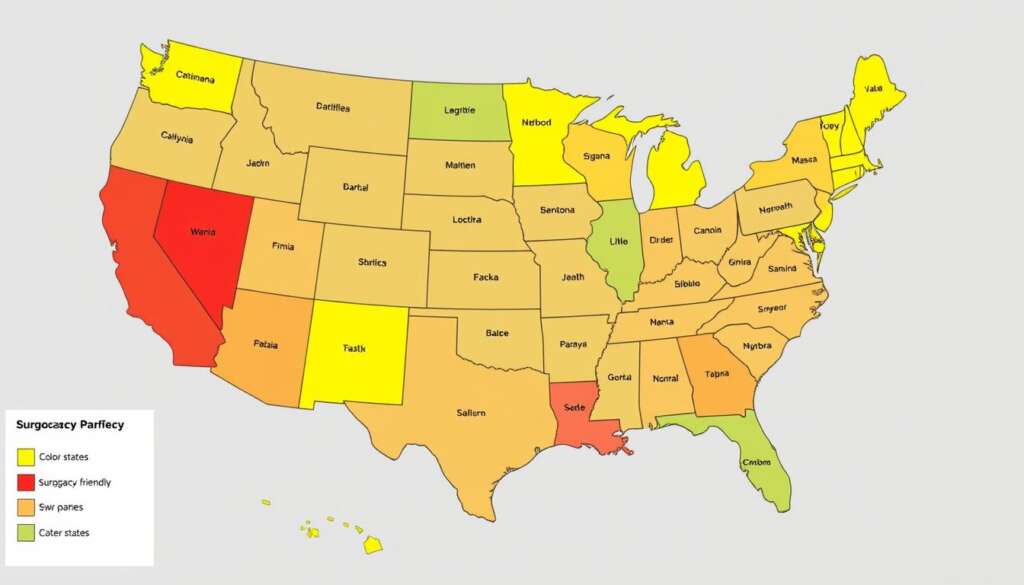
Surrogacy legal status across the United States (2025)
Surrogacy-Friendly States
Some states have established clear legal frameworks that protect all parties involved in the surrogacy process:
California
California leads the nation with its progressive surrogacy laws. The state enforces gestational surrogacy contracts and allows pre-birth parentage orders for all intended parents, regardless of marital status or sexual orientation. This legal certainty makes California a top destination for surrogacy in the USA.
Nevada
Nevada offers strong protections for surrogacy arrangements with clear statutes recognizing gestational carrier agreements. The state permits pre-birth orders and has streamlined legal processes that respect the rights of all parties involved in assisted reproductive technology.
Illinois
The Illinois Gestational Surrogacy Act provides comprehensive legal protection for surrogacy arrangements. The law allows for pre-birth parentage establishment and recognizes intended parents as legal parents from birth when specific requirements are met.
States with Mixed or Unclear Surrogacy Laws
Several states have either limited legislation or rely on case law to govern surrogacy arrangements:
Texas
Texas permits gestational surrogacy but requires intended parents to be married heterosexual couples. The state has specific requirements for surrogacy contracts to be enforceable, including court approval before the embryo transfer.
Florida
Florida allows gestational surrogacy but has different legal processes for married couples versus unmarried individuals. The state requires specific contract provisions and post-birth legal procedures to establish parentage.
New York
After years of prohibition, New York legalized gestational surrogacy in 2021 with the Child-Parent Security Act. The law includes a Surrogate’s Bill of Rights and allows for pre-birth parentage orders, marking a significant shift in the state’s approach.
States with Restrictive Surrogacy Laws
Some states have laws that restrict or even criminalize certain surrogacy arrangements:
Michigan
Michigan prohibits compensated surrogacy arrangements and imposes criminal penalties for participating in or facilitating such contracts. While altruistic surrogacy may be possible, the legal environment remains hostile.
Louisiana
Louisiana only recognizes gestational surrogacy contracts for married heterosexual couples using their own genetic material. All other surrogacy arrangements are unenforceable under state law.
Understand Your State’s Surrogacy Laws
Laws change frequently, and navigating the legal landscape requires expert guidance. Speak with a reproductive law attorney who specializes in your state’s surrogacy regulations.
Types of Surrogacy in USA
Understanding the different types of surrogacy arrangements is essential for making informed decisions about your family-building journey.
Gestational Surrogacy
In gestational surrogacy, the surrogate (also called a gestational carrier) has no genetic connection to the child. The embryo is created through in vitro fertilization (IVF) using:
- Eggs from the intended mother or an egg donor
- Sperm from the intended father or a sperm donor
Legal Status: Gestational surrogacy is the most legally recognized form of surrogacy in USA, with clearer pathways to establishing parentage since the surrogate has no genetic connection to the child.
Prevalence: Approximately 95% of all surrogacy arrangements in the United States are gestational surrogacy.
Traditional Surrogacy
In traditional surrogacy, the surrogate uses her own eggs and is genetically related to the child. Conception typically occurs through:
- Intrauterine insemination (IUI) with sperm from the intended father or donor
- In some cases, IVF may be used
Legal Status: Traditional surrogacy carries significantly higher legal risks and is prohibited or legally unenforceable in many states due to the genetic connection between the surrogate and child.
Prevalence: Less than 5% of surrogacy arrangements in the USA, with numbers declining as gestational surrogacy has become the standard.
Legal Implications of Surrogacy Types
The type of surrogacy you choose has significant legal implications:
| Aspect | Gestational Surrogacy | Traditional Surrogacy |
| Legal Recognition | Recognized and regulated in most states | Limited legal recognition, prohibited in some states |
| Parentage Establishment | Pre-birth orders are possible in many states | Often requires post-birth adoption procedures |
| Contract Enforceability | Generally enforceable in surrogacy-friendly states | Often unenforceable or void in many jurisdictions |
| Surrogate’s Rights | Limited parental claims in most states | May have stronger parental rights claims |
“Gestational surrogacy has become the standard in the United States due to the clearer legal framework and reduced emotional complications for all parties involved. The absence of a genetic connection between the surrogate and the child simplifies the legal process significantly.”
Cost Breakdown of Surrogacy in USA
Surrogacy in USA represents a significant financial investment. Understanding the complete cost breakdown helps intended parents plan appropriately and avoid unexpected expenses.
Average cost breakdown for gestational surrogacy in the United States (2025)
Average Total Cost Range
The total cost of surrogacy in USA typically ranges from $100,000 to $150,000, though costs can exceed $200,000 depending on specific circumstances and complications.
Major Cost Categories
Agency Fees
$20,000-$35,000
- Surrogate screening and matching
- Coordination of medical appointments
- Management of financial transactions
- Support services throughout the journey
Surrogate Compensation
$30,000-$60,000
- Base compensation
- Monthly allowances
- Maternity clothing allowance
- Travel expenses
- Lost wages coverage
Medical Expenses
$20,000-$40,000
- IVF procedures
- Embryo creation and transfer
- Surrogate medical screening
- Prenatal care
- Delivery and hospital costs
Legal Fees
$8,000-$15,000
- Surrogacy contract drafting
- Independent legal representation
- Parentage establishment proceedings
- Birth certificate and passport assistance
Additional Cost Factors
Egg or Sperm Donation
If donor gametes are needed, additional costs include:
- Egg donor compensation: $8,000-$15,000
- Egg donor agency fees: $5,000-$9,000
- Egg donor medical expenses: $3,000-$5,000
- Sperm donor fees: $500-$1,500
Insurance Considerations
Insurance-related expenses may include:
- Surrogate health insurance: $10,000-$30,000
- Insurance policy review: $500-$1,000
- Life insurance for surrogate: $500-$1,000
- Complications insurance: $1,000-$2,000
Variable Expenses
Other potential costs include:
- Multiple embryo transfers: $3,000-$7,000 each
- Twin or multiple pregnancy compensation: $5,000-$10,000
- C-section compensation: $2,500-$5,000
- Travel for international intended parents: Varies widely
Cost-Saving Strategies
- Employer benefits: Some companies now offer fertility and surrogacy benefits
- Financing options: Several specialized loan programs exist for fertility treatments
- Grants and scholarships: Organizations like the Baby Quest Foundation offer financial assistance
- Tax deductions: Some surrogacy expenses may qualify as medical tax deductions
- Independent surrogacy: Working without an agency can reduce costs but increases responsibilities
Get a Personalized Surrogacy Cost Estimate
Every surrogacy journey is unique. Receive a detailed cost breakdown based on your specific situation and needs.
Choosing a Surrogacy Agency in USA
Selecting the right surrogacy agency is one of the most important decisions in your journey. A reputable agency provides crucial support, coordination, and expertise throughout the complex surrogacy process.

Working with a reputable surrogacy agency provides crucial support throughout your journey
Key Criteria for Selecting an Agency
Experience & Success Rates
- Years in operation
- Number of successful surrogacy journeys
- Experience with your specific situation (international, LGBTQ+, etc.)
- Relationships with reputable fertility clinics
SURROGATE SCREENING PROCESS
- Thorough medical screening protocols
- Psychological evaluation standards
- Background check procedures
- Financial stability verification
- Previous pregnancy requirements
Services & Support
- Case management approach
- Communication protocols
- Psychological support offerings
- Legal coordination services
- Financial management assistance
Top Surrogacy Agencies in USA (2025)
While many reputable agencies operate across the country, these organizations consistently receive high ratings from intended parents and surrogates alike:

Circle Surrogacy
Founded in 1995 and based in Boston, Circle Surrogacy offers comprehensive services nationwide with particular expertise in helping LGBTQ+ families and international intended parents.

Growing Generations
Established in 1996 and headquartered in Los Angeles, Growing Generations was one of the first agencies to specialize in serving the LGBTQ+ community and has expanded to support all intended parents.

ConceiveAbilities
Operating since 1996 with headquarters in Chicago, ConceiveAbilities offers a highly selective surrogate matching process and comprehensive support services across the United States.
Questions to Ask Potential Agencies
About the Agency
- How long have you been in operation?
- How many surrogacy journeys do you facilitate annually?
- What is your successful match rate?
- What makes your agency different from others?
- Can you provide references from past clients?
- What is your experience with my specific situation?
About Their Services
- What services are included in your fee?
- How do you screen and select surrogates?
- What happens if a match doesn’t work out?
- How do you handle financial management?
- What support do you provide after birth?
- How do you handle potential complications?
Independent Surrogacy vs. Agency-Guided Surrogacy
Some intended parents choose to pursue surrogacy without an agency, working directly with fertility clinics and attorneys. While this approach can reduce costs, it requires significantly more time, knowledge, and personal management of the process. Most first-time intended parents benefit from the structure, expertise, and support that agencies provide.
Surrogacy in USA for International Parents
Many parents from Europe, China, India, and the Middle East travel to the U.S. because:
- Other countries ban or restrict commercial surrogacy.
- U.S. surrogacy provides clear legal parentage.
- Babies get U.S. citizenship, making global travel easier.
👉 However, intended parents must factor in extra costs for travel, accommodation, and legal paperwork.
| Country | Cost Range (USD) | Legal Security | LGBTQ+ Allowed | Citizenship |
| USA | $120k – $200k | Strong | Yes | U.S. |
| Mexico | $60k – $80k | Evolving laws | Yes | Mexican |
| Georgia | $55k – $70k | Strong (hetero only) | No | Georgian |
| Colombia | $60k – $75k | Recognized | Yes | Colombian |
| Argentina | $50k – $70k | Case-by-case | Yes | Argentinian |
Get Agency Comparisons
Legal Rights in Surrogacy Arrangements
Establishing and protecting the legal rights of all parties is a critical component of surrogacy in USA. Proper legal representation and documentation help ensure a smooth process and secure legal parentage.

Legal documentation is essential for protecting all parties in a surrogacy arrangement
Key Legal Documents in Surrogacy
Surrogacy Contract
The foundation of the legal relationship between the intended parents and the surrogate, covering:
- Rights and responsibilities of all parties
- Compensation and expense details
- Medical decisions and birth plans
- Behavioral requirements during pregnancy
- Procedures for unforeseen circumstances
Pre-Birth Orders
Legal documents establishing parentage before birth, including:
- Declaration of intended parents as legal parents
- Instructions for birth certificate preparation
- Hospital and medical access authorizations
- Surrogate’s relinquishment of parental rights
- Available in surrogacy-friendly states only
Post-Birth Procedures
Legal processes after birth, which may include:
- Parentage orders or judgments
- Adoption proceedings (if required)
- Birth certificate amendments
- Passport applications for the child
- Interstate or international travel documentation
Legal Rights of Intended Parents
Intended parents’ legal rights vary significantly based on state laws and the specific surrogacy arrangement:
| Legal Aspect | Surrogacy-Friendly States | Moderate States | Restrictive States |
| Parentage Establishment | Pre-birth orders available | Post-birth parentage orders | May require adoption proceedings |
| Contract Enforceability | Fully enforceable | Partially enforceable | May be void or unenforceable |
| Medical Decisions | Defined by contract | Shared with surrogate | Limited rights until after birth |
| Birth Certificate | Intended parents named directly | Amended after birth | May require court order to amend |
Legal Rights of Surrogates
Surrogates also have important legal rights that must be respected throughout the process:
Medical Autonomy
- Right to make decisions about her own body
- Right to choose her medical providers
- Right to terminate pregnancy for medical reasons
- Right to receive appropriate medical care
Financial Protection
- Right to receive agreed-upon compensation
- Right to life and health insurance coverage
- Right to compensation for lost wages
- Right to reimbursement for pregnancy-related expenses
Who Can Become a Surrogate in the USA?
Typical requirements for U.S. surrogates:
- Age 21–40 years.
- Must have given birth to at least one healthy child.
- Physically and mentally healthy.
- No history of major pregnancy complications.
- Non-smoker, no substance abuse.
- Must pass medical, psychological, and background checks.
Additional resources to read:
Special Legal Considerations
For LGBTQ+ Intended Parents
LGBTQ+ intended parents may face additional legal hurdles in some states:
- Second-parent adoption requirements
- State-specific restrictions on same-sex parentage
- Need for additional legal documentation
- Importance of choosing surrogacy-friendly jurisdictions
For International Intended Parents
International intended parents must navigate both U.S. and home country laws:
- Immigration and citizenship requirements
- Passport and travel documentation
- Recognition of U.S. parentage orders abroad
- Potential need for additional legal processes at home
For Donor-Involved Arrangements
When donor eggs or sperm are used, additional legal considerations include:
- Donor contracts and relinquishment of rights
- Anonymous vs. known donor implications
- Future contact provisions
- Genetic relationship documentation
Speak with a Surrogacy Expert
📞 Get in Touch for a Free Surrogacy Consultation
📱 +91-8800481100 (WhatsApp | LINE | Viber)
📧 neelam@ivfconceptions.com
🌐 www.ukrainesurrogacyagency.com
Why Intended Parents Choose Complete Surrogacy for a Safe, Smooth & Successful Surrogacy Journey:
🌍 Access to multiple surrogacy destinations with 15+ years of international experience
🏥 Partnerships with top-tier fertility clinics and agencies, backed by references from past clients
👩🦱 Diverse egg donor options: Asian, Caucasian, African, Oriental, and more
💸 Transparent and affordable pricing—direct payments with no extra agency fees
🔒 No hidden costs—all charges are agreed upon upfront
🤝 Dedicated case manager for personalized support
📲 Fast, honest, and clear communication throughout
📑 Full legal support for visas, documentation, and baby exit processes
🚚 Assistance with frozen sperm/embryo shipment logistics

Highly esteemed, authoritative, and trusted professional with a 14-year of experience in international surrogacy. Advocate for Secure, Legal, and Affordable International Surrogacy.
Neelam Chhagani, MA (Counselling Psychology) and Holistic Infertility and Third-Party Reproduction Consultant.
Member of European Fertility Society, Best Surrogacy Blogger of 2020, with 300 dedicated blogs, and top contributor on Quora for Surrogacy.
Add Your Comment