

Surrogacy in India for OCI (Overseas Citizens of India) is not permitted under current Indian law. The Surrogacy (Regulation) Act, 2021, allows only altruistic surrogacy and restricts it exclusively to Indian married heterosexual couples with specific medical and age eligibility criteria. OCI cardholders—despite their close ties to India—are treated the same as foreign nationals under these rules and therefore cannot access surrogacy services in India.
As a result, OCI couples or individuals who wish to pursue surrogacy must look to countries with international surrogacy laws that legally support foreign intended parents, and prepare to handle medical, legal, and documentation requirements in both the surrogacy destination and their home country.
| Criteria | Status for OCI Cardholders in India |
|---|---|
| Legal Permission | ❌ Not permitted |
| Applicable Law | Surrogacy (Regulation) Act, 2021 |
| Type of Surrogacy Allowed | Altruistic only (for eligible Indian citizens) |
| Eligibility of OCI Holders | Not eligible under Indian law |
| Marital Status Considered | Not applicable |
| Medical Infertility Proof | Not applicable |
| Use of Surrogate in India | ❌ Not allowed |
| Commercial Surrogacy | ❌ Banned |
| Access to Indian Surrogacy Clinics | ❌ Not permitted |
| Alternative Option | International surrogacy in legally supportive countries |
| Legal Treatment of OCI | Considered foreign nationals for surrogacy |
| Required Next Step | Consult international surrogacy agencies and legal experts |
Key Takeaways
- OCI cardholders may have specific advantages, but surrogacy eligibility in India for OCI requires careful legal checks.
- India permits only altruistic surrogacy under current surrogacy laws in India; commercial payments are prohibited.
- Start with an infertility or essentiality certificate, marriage proof, and your OCI card to speed the surrogacy process for OCI.
- Choose NABH-accredited ART clinics and consult a lawyer experienced in cross-border cases for smooth documentation and exit formalities.
- Prepare for documented timelines, insurance for the surrogate, and modest pregnancy-related reimbursements instead of commercial fees.
📞 Get in Touch for a Free Surrogacy Consultation
📱 +91-8800481100 (WhatsApp | LINE | Viber)
📧 neelam@ivfconceptions.com
🌐 www.ukrainesurrogacyagency.com

Surrogacy in India for OCI: What You Need to Know.
This guide helps you understand surrogacy in India for OCI cardholders. It covers legal, medical, and practical steps. This way, you can plan carefully and ethically, ensuring surrogate health and rights are protected.
Why this guide matters for OCI cardholders
OCI holders have a unique path for surrogacy in India. They must meet eligibility checks, sign notarized agreements, and get approvals from Appropriate Authorities. These steps impact timing, costs, and paperwork.
Understanding surrogacy law in India helps avoid surprises. It explains what National and State bodies require, what clinics must offer, and how embassy or FRRO steps fit into the process.
Quick summary of key takeaways
Only altruistic surrogacy is allowed in India. The surrogate can get medical and pregnancy-related expenses and insurance, but not payment for being a surrogate.
Intended parents must meet strict criteria. They need to be OCI holders or of Indian origin, legally married, and meet age and marriage duration requirements. They must also have a medical infertility or a medical reason for surrogacy.
Important documents include the OCI card, marriage certificate, and certificates of infertility or necessity. You also need an eligibility certificate from the Appropriate Authority and a notarized surrogacy agreement. Embassy letters and FRRO exit formalities are often required to take the newborn home.
The process involves several steps. First, choose a licensed ART clinic. Then, undergo medical evaluation and counseling. Next, complete surrogate screening and informed consent.
After that, perform IVF and embryo transfer. Monitor the pregnancy, deliver at an authorized hospital, and complete birth registration and exit formalities.
How Indian surrogacy laws impact OCI commissioning parents
The Surrogacy (Regulation) Act and related rules define who can commission surrogacy in India. The law allows arrangements for Indian citizens, NRIs, and certain overseas citizens of India applicants who meet the criteria. Foreign nationals face additional embassy and visa conditions.
Getting approvals from the National or State Surrogacy Boards and Appropriate Authorities is mandatory. Courts may intervene in complex cases to issue parental orders or permissions when standard pathways do not apply.
Recent changes have tightened eligibility, raised protections for surrogates, and banned commercial surrogacy. These changes affect costs and mean careful legal planning is essential for surrogacy eligibility for OCI and long-term certainty under the surrogacy rules for OCI.
Understanding the legal framework and surrogacy regulations in India
India’s surrogacy laws have changed a lot. Now, there are strict rules for who can use surrogacy services. These rules also cover where treatments can happen and the paperwork needed.
These changes aim to protect both surrogate mothers and the intended parents. They also make sure surrogacy is done ethically.
Overview of the Surrogacy (Regulation) Act and related ART rules
The Surrogacy (Regulation) Act was passed in 2021 and updated in 2024. It makes sure surrogacy is done for free, not for money. Clinics must follow strict rules set by the Indian Council of Medical Research.
The rules also cover how clinics are registered, lab work, and what information must be reported. This ensures everything is done right and safely.
ICMR guidelines and NABH accreditation are key in audits and inspections. You can expect detailed records, mandatory counselling, and clear consent forms before any treatment starts.
Altruistic surrogacy vs commercial surrogacy: legal distinctions
Altruistic surrogacy means a close relative carries a baby without getting paid. They only get medical care and pregnancy costs covered. This way, it’s less likely to exploit the surrogate.
Commercial surrogacy is not allowed in India. Any extra payments are against the law. This makes it very important to check everything carefully and document it well.
National and State Surrogacy Boards, Appropriate Authorities, and court approvals
The law set up a National Surrogacy Board and State Surrogacy Boards. These boards check if clinics are okay and if people are eligible to use surrogacy.
They also give important certificates. Sometimes, courts get involved in disputes, so getting legal advice is wise.
Recent regulatory changes and expected future trends
Recently, the rules got stricter. Now, there are more checks on who can use surrogacy. Surrogates also get more protection, like insurance.
In the future, there might be more rules. These could include clearer rules on who is a close relative and better ways to deal with foreign missions. You should be ready for more paperwork and strict rules.
Eligibility and legal requirements for OCI cardholders
This section explains who can pursue surrogacy in India and what documents they need. It covers surrogacy eligibility for OCI holders, the criteria, and legal needs. These details affect your journey and duties.
Who qualifies: nationality, marital status, and marriage duration requirements
OCI cardholders of Indian origin are often treated like Non-Resident Indians for surrogacy. They must be a legally married heterosexual couple. Single, unmarried, and same-sex couples are not eligible under current rules.
The law requires a minimum marriage duration to qualify. This is usually five years, but it can vary. Always check the current requirement before starting treatment.
Age limits and medical necessity conditions required under law
Age limits are part of the eligibility criteria. Women should be between 23 and 50 years old, and men between 26 and 55. These ages can change, so confirm them at your clinic.
Medical necessity must be certified by a doctor. This includes conditions like no uterus, MRKH syndrome, or IVF failure. A certificate from a doctor is needed to prove this.
Required certificates: infertility/essentiality certificate, eligibility certificate, NOC, and other approvals
Key paperwork is needed for surrogacy in India. You’ll need an infertility/medical necessity certificate from a doctor. The couple and surrogate also need eligibility certificates from the Appropriate Authority or State Surrogacy Board.
A notarized surrogacy agreement is mandatory. The ART clinic must be registered and provide treatment records. Cross-border cases need a No Objection Certificate or court clearance for final approval.
Embassy letters, undertakings, and FRRO exit formalities for taking the baby home
For overseas surrogacy, a letter from the embassy is often required. It confirms the country recognizes the child as the parents’. This letter helps with visa and exit procedures.
Intending parents must sign undertakings to care for the child. Before leaving India, the FRRO will check approvals, clinic certifications, and proof of payments to the surrogate.
FRRO formalities include keeping copies of the child’s birth certificate and passports. These steps ensure legal protection for all parties involved.
Surrogacy process in India: step-by-step for OCI couples
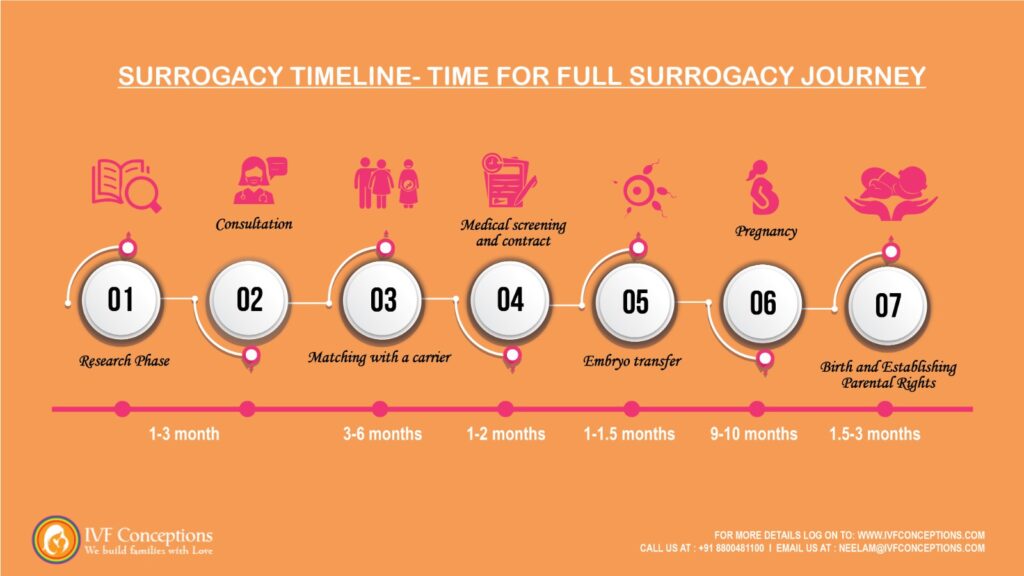
This guide helps you understand the surrogacy process in India. It covers choosing a clinic, pre-treatment checks, finding a surrogate, and managing IVF. It’s written to help you make informed decisions.
Choosing a licensed ART clinic
First, pick a reputable surrogacy clinic in India. It should be registered and follow ICMR rules. Look for NABH accreditation and experience with international patients. Clinics like Asha IVF & Fertility Centre offer support and legal help for OCI applicants.
Verify registrations and legal support
Make sure the clinic has worked with overseas parents. They should have clear procedures for FRRO coordination and eligibility certificates. Ask for documents and a staff member who handles legal clearances.
Pre-treatment medical evaluation
Intending parents get fertility tests like hormonal tests and an ultrasound. They also get psychological counselling. This helps them understand risks and consent.
Counselling and contingency planning
Counselling covers medical risks and timelines. It also talks about managing multiple pregnancies and neonatal complications. This prepares you for any challenges in the surrogacy process.
Surrogate screening and selection criteria
Surrogates are evaluated based on age, health, and marital status. They also undergo psychological and infectious disease tests.
Informed consent and documentation
The surrogate signs a notarized consent form. They agree to provide a No Objection Certificate after delivery. Confirm the exact requirements with the Appropriate Authority.
IVF, embryo creation, and transfer
The IVF cycle uses eggs and sperm from the intended parents or donors. Embryos are created in a lab and transferred to the surrogate’s uterus. Gestational surrogacy is the common method used in India.
Pregnancy monitoring and antenatal care
Pregnancy is confirmed with beta-hCG testing and an ultrasound. The clinic and hospital coordinate antenatal care and scans. They also provide nutritional support and psychological follow-up.
Delivery and postnatal legal steps
Delivery happens at an authorized hospital. After birth, the surrogate gives the NOC. Medical teams complete the birth documents. FRRO handles the child’s exit clearance in the final step.
Practical considerations: costs, clinics, and success rates
Planning surrogacy in India means getting ready for medical, legal, and travel steps. These steps affect both timing and budget. Knowing typical costs and clinic quality helps avoid delays and surprises.
Typical cost components and what altruistic arrangements cover
Altruistic surrogacy in India doesn’t allow for commercial payments. Intended parents cover medical and pregnancy costs, hospital fees, and insurance. They also pay for travel and allow reimbursements.
IVF or ICSI, donor gametes, medications, and neonatal care add to the total. Costs vary by clinic and case complexity.
How to evaluate and pick reputable clinics and agencies
Check if the ART clinic is registered with the Appropriate Authority and follows ICMR guidelines. Look for NABH accreditation and clear policies on consent and complications. Asha IVF & Fertility Centre is a good example of a facility that offers legal guidance and international support.
Choose clinics with a team of experts: reproductive endocrinologists, embryologists, counselors, legal advisors, and case managers. Ask for success data for your age group and case type. Request clinic registrations, accreditation, and agreements before choosing a surrogacy agency in India.
Surrogacy success rates, safety standards, and compliance
Success rates depend on egg quality, lab standards, and clinic experience. Ask for clinic-specific IVF/ICSI metrics that match your situation. Ensure the center follows ICMR rules and maintains strong infection control.
Confirm policies on multiple embryo transfer, selective reduction, and emergency management. Clinics that publish transparent outcome data and follow NABH/ICMR compliance offer higher confidence in patient safety.
Hidden costs and timelines to plan for
Hidden expenses include legal fees, embassy letters, and exit charges. Extra travel or longer stays for delivery can also add up. Contingency funds reduce stress if cycles fail.
Planning takes several months for approvals, weeks to months for IVF and matching cycles, and nine months for pregnancy. Postnatal exit formalities take weeks to months. Many cases take 12–24 months from first planning to leaving India with the baby.
| Item | What it covers | Typical impact on budget |
|---|---|---|
| Medical procedures (IVF/ICSI) | Ovarian stimulation, egg retrieval, lab work, embryo transfer | Major portion; varies by protocol and clinic |
| Surrogate pregnancy costs | Prenatal visits, antenatal scans, pregnancy care, delivery | Significant; included under altruistic reimbursements |
| Insurance and neonatal care | Surrogate health insurance, NICU if required, newborn care | Variable; potentially high-cost item |
| Legal and administrative | Eligibility certificates, court filings, notarizations, embassy letters | Moderate; essential for compliance with surrogacy requirements |
| Travel and accommodation | International flights, local transport, extended stays during delivery | Moderate to high for OCI parents living abroad |
| Agency and case management | Coordination, counseling, legal liaison, logistics | Depends on scope; reputable surrogacy agency in India may charge for full-service support |
Legal and ethical protections for surrogate mothers and intended parents

The law tries to meet the needs of both surrogate mothers and intended parents. It sets clear rules to reduce uncertainty for everyone. This section talks about key protections, rights, and steps to follow.
Surrogate rights: medical care, insurance, and postnatal protections
Surrogates get required medical care during pregnancy and delivery. Clinics must keep records of prenatal visits and tests. They also plan for emergencies.
They also offer psychological support and counseling. Insurance covers maternity care and any complications. Some plans also cover postpartum care for up to 36 months.
Before starting, surrogates need to pass physical and mental fitness tests. They must sign informed consent after understanding the risks and benefits.
Informed consent is mandatory. Surrogates sign consent after a full explanation of risks, rights, and benefits. State boards and Appropriate Authorities monitor compliance to prevent coercion and exploitation.
Intended parents’ legal protections and parental rights under Indian law
Intended parents who follow legal steps can get parental recognition and custody. They need approvals from Appropriate Authorities to add their names to the birth certificate.
They need notarized surrogacy agreements and clinic-issued certificates for exit and citizenship. Courts may issue orders for cross-border cases.
FRRO exit procedures and embassy letters depend on complete paperwork. Legal steps reduce the risk of disputes and make bringing the child home easier.
Best practices to avoid exploitation and ensure transparent agreements
Work only with registered ART clinics and accredited professionals. Demand a written, notarized surrogacy agreement. It should list medical responsibilities, expense coverage, and confidentiality terms.
Make sure the surrogate has independent counseling and legal representation if needed. Record all payments and reimbursements for transparency and traceability.
Avoid unaccredited intermediaries. Choose hospitals and clinics with clear case-management systems and legal compliance.
Role of lawyers, consent documents, and notarized surrogacy agreements
Experienced lawyers in international family and reproductive law draft strong surrogacy agreements. They help get Appropriate Authority approvals, embassy letters, and FRRO exit documentation.
Essential consent documents include surrogate informed consent, medical consent for procedures, and post-delivery NOC. Notarization and registration add enforceability.
Legal teams help get the essentiality and eligibility certificates. They also seek court orders for parental status or citizenship documentation. Clear surrogacy agreements protect both parties from future disputes.
Surrogacy consulting services with trusted and experienced surrogacy consultant
A dedicated surrogacy consultant guides you through each step of the surrogacy process for OCI applicants. They check your registrations and make sure clinics in India meet high standards. They also work with a surrogacy agency in India for bigger tasks.
Patient coordinators help with medical appointments and paperwork. They also talk to authorities and offices to get important certificates. This helps avoid delays in getting the documents needed to leave India.
Good surrogacy consulting services offer clear fees and plans. They help with legal documents and arrange screenings at top IVF hospitals. They also provide emotional support and counseling.
They connect you with counselors and interpreters. They also help with finding places to stay. They manage prenatal visits, delivery planning, and postnatal steps like birth registration and exit coordination.
Choose a consultant with experience in OCI and foreign cases. Look for verified testimonials and clinic accreditation. Make sure they work with registered clinics and protect surrogate mothers.
Avoid agencies that ask for too much money upfront or promise guaranteed results. Good services offer clear contracts and work with international teams. They also give realistic timelines for the surrogacy process for OCI families.
| Service | What to expect | Questions to ask |
|---|---|---|
| Clinic verification | Confirm ART registration, NABH compliance, success metrics | Can you share accreditation documents and recent case outcomes? |
| Legal coordination | Drafting agreements, obtaining eligibility and NOC, embassy letters | Which lawyer handles international surrogacy and are fees itemized? |
| Medical logistics | Scheduling IVF, surrogate screening, prenatal care at clinics | How do you coordinate care between clinic teams and patient coordinators? |
| Travel and postnatal support | Visa advice, FRRO exit assistance, birth registration help | What is included in your postnatal package and timeline to departure? |
| Emotional and translation services | Counseling referrals, interpreter services, local accommodation | Do you provide ongoing counseling and language support during stays? |
dditional Resources to Read:
What Are the Hidden Costs of Altruistic Surrogacy in India?
Surrogacy in India: Legal, Ethical, and Practical Considerations
Altruistic Surrogacy in India for Australian OCI Citizens
Altruistic Surrogacy in India for USA OCI Citizens
Conclusion
The surrogacy process for OCI applicants is possible but strict. Success depends on meeting certain requirements and following the law. It’s also important to work with clinics that meet high standards.
OCI couples need to gather important documents early. These include the OCI card, marriage certificate, and proof of infertility. They should also check if the clinic is registered and meets the necessary standards.
Steps to take include getting an eligibility certificate and making notarized agreements. It’s also key to ensure the surrogate has medical care and insurance. Remember to handle exit formalities and embassy letters if needed.
Be aware of the costs involved and any hidden expenses. Make sure to plan a realistic timeline with the clinic and legal advisors. This will help in managing the process smoothly.
It’s important to focus on ethics and protection. Ensure the surrogate’s welfare and get clear consent from all parties. Counselling is also essential for everyone involved.
Having a lawyer who knows international family and reproductive law is vital. They can help with legal documents and ensure parental rights are protected. By following the law and best practices, surrogacy in India for OCI can lead to a safe and documented path to parenthood.
💫 Why Intended Parents Choose Complete Surrogacy for a Safe, Smooth & Successful Surrogacy Journey:
🌍 Access to multiple surrogacy destinations with 15+ years of international experience
🏥 Partnerships with top-tier fertility clinics and agencies, backed by references from past clients
👩🦱 Diverse egg donor options: Asian, Caucasian, African, Oriental, and more
💸 Transparent and affordable pricing—direct payments with no extra agency fees
🔒 No hidden costs—all charges are agreed upon upfront
🤝 Dedicated case manager for personalized support
📲 Fast, honest, and clear communication throughout
📑 Full legal support for visas, documentation, and baby exit processes
🚚 Assistance with frozen sperm/embryo shipment logistics

FAQ: Surrogacy in India for OCI
Who is an Overseas Citizen of India (OCI) and why does OCI status matter for surrogacy in India?
OCI cardholders are people of Indian origin with long-term residency in India. The OCI status is important because India allows surrogacy for Indian citizens, NRIs, and OCIs. They must meet strict criteria. Being an OCI can make legal processes easier, but they must follow Indian laws and get approvals.
Is commercial surrogacy allowed in India for OCI couples?
No. India only allows altruistic surrogacy. This means the surrogate can get medical and pregnancy expenses covered. But, no direct money can be paid to her.
What are the core eligibility requirements for OCI intending parents?
They must be an OCI cardholder or an Indian citizen/NRI. They should be a legally married couple. They need a certificate showing they can’t have children naturally. They also need to meet age limits and get certificates from the Appropriate Authority.
What specific documents should OCI couples prepare before beginning the surrogacy process?
They need their OCI card, marriage certificate, and a certificate from a doctor. They also need their passport copies, proof of residence, and certificates from the Appropriate Authority. A notarized surrogacy agreement and clinic registration proof are also required.
What is the role of the Appropriate Authority, State Boards, and courts in OCI surrogacy cases?
The Appropriate Authority and State Boards issue important certificates and oversee clinics. The National Surrogacy Board gives policy advice. Courts help with complex cases and may issue orders.
Do OCI parents need a letter from their embassy or other country confirmations?
Often yes. Many clinics and FRRO need a letter from the embassy. This letter confirms the country recognizes surrogacy. The embassy letter requirements can change, so legal advice is important.
What is the step-by-step clinical and legal process for OCI couples pursuing surrogacy in India?
First, choose a registered ART clinic. Then, get medical evaluations and counselling. Next, get the necessary certificates from the Appropriate Authority. After that, select and screen a surrogate, do IVF/embryo transfer, and monitor the pregnancy. The surrogate gives birth, and the couple gets the birth registered and exit clearance.
How are surrogates selected and what protections do they have?
Surrogates must meet certain criteria and have medical and psychological assessments. They must give informed consent. The law protects them from exploitation and ensures they get medical care and insurance.
What costs should OCI couples expect and what does altruistic surrogacy cover?
They will pay for IVF/ICSI, clinic fees, medications, and donor gametes. They also cover the surrogate’s medical and pregnancy expenses, insurance, and hospital delivery costs. Legal fees, embassy documentation, and exit fees are also included. Hidden costs can include NICU care and legal issues.
How long does the entire surrogacy journey usually take?
It varies. Getting approvals and paperwork can take months. IVF cycles and embryo transfer take weeks to months. Pregnancy lasts nine months. After birth, getting the birth registered and exit clearance can take more weeks. The whole process can take 12–24 months.

Highly esteemed, authoritative, and trusted professional with a 14-year of experience in international surrogacy. Advocate for Secure, Legal, and Affordable International Surrogacy.
Neelam Chhagani, MA (Counselling Psychology) and Holistic Infertility and Third-Party Reproduction Consultant.
Member of European Fertility Society, Best Surrogacy Blogger of 2020, with 300 dedicated blogs, and top contributor on Quora for Surrogacy.
Add Your Comment