

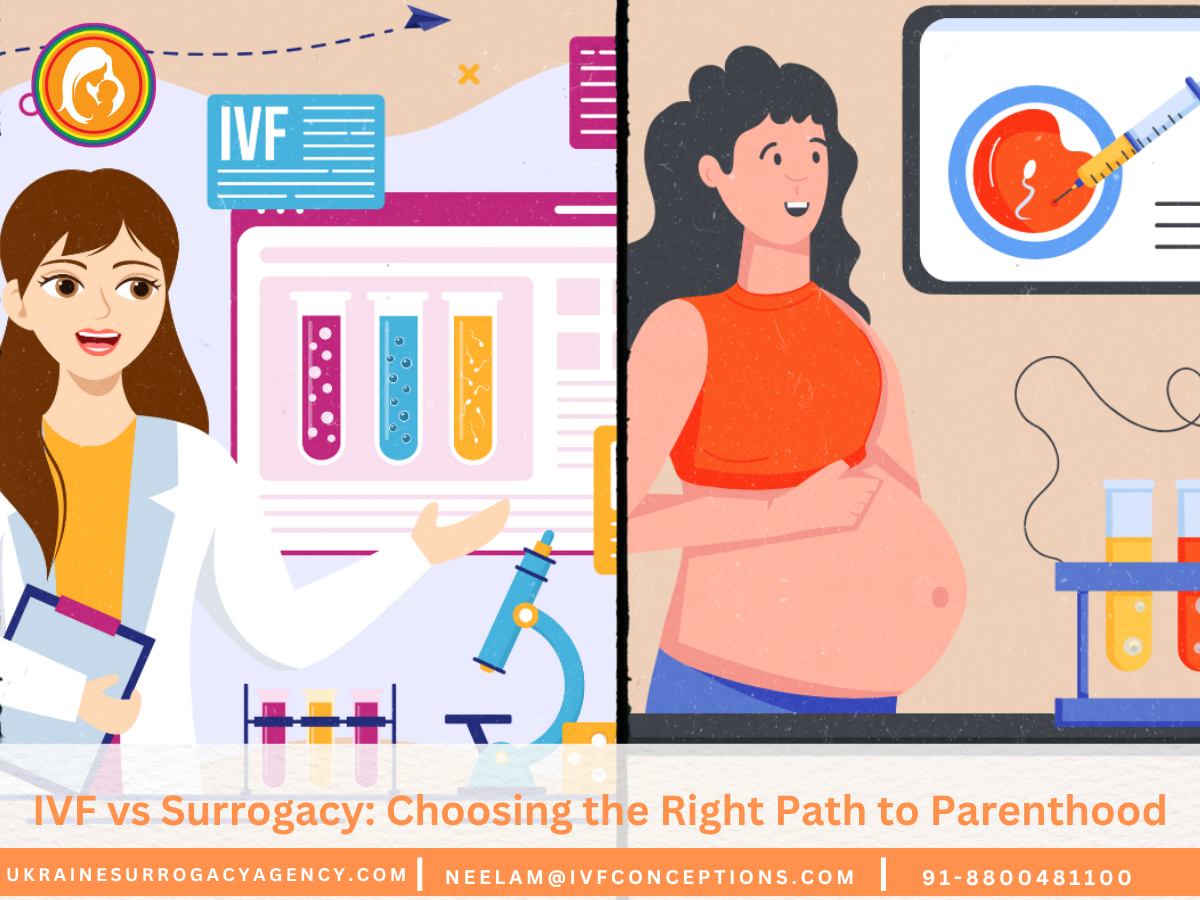
In the United States, nearly 12% of women face infertility. This has led to a big increase in fertility treatments like IVF and surrogacy. These options give hope to those dreaming of starting a family but face tough reproductive challenges.
Starting a family is a deeply personal journey, and for many facing fertility challenges, the decision often narrows down to two powerful options: In Vitro Fertilization (IVF) and Surrogacy. Each path offers unique advantages, and choosing the right one depends on your medical circumstances, emotional readiness, legal landscape, and financial planning.
Whether you’re a couple dealing with repeated IVF failures, a single parent, or an LGBTQIA+ individual, understanding the core differences between IVF and surrogacy is essential. This guide will help you compare both options in terms of cost, success rate, biological connection, and ideal candidates.
IVF vs Surrogacy: Side-by-Side Comparison
| Factor | IVF | Surrogacy |
|---|---|---|
| Who carries the baby? | The intended mother (or egg recipient) | A surrogate (gestational carrier) |
| Best for | Women with a healthy uterus but fertility issues | Women unable to carry a pregnancy or without a uterus |
| Use of own eggs? | Yes, commonly with own eggs | Yes or donor eggs can be used |
| Legal complexity | Moderate (depends on embryo ownership, donors, etc.) | High (requires detailed contracts and parentage orders) |
| Medical involvement | High–hormone injections, egg retrieval, embryo transfer | Moderate – IVF still needed, but no physical burden on parents |
| Time to pregnancy | May require multiple cycles; varies widely | Time depends on surrogate matching and the legal process |
| Cost estimate | $10,000 – $20,000 per IVF cycle | $50,000 – $150,000+ depending on country and program |
| Success rate | Varies by age and embryo quality (20%–60%) | Higher overall if healthy surrogate and PGT-A embryos are used |
| Biological connection | Full or partial (depends on egg/sperm source) | Full (if using intended parents’ embryos) |
| Emotional factors | Physically and emotionally taxing for the intended mother | Emotional challenges of trust and legal dependency |
Key Takeaways
- IVF and surrogacy are distinct paths to parenthood
- Medical evaluations are key in choosing the best fertility treatment
- Being emotionally prepared is as important as being medically ready
- Legal aspects differ between IVF and surrogacy
- Getting professional advice can help with complex reproductive choices
📞 Get in Touch for a Free Surrogacy Consultation
📱 +91-8800481100 (WhatsApp | LINE | Viber)
📧 neelam@ivfconceptions.com
🌐 www.ukrainesurrogacyagency.com
Understanding Assisted Reproductive Technologies
Exploring fertility treatments can be tough for those wanting to start a family. Assisted reproductive technologies offer new ways to overcome infertility and other reproductive issues.
Modern reproductive medicine has changed how we become parents. Techniques like in vitro fertilization and surrogacy bring hope to those facing challenges in having children.
What is In Vitro Fertilization (IVF)?
In vitro fertilization is a complex technology that creates embryos outside the body. It involves several key steps:
- Ovarian stimulation to produce multiple eggs
- Egg retrieval through minimally invasive procedures
- Sperm donation or collection from a partner
- Fertilization in a specialized laboratory
- Embryo transfer to the uterus
The Surrogacy Process Explained
Surrogacy is a way for people to become parents when they can’t carry a pregnancy. There are two main types:
- Gestational surrogacy: A carrier has no genetic connection to the child
- Traditional surrogacy: The surrogate’s own egg is used
Medical Advancements in Fertility Treatments
New technologies have boosted the success of fertility treatments. Genetic screening, better embryo transfer methods, and improved cryopreservation have opened more doors for parents-to-be.
| Fertility Treatment | Success Rate | Key Characteristics |
|---|---|---|
| In Vitro Fertilization | 40-50% | Comprehensive genetic screening |
| Gestational Surrogacy | 50-60% | Carrier has no genetic connection |
| Egg Donation | 55-65% | Donor eggs from younger women |
Knowing about these reproductive technologies helps people make better choices for their fertility journey. It opens up new ways to build families.
IVF vs Surrogacy: Key Differences and Considerations
Choosing the right path to parenthood involves knowing the differences between IVF and surrogacy. Intended parents must weigh many factors, including medical, emotional, and legal aspects.
IVF and surrogacy differ mainly in who carries the pregnancy. In IVF, the biological mother carries the child. Surrogacy means that another woman carries the pregnancy for the intended parents.
- Medical Complexity: IVF focuses on fertilization techniques
- Pregnancy Involvement: Surrogacy requires third-party participation
- Reproductive Rights: Each approach offers unique challenges
Costs for these options vary greatly. IVF costs between $12,000 and $17,000 per cycle. Surrogacy, with legal and medical costs, can be over $100,000.
| Aspect | IVF | Surrogacy |
|---|---|---|
| Pregnancy Carrier | Biological Mother | Surrogate |
| Average Cost | $12,000-$17,000 | $90,000-$130,000 |
| Legal Complexity | Low | High |
Legal aspects are key in choosing a path. Surrogacy needs detailed contracts, while IVF mainly involves medical steps.
Each fertility journey is unique, requiring personalized medical and emotional support.
Knowing the differences helps intended parents make choices that fit their needs, health, and budget.
Medical and Physical Requirements for Both Paths

Understanding the medical and physical aspects of family planning is key. Whether you’re looking into IVF or surrogacy, health checks are vital. They help decide your path to becoming a parent.
Every journey to parenthood is different. It needs its own medical checks and physical readiness. People planning to have a child must go through detailed tests to ensure success.
Health Screening and Eligibility Criteria
Fertility clinics do thorough health checks to see if you’re ready for reproductive technologies. They look at:
- Comprehensive medical history review
- Genetic screening
- Reproductive health assessments
- Physical fitness examinations
Recovery and Time Commitments
IVF success depends a lot on how well you prepare and recover. The steps include:
- Initial medical consultations
- Hormone treatments
- Egg retrieval procedures
- Embryo transfer
- Post-procedure recovery
Success Rates and Statistics
Knowing about IVF success rates is important for making choices. Several things affect the outcome, such as:
- Age of intended parents
- Underlying fertility challenges
- Quality of reproductive technologies
- Individual health conditions
Success rates vary, with younger patients experiencing higher pregnancy probabilities through assisted reproductive technologies.
It’s best to talk to fertility clinics for a personal assessment. They can give you specific success rate information for your situation.
Legal and Financial Aspects

Exploring surrogacy and IVF can be tough for those wanting to start a family. Laws on surrogacy differ a lot from state to state. This makes it very important to get legal advice from experts.
Knowing how much surrogacy costs is key for planning. The total cost can be between $90,000 to $130,000. This includes:
- Medical procedures and screening
- Legal documents and lawyer fees
- Payment to the surrogate
- Agency fees
- Insurance costs
There are ongoing debates about the ethics of surrogacy. These debates question how fair it is to pay surrogates. They also raise concerns about exploitation and the rights of parents.
- Is paying surrogates fair?
- Is there a risk of exploitation?
- What rights do parents have?
- Are there rules for surrogacy worldwide?
| Expense Category | Estimated Cost Range |
|---|---|
| Medical Procedures | $30,000 – $50,000 |
| Legal Fees | $15,000 – $25,000 |
| Surrogate Compensation | $35,000 – $45,000 |
| Agency Fees | $10,000 – $15,000 |
Those interested in surrogacy should look into the laws in their state. They should also talk to lawyers who specialize in reproductive law. Planning your finances, including insurance and loans, can help with the costs of this journey.
Emotional and Psychological Journey
Starting a fertility journey through gestational or traditional surrogacy is complex. It’s filled with hope, anxiety, and personal growth. Intended parents face a path of transformation.
Dealing with fertility treatments’ psychological challenges needs support and emotional management. Knowing the emotional side helps prepare for the journey ahead.
Support Systems and Counseling
Professional counseling is key for managing surrogacy’s emotional highs and lows. Mental health experts in reproductive psychology offer vital guidance. They help by:
- Teaching coping strategies for setbacks
- Helping process complex emotions
- Building resilience on the fertility journey
- Creating healthy emotional boundaries
Building Relationships with Surrogates
Building a good relationship with a surrogate needs respect, clear talk, and emotional smarts. Successful partnerships come from clear expectations and a shared goal of creating a family.
Managing Expectations and Stress
Fertility treatments require a lot of emotional effort. To manage stress, try:
- Regular check-ins with a psychologist
- Practicing mindfulness meditation
- Keeping open communication with your partner
- Joining support groups for intended parents
The fertility journey is deeply personal, requiring patience, compassion, and professional support.
Additional Resources to read:
Surrogacy Travel Accommodations
Surrogacy in Kazakhstan for US Citizens
Understanding Surrogacy Costs in Thailand
Which Country Has the Best Surrogacy Success Rate in 2025?
Conclusion
Exploring assisted reproductive technology shows many ways to become parents. Choosing between IVF and surrogacy is a personal decision. It involves looking at medical, emotional, and financial aspects.
Each person’s path is unique, based on their life and fertility issues. Gestational carriers offer a special option for those who can’t carry a baby. Doctors and fertility experts help guide those wanting to start a family.
They help understand the differences in fertility treatments. This knowledge helps people make choices that fit their family dreams.
At IVF Conceptions, we help connect intended parent to fertility clinics/surrogacy agencies worldwide, based on their individual situation assessment. If you’re considering IVF, IVF with egg donor, Surrogacy, Egg donor surrogacy, and LGBT+ Surrogacy.
Get in touch today to get world-class services with ethical, legal, and affordable surrogacy options worldwide.
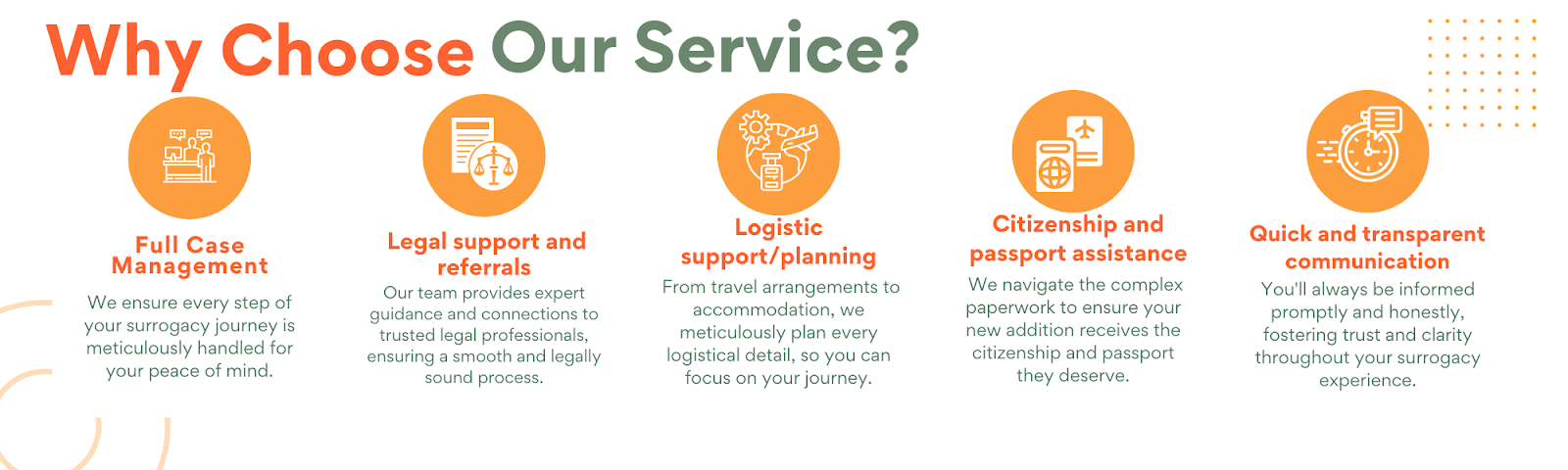
💫 Why Intended Parents Choose Complete Surrogacy for a Safe, Smooth & Successful Surrogacy Journey:
🌍 Access to multiple surrogacy destinations with 15+ years of international experience
🏥 Partnerships with top-tier fertility clinics and agencies, backed by references from past clients
👩🦱 Diverse egg donor options: Asian, Caucasian, African, Oriental, and more
💸 Transparent and affordable pricing—direct payments with no extra agency fees
🔒 No hidden costs—all charges are agreed upon upfront
🤝 Dedicated case manager for personalized support
📲 Fast, honest, and clear communication throughout
📑 Full legal support for visas, documentation, and baby exit processes
🚚 Assistance with frozen sperm/embryo shipment logistics
FAQs for IVF vs Surrogacy
What is the primary difference between IVF and surrogacy?
IVF is a treatment where eggs and sperm are mixed in a lab. Then, the fertilized eggs are put into the mother’s uterus. Surrogacy means that another woman carries the baby for the parents. This can be with their own genetic material or through donation.
What are the types of surrogacy?
There are two main types. Traditional surrogacy uses the surrogate’s egg, making her genetically related to the child. Gestational surrogacy uses an embryo from the intended parents or donors, with no genetic link to the surrogate.
How do I know if I’m a good candidate for IVF or surrogacy?
IVF is for those facing fertility issues like blocked tubes or unexplained infertility. Surrogacy is for those who can’t carry a baby due to health issues or same-sex couples wanting a biological child.
What are the success rates for IVF and surrogacy?
IVF success rates depend on age and other factors, usually 20-35% per cycle for women under 35. Surrogacy success rates are higher, around 75-80%, thanks to careful surrogate selection.
How much do IVF and surrogacy typically cost?
IVF costs $12,000 to $25,000 per cycle. Surrogacy costs $90,000 to $130,000, including medical, legal, and surrogate compensation.
What legal considerations are involved in surrogacy?
Surrogacy laws vary by state and country. It’s important to work with a reproductive law specialist for legal agreements and parental rights. Some states have strict laws, while others are more lenient.
What medical screenings are required for IVF and surrogacy?
Both require detailed medical screenings. IVF includes fertility tests, hormone tests, and genetic screenings. Surrogacy screenings are more extensive, covering medical history, psychological evaluations, and infectious disease tests.
How long does the entire IVF or surrogacy process take?
IVF takes 4-6 weeks per cycle, with possible multiple cycles. Surrogacy takes 12-18 months, from screening to pregnancy, including legal and medical preparations.
What emotional support is available during these processes?
Both IVF and surrogacy can be emotionally tough. Fertility clinics and surrogacy agencies offer counseling, support groups, and mental health resources.
Can single individuals or LGBTQ+ couples use these fertility options?
Yes, single individuals and LGBTQ+ couples can use IVF and surrogacy. These options often involve donation to create a biological connection to the child.
More Resources:
- https://www.usa.gov/laws-and-regulations
- https://www.justice.gov/reproductive-rights
- https://www.worldwidesurrogacy.org

Highly esteemed, authoritative, and trusted professional with a 14-year of experience in international surrogacy. Advocate for Secure, Legal, and Affordable International Surrogacy.
Neelam Chhagani, MA (Counselling Psychology) and Holistic Infertility and Third-Party Reproduction Consultant.
Member of European Fertility Society, Best Surrogacy Blogger of 2020, with 300 dedicated blogs, and top contributor on Quora for Surrogacy.
Add Your Comment