


Body weight plays a significant role in reproductive health, which is why many patients want to know how BMI influences fertility and IVF outcomes. Both high and low BMI can affect hormone balance, egg quality, implantation rates, and overall success in fertility treatments.
In this article, we’ll explore the relationship between BMI and fertility, reveal how it impacts IVF results, and provide practical strategies to optimize your chances of a successful pregnancy.
Key Takeaways
- BMI significantly affects reproductive hormone levels.
- Both obesity and low BMI can lead to fertility complications.
- IVF success rates may vary based on a patient’s BMI.
- Research emphasizes the importance of maintaining a healthy weight for IVF outcomes.
- Understanding BMI can inform better decisions regarding fertility treatments.
📞 Get in Touch for a Free Surrogacy Consultation
📱 +91-8800481100 (WhatsApp | LINE | Viber)
📧 neelam@ivfconceptions.com
🌐 www.ukrainesurrogacyagency.com
The Importance of Body Mass Index in Reproductive Health
Body Mass Index (BMI) is a key indicator for reproductive health. It categorizes individuals into underweight, normal weight, overweight, and obese based on weight and height. Knowing the impact of BMI on fertility can guide health decisions.
Definition of BMI and its Classification
BMI is calculated by dividing weight in kilograms by height in meters squared. The World Health Organization (WHO) classifies BMI as follows:
| Classification | BMI Range (kg/m²) |
|---|---|
| Underweight | < 18.5 |
| Normal Weight | 18.5 – 24.9 |
| Overweight | 25 – 29.9 |
| Obese | >= 30 |
Global Trends in Obesity and Its Relevance to Fertility
Obesity rates are rising globally, with a significant increase in developed countries. This rise is linked to fertility issues, including ovulatory problems and higher risks of reproductive complications. Understanding this connection is vital for addressing the impact of BMI on conception.
How BMI Influences Fertility and IVF Outcomes
Body Mass Index (BMI) significantly impacts both male and female fertility. It affects the likelihood of successful conception and the success of assisted reproductive technologies like IVF. Understanding the BMI effects on infertility treatment highlights the importance of maintaining a healthy weight for reproductive health.
The Relationship Between BMI and Ovulatory Function
High BMI often leads to hormonal imbalances in women, disrupting ovulatory cycles. Irregular or absent ovulation makes conception more challenging. This BMI and infertility correlation shows how excess weight can cause anovulation, increasing infertility risks. Achieving a normal weight can boost the chances of successful pregnancy outcomes in IVF.
Impact of BMI on Sperm Quality and Male Fertility
Men with high BMI experience lower sperm quality, affecting motility and reproductive health. Research shows that high BMI can alter hormone levels, impacting spermatogenesis. The presence of high BMI and fertility issues may lower the chances of successful fertilization in IVF. Addressing weight concerns can improve sperm quality, boosting fertility prospects for men.
| Factor | Women (High BMI) | Men (High BMI) |
|---|---|---|
| Ovulatory Dysfunction | Increased risk of anovulation | N/A |
| Sperm Quality | N/A | Reduced motility and quality |
| IVF Success Rate | Lower likelihood of conception | Lower fertilization potentials |
| Hormonal Imbalance | Likely disruption of the menstrual cycle | Altered testosterone levels |
BMI and Fertility: Research Findings
Recent studies have shed light on the connection between BMI and reproductive health. They show how BMI affects fertility rates and the success of IVF treatments. This knowledge is vital for those seeking fertility support, helping them make informed health decisions.
Analysis of Recent Studies
Recent research into BMI and fertility reveals a clear trend. Women with a normal BMI tend to have higher pregnancy rates than those who are overweight or obese. For instance, one study found that women with a normal weight had a 30% higher chance of conceiving through IVF compared to those who were overweight. These statistics underscore the importance of BMI for those planning to conceive.
Longitudinal Research on Weight and Fertility Rates
Long-term studies on weight and fertility trends offer significant insights. They show that women with higher BMIs face challenges in achieving pregnancy and are at a higher risk of miscarriage. The data suggests that a high BMI can disrupt hormonal balance, making fertility efforts more difficult. Prospective parents are advised to consider weight management as a proactive step before starting fertility treatments.
| Weight Category | Pregnancy Rate (%) | Miscarriage Rate (%) |
|---|---|---|
| Underweight | 54 | 20 |
| Normal Weight | 68 | 10 |
| Overweight | 45 | 15 |
| Obese | 32 | 25 |
The Role of BMI in IVF Procedures
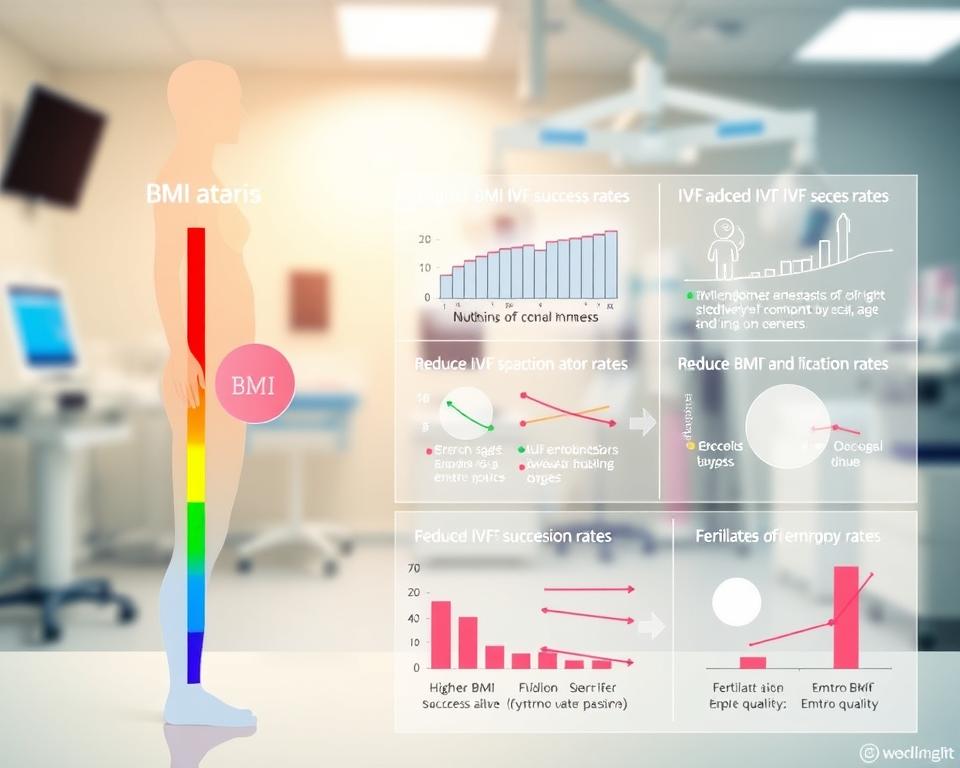
Exploring the impact of BMI on IVF outcomes reveals key challenges and success factors. High BMI can alter how the ovaries respond to stimulation and fertilization rates. This affects the success of IVF. Research shows that BMI changes can have significant implications for reproductive health.
Impact of High BMI on Ovarian Response to Stimulation
Women with high BMI often need more gonadotropins for ovarian stimulation than those with normal BMI. This higher hormonal need can lead to a less effective ovarian response. This, in turn, impacts the BMI’s impact on IVF results. The connection between obesity and hormonal levels is vital in determining ovarian response to treatment.
Insights on Fertilization Rates in Overweight Women
Fertilization rates drop in overweight women undergoing IVF. Data shows that higher BMI is linked to fewer and lower-quality embryos. This highlights a direct BMI correlation with IVF outcomes. It emphasizes the need for a healthy weight for those considering IVF. Understanding these factors is critical, as the BMI effects on reproductive health are clear in clinical settings.
| BMI Category | Required Gonadotropins (IU) | Average Fertilization Rate (%) |
|---|---|---|
| Normal (18.5-24.9) | 150-225 | 75 |
| Overweight (25-29.9) | 250-300 | 65 |
| Obese (30 and above) | 300-450 | 55 |
Weight and Pregnancy Success: A Detailed Look
The connection between body mass index (BMI) and pregnancy success is profound. It impacts various key metrics for conception and maintaining a healthy pregnancy. Research shows that higher BMI poses challenges, affecting implantation rates and raising the risk of miscarriage. This highlights the critical role of weight management in the fertility journey.
Connection Between BMI and Implantation Rates
Studies have found a negative link between BMI and implantation rates. Those with higher BMI often face difficulties in achieving successful implantation. This means even fertilization may not result in a viable pregnancy. Understanding the BMI effects on fertility treatments is vital for better outcomes.
Miscarriage Rates in Relation to Obesity
Obesity is a major risk factor for increased miscarriage rates. Scientific evidence shows a link between weight and pregnancy success. Those with elevated BMI are at a higher risk of pregnancy loss. By addressing miscarriage rates and obesity through weight management, overall pregnancy outcomes can improve. This stresses the importance of a healthy lifestyle for those aiming to conceive.
Complications Associated with High BMI in IVF Treatments
Those with a high body mass index (BMI) often encounter significant hurdles during in vitro fertilization (IVF). It’s vital to grasp the complications of high BMI in IVF for both patients and healthcare professionals. Studies show that high BMI can elevate the risk of pregnancy-related problems, impacting BMI and infertility treatment outcomes.
Increased Risk of Pregnancy-Related Issues
High BMI can lead to several complications, including:
- Gestational diabetes
- Hypertension
- Pre-eclampsia
- Increased risk of cesarean delivery
- Complications during labor
These issues can hinder the IVF journey and pose long-term health risks to both mother and child.
Patient Considerations and Clinical Recommendations
The medical community stresses the need for managing BMI before and during IVF. Clinical recommendations for BMI management include:
- Consultation with a dietitian for personalized diet modifications
- Regular health assessments to monitor BMI changes
- Engagement in physical activity tailored to individual capabilities
- Create tailored treatment plans to improve fertility outcomes
By adopting these strategies, individuals can boost their chances of successful IVF and reduce associated health risks.
| Complication | Impact on IVF Outcomes |
|---|---|
| Gestational Diabetes | Increases the risk of large for gestational age infants, lowers the chances of a successful pregnancy. |
| Hypertension | It can lead to pre-eclampsia and complications during labor. |
| C-section Risks | Higher rates of cesarean delivery can complicate recovery and affect future pregnancies. |
| Labor Complications | May lead to longer hospital stays and increased recovery time. |
Additional Resources to Read:
Fertility Insurance and International Coverage Options
How Age Affects Fertility in Women
Conclusion
This article highlights the critical role of BMI in reproductive health, focusing on fertility and IVF success. Studies show that a healthy BMI is key to optimal reproductive health. Both obesity and being underweight can hinder fertility and raise pregnancy risks.
Recognizing the value of a healthy weight is vital for those seeking to boost their fertility. By managing weight through lifestyle changes, individuals can improve their fertility treatment experiences. The link between BMI and reproductive health is fundamental for everyone involved in surrogacy.
In conclusion, focusing on a balanced health approach is essential for better fertility and healthier pregnancies. Understanding the BMI’s impact on pregnancy success empowers individuals to make informed reproductive health decisions.
💫 Why Intended Parents Choose Complete Surrogacy for a Safe, Smooth & Successful Surrogacy Journey:
🌍 Access to multiple surrogacy destinations with 15+ years of international experience
🏥 Partnerships with top-tier fertility clinics and agencies, backed by references from past clients
👩🦱 Diverse egg donor options: Asian, Caucasian, African, Oriental, and more
💸 Transparent and affordable pricing—direct payments with no extra agency fees
🔒 No hidden costs—all charges are agreed upon upfront
🤝 Dedicated case manager for personalized support
📲 Fast, honest, and clear communication throughout
📑 Full legal support for visas, documentation, and baby exit processes
🚚 Assistance with frozen sperm/embryo shipment logistics

FAQ-How BMI Influences Fertility and IVF Outcomes
How does BMI affect female fertility?
An elevated Body Mass Index (BMI) can upset hormonal balances, affecting ovulation in women. This imbalance increases infertility risks and lowers the chance of successful conception.
What role does BMI play in male fertility?
Obesity in men is linked to lower sperm quality and motility. High BMI can harm reproductive health, making conception more challenging.
Why is BMI important in IVF treatments?
BMI greatly affects IVF success. Obese women may need more medication for ovarian stimulation. They often face lower fertilization and embryo quality rates, reducing IVF success.
What are the impacts of obesity on pregnancy outcomes during IVF?
Pregnancy with a higher BMI increases risks of gestational diabetes, hypertension, and miscarriage. Maintaining a healthy weight is key for safe pregnancy and better outcomes.
How might low BMI affect fertility and IVF results?
Low BMI can cause hormonal imbalances and ovulatory dysfunction, leading to fertility issues. Women with low BMI may also face complications in assisted reproductive treatments.
What strategies can help manage BMI for better fertility outcomes?
Adopting a healthy lifestyle, including balanced nutrition, regular exercise, and weight management programs, can help reduce BMI. This improves reproductive health and boosts the chances of successful fertility treatments.
What do recent studies say about BMI and IVF success rates?
Recent studies show women with a normal BMI have much higher pregnancy and live birth rates than those with elevated BMI. This underlines the critical role of weight management before IVF treatments.
Are there specific clinical recommendations for patients with high BMI undergoing IVF?
Yes, clinical guidelines may include dietary changes, health assessments, and tailored treatment plans. These focus on weight management to enhance fertility outcomes and lower pregnancy risks.

Highly esteemed, authoritative, and trusted professional with a 14-year of experience in international surrogacy. Advocate for Secure, Legal, and Affordable International Surrogacy.
Neelam Chhagani, MA (Counselling Psychology) and Holistic Infertility and Third-Party Reproduction Consultant.
Member of European Fertility Society, Best Surrogacy Blogger of 2020, with 300 dedicated blogs, and top contributor on Quora for Surrogacy.
Add Your Comment