

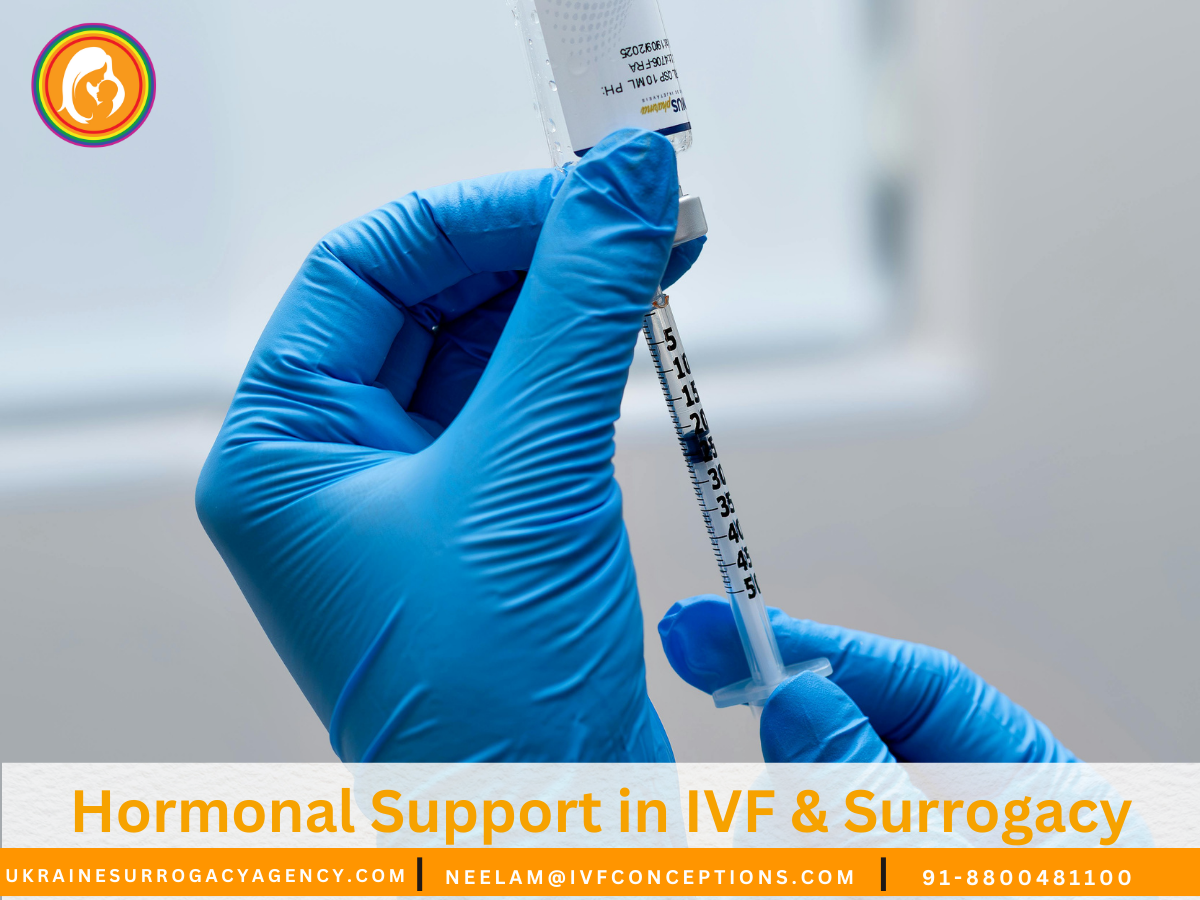
Understanding the role of hormonal support in IVF & surrogacy is crucial for improving treatment success and ensuring a healthy pregnancy journey. In IVF, hormones like estrogen, progesterone, and stimulation medications help regulate the cycle, support egg development, and prepare the uterine lining for embryo implantation. For surrogacy, the surrogate may receive carefully timed hormonal support—particularly progesterone and estrogen—to create an ideal environment for the transferred embryo to grow.
These medications stabilize early pregnancy, reduce the risk of implantation failure, and enhance overall success rates. When monitored closely by fertility specialists, hormonal support becomes a vital foundation for achieving a safe and successful pregnancy through both IVF and surrogacy.
Key Takeaways
- Hormonal Support in IVF & Surrogacy is essential for timing ovulation and preparing the uterus for implantation.
- Hormone therapy recreates physiological signals the surrogate may not produce naturally.
- Typical IVF hormonal support spans stimulation (about two weeks) and progesterone support for early pregnancy (8–12 weeks).
- Monitoring and individualized adjustments reduce risks like OHSS and manage side effects.
- Clear communication between you and your care team improves hormone balance during ivf and overall outcomes.
📞 Get in Touch for a Free Surrogacy Consultation
📱 +91-8800481100 (WhatsApp | LINE | Viber)
📧 neelam@ivfconceptions.com
🌐 www.ukrainesurrogacyagency.com

Understanding the role of hormones in fertility treatment
Fertility care is based on a complex system of chemical signals. Hormones control the growth of follicles, ovulation, and the lining of the uterus. Doctors check levels of AMH, FSH, estradiol, progesterone, hCG, prolactin, and TSH to understand this system. This helps them find any hormone imbalances and provide the right support.
Overview of the reproductive hormones that matter
AMH indicates the number of eggs a woman has remaining. High levels mean more eggs, while low levels mean fewer. FSH and LH levels on day 3 show how well the ovaries are working. High FSH levels often mean fewer eggs.
Estradiol shows how many follicles are growing. Progesterone prepares the uterus for implantation. hCG is used to trigger ovulation and is a sign of pregnancy. Prolactin and TSH help regulate other hormones, and abnormal levels can affect fertility.
Why is hormonal control central to assisted reproduction
Assisted reproduction changes the menstrual cycle to help with egg growth and timing. It aims to get more eggs while keeping the ovaries and uterus safe. After egg retrieval or transfer, hormones are used to support the lining of the uterus and early pregnancy.
Controlling hormones makes timing more predictable. It lets doctors adjust treatments based on age, AMH, and diagnosis. This personal approach lowers risks and increases the chances of success.
Differences between natural cycles, medicated IVF, and modified natural IVF
Natural cycle IVF uses little to no medication. It waits for a natural ovulation to retrieve eggs. This method is less invasive but often results in fewer eggs and lower success rates.
Medicated IVF uses injections to stimulate more follicles. It prevents early ovulation and uses a trigger to mature eggs. This method aims for more eggs and better success rates.
Modified natural IVF combines both methods. It uses a bit of stimulation to increase egg numbers while keeping medication low. It’s a good option for those who want fewer drugs but still want a chance at success.
Hormones commonly used in IVF hormonal support and their functions
IVF uses specific hormones to stimulate the ovaries. Each person gets a customized plan for hormone shots and pills. This approach aims to get the most eggs safely.
Gonadotropins: FSH and LH analogs and injections
Gonadotropins help eggs grow and mature. They include FSH and LH, which are made in labs. These hormones are given as shots under the skin.
The dose depends on age, hormone levels, and past results. Those with low hormone levels might need more. But, people with PCOS should get less to avoid complications.
hCG and trigger medications
The hCG trigger helps eggs finish maturing before they’re taken out. It’s used when the ovaries respond well to treatment.
For those at high risk of complications, a different trigger might be used. After the eggs are transferred, the body’s own hormones help. Sometimes, extra hCG is given to help early in pregnancy.
Suppression agents and contraception pretreatment
These agents stop a premature surge in hormones. They help match cycles between donors and recipients. Options include birth control pills, progestin-only pills, and hormone blockers.
Birth control before IVF helps plan the timing. It’s especially useful in surrogacy. But, it can affect hormone levels for months after stopping.
Doctors weigh the benefits and risks of these treatments. Pretreatment can help plan without harming chances of having a baby. It might mean more shots and a longer treatment time. The choice of treatment affects the outcome.
Hormonal Support in IVF & Surrogacy
Gestational surrogacy needs careful hormonal care to get the uterus ready for embryo implantation. Doctors plan surrogacy hormone therapy to make sure the surrogate’s uterus is ready at the right time. They balance estrogen and progesterone and watch the hormone levels closely.
Doctors tailor hormone support for each surrogate based on their health, BMI, age, and past pregnancies. They choose the right dose and how to give it (vaginal, intramuscular, or subcutaneous progesterone). This makes the hormone support more effective and reduces side effects.
It’s important to match the surrogate’s cycle with the embryo’s timing. Doctors use methods like suppression or scheduling to control ovulation. They start with estradiol to grow the lining, then add progesterone to make it ready for the embryo.
They keep an eye on the lining’s thickness, the follicles, and hormone levels. This helps avoid timing issues and supports hormone balance early in pregnancy.
Here are some key parts of the protocol:
- Cycle suppression or synchronization (OCPs, combined regimens, or GnRH agonists).
- Estrogen (oral, transdermal, injectable) to build the lining.
- Progesterone (vaginal gel, suppositories, intramuscular, or subcutaneous) to induce receptivity and continue into early pregnancy.
- Targeted monitoring with transvaginal ultrasound and selective blood tests.
- Continuation of luteal support, commonly for 8–12 weeks post-transfer until placental hormones take over.
Doctors talk about possible side effects and how hormones might affect breastfeeding. They also discuss what to expect after the baby is born. A team of doctors and the surrogacy agency work together to keep everyone safe and informed.
| Protocol Element | Purpose | Common Options |
|---|---|---|
| Cycle synchronization | Align surrogate endometrium with embryo developmental stage | Combined OCPs, GnRH agonists, progestin scheduling |
| Endometrial preparation | Build and thicken lining to receptive state | Estradiol oral/transdermal/injectable; dose escalation to target thickness |
| Progesterone support | Convert lining to receptive state and maintain early pregnancy | Vaginal gel/suppositories, intramuscular injections, subcutaneous formulations |
| Hormone monitoring | Ensure adequacy of surrogacy hormone balance and timing | Transvaginal ultrasound, serum estradiol and progesterone checks |
| Duration of support | Maintain hormonal environment until placental autonomy | Progesterone typically continued 8–12 weeks post-transfer |
| Counseling and coordination | Address risks, side effects, and ethical considerations | Multidisciplinary planning with REI specialists and maternal‑fetal medicine |
How hormone levels are tested and monitored during IVF and surrogacy
Testing hormone levels in infertility treatments is a detailed process. Clinics use blood tests and imaging to guide treatment. This helps tailor care for each patient and surrogate.
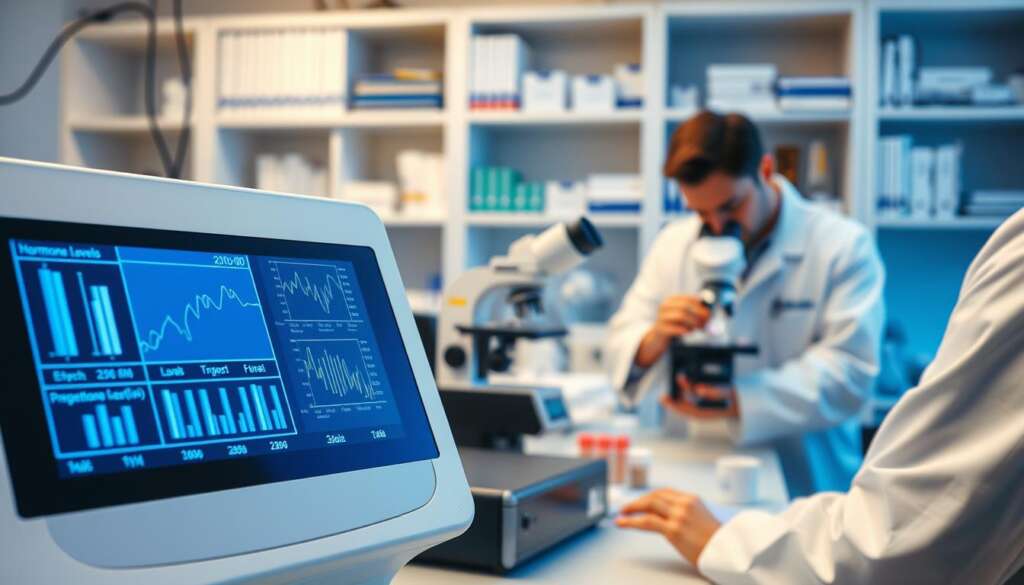
Baseline hormone testing starts before treatment. AMH testing checks ovarian reserve and can be done any time. Day-3 labs (FSH and estradiol) offer more insight into ovarian function.
Antral follicle count (AFC) is done by ultrasound. AFC, AMH, and baseline hormone tests help plan treatment and predict egg yield.
Hormonal birth control can lower AMH and AFC. Some clinics suggest stopping hormonal birth control for 2–3 months. This helps get a clearer picture of ovarian reserve.
During stimulation, clinics use ultrasounds and estradiol tests. These track follicle growth and endometrial thickness. They help avoid ovarian hyperstimulation and decide when to give trigger injections.
Progesterone levels are checked before and after starting luteal support. A rise in progesterone before retrieval may mean premature luteinization. This could lead to changes in treatment.
After embryo transfer, hCG testing confirms pregnancy. Serum hCG levels are tracked to check early pregnancy health and guide further care.
Thyroid and prolactin screening is part of preconception checks. TSH is measured because thyroid issues affect fertility and pregnancy. Many clinics aim for tighter TSH ranges than usual.
Prolactin is tested in the morning. High prolactin can stop ovulation and may need treatment before starting stimulation.
High responders and surrogates need special care. Those with PCOS or high AMH levels need more frequent checks for OHSS. Surrogates get extra endometrial assessments and hormone checks to match embryo and recipient timing.
Test results guide treatment decisions. Adjustments are made in gonadotropin doses, trigger strategy, and transfer timing. Clear monitoring helps reduce risks and improve outcomes.
Managing side effects, risks, and special populations
Hormonal support helps with IVF and surrogacy. It brings both expected and unexpected effects. Patients and surrogates Mothers need clear plans, symptom tracking, and quick access to their clinic for any concerns.
Common physical and emotional side effects of IVF hormones
Physical side effects include bloating, breast tenderness, headaches, and changes in appetite. You might also experience constipation or loose stools, and temporary weight changes. Most of these are mild and can be managed with diet, staying hydrated, and light exercise after getting approval from your doctor.
Emotional and cognitive changes can also occur. Mood swings, anxiety, irritability, fatigue, and trouble concentrating are common. These can be due to changing hormone levels and the stress of treatment. Talking openly with your clinic can help find ways to cope and, if needed, get mental health support.
A small number of people face ovarian hyperstimulation syndrome (OHSS). Signs include rapid swelling of the abdomen, severe pain, nausea, and shortness of breath. Clinics use early detection and established protocols to reduce OHSS risk and treat it quickly.
Considerations for PCOS, diminished ovarian reserve, or endometriosis
PCOS and IVF require special care. People with PCOS are at higher risk for OHSS because of many small follicles. Doctors might choose milder stimulation, use antagonist cycles, or a “freeze-all” approach to lower OHSS risk. Hormonal birth control before treatment may help regularize cycles but has mixed effects on live birth rates.
For diminished ovarian reserve, it’s important to have realistic expectations. Low AMH, AFC, and high day-3 FSH levels mean fewer eggs. Doctors might increase gonadotropin doses, explore growth hormone in some cases, and focus on individual counseling about chances and trade-offs.
Endometriosis treatment often includes short-term suppression before stimulation. Suppressing the disease for a few weeks can improve egg retrieval outcomes for some, especially those with endometriomas. Decisions are made based on lesion size, symptoms, and patient priorities, balancing surgery versus medical management.
Risk mitigation and safety screening
Preventive steps reduce complications. Clinics check for heart risk, migraine with aura, smoking status, and venous thromboembolism risk before starting estrogen therapies. For surrogates, teams address postpartum hormonal changes and mood monitoring as part of routine follow-up.
Symptom management often involves dietary changes, gentle exercise after clearance, sleep hygiene, and stress reduction. It’s crucial to communicate openly with fertility nurses or doctors for urgent care when symptoms suggest OHSS or other serious issues.
| Issue | Typical signs | Common clinic responses |
|---|---|---|
| Common side effects of IVF hormones | Bloating, breast tenderness, headaches, mood swings, fatigue | Diet and activity advice, symptomatic meds, counseling referral |
| OHSS risk | Rapid abdominal distension, severe pain, nausea, breathing difficulty | Risk stratification, antagonist cycles, agonist trigger, “freeze-all” |
| PCOS and IVF | High antral follicle count, variable ovulation, metabolic concerns | Mild stimulation, careful dosing, possible OCP pretreatment, close monitoring |
| diminished ovarian reserve considerations | Low AMH, low AFC, elevated FSH, fewer oocytes | Individualized dosing, candid counseling, selective adjunct therapies |
| endometriosis fertility treatment | Endometriomas, pelvic pain, reduced ovarian response | Short-term suppression, surgical review for large lesions, tailored protocols |
Hormonal contraception, pretreatment and timing for assisted reproduction
Hormonal contraception is often used before assisted reproduction. It helps plan IVF cycles and ensures timing in donor and surrogate programs. The type and length of pretreatment affect hormone levels, monitoring, and patient advice.

Using hormonal contraception to schedule or synchronize cycles
Combined oral contraceptives and short progestins help plan IVF cycles. This makes it easier for teams to schedule and match donor and surrogate timelines.
Using contraception for synchronization reduces the risk of unplanned pregnancies. It also ensures the surrogate’s uterus is ready for the embryo. Teams often set specific start and stop dates for monitoring and stimulation.
It’s also used to manage cysts, heavy bleeding, and symptoms of endometriosis or PCOS. These benefits are considered when deciding on pretreatment.
Impact of contraception on ovarian reserve markers and stimulation response
Long-term use can lower AMH and AFC levels. Studies show a small decrease in these markers. AFC may take up to six months to recover after stopping.
Before testing ovarian reserve, a 2–3 month break from contraception is advised. This helps avoid misleadingly low values. If immediate testing is needed, the suppressive effect is considered.
Pretreatment may increase the need for gonadotropins and extend stimulation. Meta-analyses show small increases in medication and stimulation days. However, this does not always mean fewer eggs or lower birth rates.
The type of progestin used is important. Some studies suggest older androgenic progestins may lower egg counts. But evidence is mixed, and no single progestin is recommended for all.
LNG-IUDs and IVF have specific interactions. They may lower peak estradiol and increase FSH needs. Many clinics keep LNG-IUDs in place during stimulation. Data show no consistent decrease in egg yield or pregnancy rates, but higher doses of gonadotropins may be needed.
Data on implants and other long-acting methods are limited. Higher progesterone levels suggest careful planning. Decisions depend on age, ovarian reserve, diagnosis, and the chosen ART protocol.
When counseling patients, teams discuss the possible effects on reserve markers and medication needs. They also explain that most studies show no harm to birth rates. This helps patients make informed decisions about pretreatment.
Practical how-to tips: optimizing hormone balance before and during treatment
Getting ready for assisted reproduction means taking clear steps to support hormone balance. Start with a baseline test to measure important hormones. This includes AMH, day‑3 FSH and estradiol, antral follicle count (AFC), TSH, and prolactin.
Clinics use AMH and AFC to plan your treatment. This baseline helps tailor your care and plan for IVF.
Fix any abnormal lab results before starting treatment. Treat hypothyroidism to meet clinic TSH targets. Manage hyperprolactinemia with dopamine agonists when needed.
These steps help improve your response to treatment.
Make treatment plans based on your unique situation. For example, those with PCOS might need a gentler approach to avoid complications. Patients with endometriosis might need special preparation to get the best results.
Choosing the right plan is key to hormone balance in fertility treatments.
Use lifestyle changes to support medical care. Eat an anti-inflammatory diet and exercise moderately. Avoid products that can disrupt hormones.
Manage stress with mindfulness or counseling. Lowering chronic stress helps balance hormones. These practices help both surrogates and those preparing for transfer.
Know your options for hormone supplements. Vaginal progesterone gels or suppositories are common. Intramuscular progesterone is also an option. Discuss the best choice with your clinic.
Follow the schedule for hormone supplements. Start estrogen and progesterone as instructed. Keep track of trigger dates and blood-test windows. Accurate timing is crucial for success.
Stay in touch with your fertility team. Report any severe symptoms right away. For surrogates, coordinate with the agency and intended parents. Clear communication is essential for care.
Ask for changes if needed. If endometrial thickness is low or if you have side effects, ask for a review. Timely adjustments help keep your cycle viable.
| Focus Area | Practical Steps | Why It Matters |
|---|---|---|
| Baseline testing | AMH, day‑3 FSH/estradiol, AFC, TSH, prolactin | Informs individualized dosing and identifies correctable issues |
| Lab correction | Treat hypothyroidism, manage hyperprolactinemia | Improves response and supports embryo implantation |
| Protocol choice | Antagonist vs. mild stimulation; pretreatment for endometriosis | Reduces OHSS risk and optimizes the uterine environment |
| Lifestyle | Anti-inflammatory diet, moderate exercise, avoid toxins | Supports steady hormone balance in fertility treatments |
| Stress and support | Mindfulness, counseling, clear clinic communication | Limits cortisol effects on reproductive hormones |
| Medication logistics | Choose progesterone route, track start dates and triggers | Ensures effective luteal support and timing precision |
| Surrogacy coordination | Share monitoring results, align schedules with intended parents | Enables natural hormone support for surrogacy with ethical transparency |
Additional resources to read:
How BMI Influences Fertility and IVF Outcomes
Best IVF Doctors for Surrogacy in Mumbai
How Much Does IVF with an Egg Donor Cost
Conclusion
Hormonal support is key in IVF and surrogacy for timing, safety, and success. It involves adjusting FSH and LH, tracking estradiol, and using hCG triggers. This helps in follicle growth, precise egg collection, and preparing the uterus for implantation.
Every person is different, so treatments must be tailored. This includes looking at ovarian reserve markers and past responses. Surrogacy also needs careful planning and clear communication among all parties.
Risks exist, but they can be managed with careful monitoring. Side effects and rare issues like OHSS can be lessened with adjustments and close follow-up. It’s important to discuss baseline tests, medication schedules, and how previous treatments might affect fertility.
For those involved in IVF or surrogacy, the main point is to seek clear information and expect regular checks. When hormone therapy is personalized and monitored, it leads to better outcomes. This makes ethical and successful surrogacy and IVF more possible.
💫 Why Intended Parents Choose Complete Surrogacy for a Safe, Smooth & Successful Surrogacy Journey:
🌍 Access to multiple surrogacy destinations with 15+ years of international experience
🏥 Partnerships with top-tier fertility clinics and agencies, backed by references from past clients
👩🦱 Diverse egg donor options: Asian, Caucasian, African, Oriental, and more
💸 Transparent and affordable pricing—direct payments with no extra agency fees
🔒 No hidden costs—all charges are agreed upon upfront
🤝 Dedicated case manager for personalized support
📲 Fast, honest, and clear communication throughout
📑 Full legal support for visas, documentation, and baby exit processes
🚚 Assistance with frozen sperm/embryo shipment logistics

FAQ: Hormonal Support in IVF & Surrogacy
What is the purpose of hormonal support in IVF and gestational surrogacy?
Hormonal support helps control ovulation timing and quality. It prepares the uterus for implantation and supports early pregnancy. In IVF and surrogacy, it ensures the best chance of success by managing hormone levels carefully.
Which reproductive hormones are routinely assessed and why?
Important hormones include AMH, FSH, LH, estradiol, progesterone, hCG, TSH, and prolactin. These tests help plan the treatment, ensuring the best outcome for the patient.
Why is hormonal control central to assisted reproduction?
Hormonal control is key in assisted reproduction. It helps synchronize the menstrual cycle and prepare the uterus for implantation. This improves the chances of success in IVF and surrogacy.
How do natural cycle, medicated (conventional) IVF, and modified natural IVF differ?
Natural cycle IVF uses little stimulation, while medicated IVF uses injections to stimulate more follicles. Modified natural IVF is a mix, offering a balance between the two.
What are gonadotropins and how are they used in stimulation?
Gonadotropins are hormones that stimulate follicle growth. They are used in IVF to increase the number of eggs. The dosage is adjusted based on the patient’s age and ovarian reserve.
What is an hCG trigger and when is it used?
An hCG trigger mimics the natural surge that triggers ovulation. It is used in IVF to ensure the eggs are mature at the time of retrieval. In some cases, a GnRH-agonist trigger is used instead to reduce the risk of complications.
Why are suppression agents or contraceptive pretreatments used before IVF or surrogacy cycles?
Suppression agents prevent premature ovulation and help synchronize cycles. They are used to manage the timing of the treatment and ensure the best outcome.
Why do gestational surrogates need a tailored hormone regimen?
Surrogates do not produce the hormones needed for pregnancy. A tailored hormone regimen is necessary to support the growth of the embryo and prepare the uterus for implantation.
What does a typical surrogacy hormone protocol include?
A typical protocol includes suppression of the menstrual cycle, preparation of the endometrium with estrogen, and progesterone to support implantation. Monitoring is done to adjust the treatment as needed.
What baseline and ovarian reserve tests should be done before stimulation?
Baseline tests include AMH, FSH, estradiol, AFC, TSH, and prolactin. These tests help determine the best approach for the treatment and assess the ovarian reserve.
How are thyroid and prolactin evaluated and managed before IVF?
Thyroid and prolactin levels are checked before IVF. Abnormal levels may require treatment to ensure optimal conditions for the treatment.
How are hormone levels and endometrial readiness monitored during stimulation and surrogate preparation?
Hormone levels and endometrial readiness are monitored through ultrasounds and blood tests. This ensures the treatment is progressing as planned.

Highly esteemed, authoritative, and trusted professional with a 14-year of experience in international surrogacy. Advocate for Secure, Legal, and Affordable International Surrogacy.
Neelam Chhagani, MA (Counselling Psychology) and Holistic Infertility and Third-Party Reproduction Consultant.
Member of European Fertility Society, Best Surrogacy Blogger of 2020, with 300 dedicated blogs, and top contributor on Quora for Surrogacy.
Add Your Comment