


Surrogacy agency vs fertility clinic — understanding the difference between these two is essential for anyone beginning their surrogacy journey. While a surrogacy agency manages the coordination, legal, and emotional aspects of the process—such as matching intended parents with surrogates and handling contracts—a fertility clinic focuses on the medical side, including IVF procedures, embryo creation, and pregnancy monitoring. Both play vital but distinct roles in achieving a successful surrogacy.
This guide explains how they work together, what services each provides, and how to choose the right partners for a smooth and transparent surrogacy experience.
Key Takeaways
- Surrogacy agency vs fertility clinic: agencies coordinate matching and legal steps; clinics provide medical and IVF care.
- Using both a clinic and an agency often improves continuity and reduces legal or logistical barriers.
- Assisted reproduction involves multiple specialists—expect medical, legal, and counseling teams.
- Costs vary widely; clear budgeting and understanding of fee splits matter early.
- This article will compare responsibilities, services, timelines, and how to select providers.
📞 Get in Touch for a Free Surrogacy Consultation
📱 +91-8800481100 (WhatsApp | LINE | Viber)
📧 neelam@ivfconceptions.com
🌐 www.ukrainesurrogacyagency.com

Understanding the Basics: What Is a Fertility Clinic and What Is a Surrogacy Agency?
Understanding the difference between a fertility clinic and a surrogacy agency is key to making the right choice. A fertility clinic is dedicated to medical evaluation and treatment for those trying to start a family. They offer a range of services, from basic fertility tests to advanced lab work for assisted reproduction.
Definition and primary focus of a fertility clinic
A fertility clinic, often referred to as an IVF clinic when it offers in vitro procedures, provides clinical care. The team includes reproductive endocrinologists, embryologists, nurses, and genetic counselors. They handle treatments like ovarian stimulation, egg retrieval, IVF cycles, embryo creation, and storage.
These clinics also offer preimplantation genetic testing (PGT) and carrier screening. They perform lab-based procedures, categorized as assisted reproductive technology. Counseling is mainly focused on medical risks, cycle expectations, and lab outcomes.
Definition and primary focus of a surrogacy agency
A surrogacy agency deals with the non-medical aspects of the journey. They match intended parents with gestational carriers, manage profiles, and handle logistics from screening to birth planning.
Psychosocial evaluation and supportive counseling are core tasks. Agencies provide legal referrals to reproductive attorneys and coordinate contracts, insurance checks, and travel arrangements. They ensure ongoing communication between all parties involved.
How assisted reproductive technology connects clinics and agencies
Assisted reproductive technology acts as the bridge between medical teams and agency work. The IVF clinic creates and tests embryos. Then, the surrogacy agency decides which gestational carrier will receive the embryo transfer.
Agencies ensure that medical records, consent forms, and scheduling reach the clinic. Clinics may perform additional carrier screening or clearance even after agency approval. These checks enhance safety and compliance across state lines.
When assisted reproduction is well-coordinated, intended parents, carriers, clinics, and agencies navigate fertility treatment options with fewer delays and clearer expectations.
Surrogacy Agency vs Fertility Clinic – What’s the Difference?
The journey of surrogacy is divided into clinical care and case management. Knowing the difference between a surrogacy agency and a fertility clinic is key. It helps you understand who handles the medical aspects and who manages the non-medical tasks, paperwork, and plans.
Side-by-side comparison of core responsibilities
Fertility clinics focus on the medical aspects. Their tasks include fertility testing, egg retrieval, in vitro fertilization (IVF), preimplantation genetic testing (PGT), embryo storage, embryo transfer, and early pregnancy monitoring.
On the other hand, surrogacy agencies manage the non-medical but critical aspects. They are responsible for matching surrogates, conducting psychosocial screenings, counseling, legal coordination, managing surrogate compensation, and maintaining relationships.
Where services overlap and why collaboration matters
Both clinics and agencies perform screenings and counseling, but in different ways. Clinics handle medical screenings and order necessary tests. Agencies, on the other hand, conduct in-depth psychosocial assessments and ensure continuity of care for all parties involved.
Collaboration is essential because state laws and hospital policies vary widely. A clinic’s expertise in laboratory procedures, such as IVF success and embryo biopsy, complements an agency’s legal and logistical knowledge. This combination reduces delays and legal risks. Many clinics require proof of legal arrangements or agency involvement before proceeding.
Examples of tasks typically handled exclusively by each
Exclusive clinic tasks include laboratory procedures like embryo biopsy for PGT, specimen storage, thawing, and transfer. They also handle direct medical monitoring through bloodwork and ultrasounds.
Exclusive agency tasks include creating surrogate profiles, matching intended parents with carriers, administering compensation, coordinating attorneys for contracts, and planning birth logistics with hospitals and birth teams.
| Area | Fertility Clinic (Medical) | Surrogacy Agency (Case Management) |
|---|---|---|
| Primary focus | Diagnostic testing, IVF cycles, embryo handling, and medical monitoring | Matching, counseling, legal coordination, compensation, and logistics |
| Screening | Medical and genetic screening, infectious disease testing | Psychosocial screening, background checks, and ongoing support |
| Procedures | Egg retrieval, embryo biopsy for PGT, embryo transfer, specimen storage | Surrogate profile management, birth plan creation, travel coordination |
| Legal and contracts | May require proof of legal arrangements before treatment | Drafting and coordinating contracts with reproductive attorneys |
| Continuity of care | Short-term pregnancy monitoring (until transfer to OB around 8–10 weeks) | Ongoing relationship management from match to birth and post-birth support |
| Why both matter | Medical success depends on lab quality, protocols, and specialist care | Process success relies on counseling, legal safety, and consistent communication |
Medical Services and Assisted Reproductive Technology Offered by Fertility Clinics
Fertility clinics offer a wide array of medical services to support intended parents through complex fertility treatments. Teams of fertility specialists oversee testing, lab work, and procedures. They guide you through each step of assisted reproductive technology. The focus is on safety, evidence-based protocols, and clear communication with agencies and obstetric providers.
Fertility testing, IVF cycles, egg retrieval, and embryo creation
Diagnostic fertility testing is the first step for intended parents and partners. This includes hormone panels, semen analysis, and ovarian reserve measures. If IVF is recommended, the clinic manages ovarian stimulation, monitoring, and egg retrieval.
Retrieved eggs are then fertilized conventionally or through ICSI in the lab to create embryos. The embryos undergo culture, grading, and cryopreservation. They are stored until a planned embryo transfer into the gestational carrier.
Preimplantation genetic testing (PGT) and genetic counseling
Genetic counseling is offered before any PGT to explain risks, benefits, and limitations. Many centers provide PGT-A to screen embryos for chromosomal abnormalities. This can inform embryo selection and lower miscarriage risk.
Fertility specialists review SART success rates and lab practices. This ensures reliable PGT workflows and transparent outcome reporting.
Gestational carrier medical screening and embryo transfer procedures
Medical screening of gestational Surrogate carriers includes detailed obstetric history, physical exam, and review of prior births and surgical deliveries. Clinics assess risk factors and coordinate necessary clearances. Embryo transfer is performed with ultrasound guidance by experienced clinicians.
Staff optimize uterine preparation, timing, and transfer technique to support implantation success.
Short-term pregnancy monitoring and coordination with local OB care
After embryo transfer, clinics order early beta hCG testing and first-trimester ultrasounds. Monitoring typically continues until about 8–10 weeks, when routine prenatal care transfers to a local obstetrician. Clinics may offer short-term pregnancy follow-up, mental-health resources, and support groups during the transition to community OB care.
| Service | Typical Steps | Who Leads |
|---|---|---|
| Fertility testing | Hormone panels, semen analysis, ovarian reserve testing | Fertility specialists |
| IVF cycle | Stimulation, egg retrieval, fertilization (IVF/ICSI), embryo culture | IVF clinic team |
| PGT and counseling | Pretest counseling, biopsy, lab analysis, and result review | Genetic counselor and embryology lab |
| Gestational carrier screening | Medical history, physical, obstetric review, risk assessment | Clinic medical staff |
| Embryo transfer | Endometrial prep, ultrasound-guided transfer, post-transfer instructions | Reproductive endocrinologist |
| Early pregnancy monitoring | Serial hCG, early ultrasound, transfer to local OB at 8–10 weeks | Clinic nurses and fertility specialists |
Surrogacy Agency Services: Matching, Screening, Counseling, and Legal Coordination
Surrogacy agencies play a vital role in guiding intended parents and gestational surrogates through the surrogacy journey. They manage the practical aspects, bridging medical care from fertility clinics with legal and emotional support. This ensures a smooth process for all involved.

Matching services start with creating detailed profiles and conducting interviews. Agencies then perform reference checks to find the best matches. They arrange video calls and help set expectations. The criteria for matching are clearly outlined, ensuring a good fit for families and carriers.
Comprehensive screening is a critical step. It includes medical, psychological, and social assessments. Licensed clinicians review health records, while mental-health professionals evaluate coping skills and motivations. This process minimizes risks and ensures a safe surrogacy experience for everyone.
Counseling is provided to both intended parents and the gestational surrogate. Agencies may have in-house counselors or work with independent therapists. The focus is on communication, setting boundaries, and preparing for the prenatal and post-birth periods.
Legal coordination is another essential function of surrogacy agencies. They connect clients with reproductive attorneys across states for legal representation. Contracts cover compensation, medical decisions, confidentiality, and post-birth contact. Agencies guide clients through legal steps, such as pre-birth orders and voluntary acknowledgments of parentage.
Agencies also manage the relationship during pregnancy. They help plan the birth, arrange travel and lodging for out-of-state transfers, and ensure all legal and clinic milestones are met. Regular updates and a detailed surrogacy plan help maintain trust and reduce surprises.
Agencies provide practical resources and clear guidelines to help families budget time and meet deadlines. They understand the responsibilities of each party. A professional agency aims to make the surrogacy process predictable, compassionate, and legally sound.
Costs, Contracts, and Financial Considerations for Intended Parents
Grasping the surrogacy cost is vital for planning. In the U.S., budgets can range from $48,000 to $140,000 or more. Factors influencing this include donor use, location, medical issues, travel, and the level of support desired.
Typical cost ranges and factors that affect price
Costs are divided into fixed and variable items. Fixed costs include agency and clinic fees. Variable costs encompass medication, extra IVF cycles, and neonatal care if necessary. Location can significantly alter these costs.
How agency fees and clinic fees differ, and what each covers
Fertility clinic fees cover essential services like testing, IVF cycles, and embryo transfer. They also include short-term prenatal care post-transfer. Clinic fees are often the fixed costs in your budget.
Agency fees, on the other hand, manage the matching process, candidate screening, and support. They do not include surrogate compensation, which is negotiated separately. This compensation includes base pay, benefits, and maternity leave.
Budgeting for surrogate compensation, medical expenses, legal fees, and travel
Effective budgeting involves breaking down costs into categories. These include surrogate compensation, clinic fees, agency fees, legal expenses, and travel. A contingency fund for unexpected expenses is also essential.
Legal fees for reproductive attorneys and escrow management are predictable. Travel and lodging costs can increase with out-of-state transfers. Insurance gaps for maternal or neonatal care may require additional coverage.
Why using both an agency and a clinic can prevent costly mistakes
Collaborating with a reputable agency and a top fertility clinic is key. Agencies handle matching and psychosocial support, while clinics manage laboratory and procedural aspects. This synergy reduces the risk of legal or medical errors.
Such coordination avoids delays that can escalate costs. Clear Surrogacy contracts, escrow arrangements, and joint planning with reproductive attorneys safeguard parental rights. This approach minimizes the risk of costly legal battles.
Choosing Providers: How to Select the Right Fertility Clinic and Surrogacy Agency

Choosing the right care teams is critical in the surrogacy journey. It’s important to prioritize medical expertise, legal security, and emotional support. Many intended parents start by comparing fertility clinics and surrogacy agencies. They look for the best approach and timeline for their needs.
Clinic quality and measurable outcomes
When evaluating clinics, examine their success rates and SART data. Ask about donor-egg IVF success and transfers to gestational carriers. Look at the embryology lab, PGT protocols, and embryo storage policies. It’s also important to know who will manage carrier monitoring and how long follow-up lasts after pregnancy confirmation.
Agency practices that protect and support
For selecting a surrogate agency, focus on legal support, medical and psychosocial screening, and matching timelines. Look for transparent fee structures and counseling resources. These are signs of a mature program.
Questions to ask in consultations
- Clinic: What are your SART-reported success rates for donor-egg cycles and transfers to carriers?
- Clinic: Do you handle PGT, embryo storage, and carrier medical clearance in-house?
- Agency: Do you provide or coordinate legal counsel and contracts for all parties?
- Agency: What is your screening protocol for medical, psychological, and social factors?
- Both: How do you manage travel, out-of-state transfers, and unexpected medical needs?
Legal context and regional experience
Before committing, review state statutes and recent case law. Choose teams with experience in surrogacy-friendly states. Ask if the clinic requires agency confirmations before treatment and if the agency works with local courts and attorneys.
Practical contrast for decisions
| Decision area | Clinic focus | Agency focus |
|---|---|---|
| Success metrics | Lab outcomes, SART data, physician experience | Not applicable directly; relies on clinic data and carrier outcomes |
| Screening | Medical clearance for carriers, fertility testing | Psychosocial evaluation, background checks, and matching |
| Legal coordination | Provides medical records for legal filings | Prepares contracts, works with attorneys for parentage orders |
| Communication | Clinical updates and pregnancy monitoring | Ongoing relationship management and birth planning |
Balance clinical data with personal fit. Pair a clinic known for embryology excellence with an agency experienced in surrogate agency selection and cross-state logistics. This combination reduces surprises and supports better outcomes throughout the journey.
Practical Timeline and the Surrogacy Process vs IVF Workflow
Timing is key to planning and setting realistic expectations. A typical gestational surrogacy journey spans about 15 months to two years. This period includes initial consultations, fertility tests, donor searches, IVF cycles, and matching with a surrogate. It also covers legal contracts, embryo transfer, early pregnancy monitoring, and birth planning.
Typical timeline from consultation to birth in a surrogacy journey
The journey starts with fertility clinic consultations and an agency interview. The clinic initiates the IVF process: ovarian stimulation, egg retrieval, fertilization, and embryo culture. Simultaneously, the agency conducts background checks, psychosocial screenings, and matches.
The donor needs to extend the timeline. Preimplantation genetic testing (PGT) adds lab days and analysis. Failed transfers require additional cycles, extending the journey further.
How IVF steps integrate with the surrogate match and agency milestones
IVF creates embryos while the agency secures a match. The clinic handles embryo creation and PGT. The agency negotiates contracts, secures insurance, and arranges travel if necessary. Synchronizing embryo transfer dates with the surrogate’s uterine preparation is critical.
Effective coordination ensures smooth medication protocols, bloodwork, and ultrasound schedules. Clear communication between the clinic and the agency minimizes risks and avoids unnecessary delays.
Transition points: embryo transfer, early pregnancy monitoring, and transfer of care
The embryo transfer marks a significant transition. The clinic performs the transfer and confirms implantation with beta hCG tests. Early ultrasounds are ordered, and remote monitoring is common until 8–10 weeks.
After 8–10 weeks, obstetric care shifts to a local OB-GYN. The agency manages birth planning, final legal paperwork, and supports both parties through prenatal appointments and hospital coordination.
Common delays and how clinic–agency coordination reduces risk
Delays in surrogacy include failed IVF cycles, lengthy donor searches, legal issues, and scheduling conflicts. Each delay can extend the journey by months.
Experienced providers and clear protocols reduce uncertainty. Regular updates, shared calendars, and defined responsibilities between the clinic and agency streamline the process, keeping it aligned with IVF workflows.
Additional Resources to Read:
Best Surrogacy Agency in India
The Cost of Surrogacy Without an Agency
Independent Surrogate Cost vs Agency Surrogate Cost
Conclusion
Fertility clinics and surrogacy agencies have distinct roles in assisted reproduction. Clinics handle the medical aspects, including IVF and early pregnancy care. Agencies focus on matching, legal support, and psychosocial screening for gestational surrogacy.
The choice between a surrogacy agency and a fertility clinic hinges on their roles. Clinics concentrate on the medical and reproductive techniques. Agencies manage the logistics, contracts, and relationships. This combination offers stronger legal protection and smoother coordination.
Intended parents should look at the clinic SART data and lab quality. They should also choose an agency with strict screening and legal expertise. Budgeting realistically for infertility solutions is essential. With experienced providers, the journey is safer, more ethical, and less stressful for all involved.
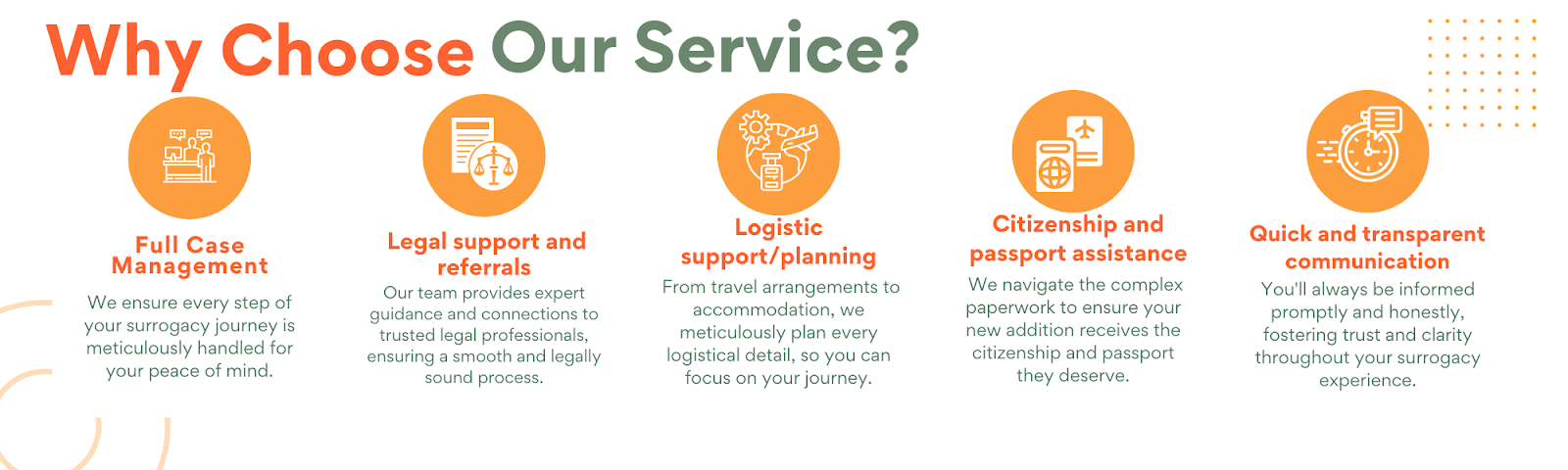
💫 Why Intended Parents Choose Complete Surrogacy for a Safe, Smooth & Successful Surrogacy Journey:
🌍 Access to multiple surrogacy destinations with 15+ years of international experience
🏥 Partnerships with top-tier fertility clinics and agencies, backed by references from past clients
👩🦱 Diverse egg donor options: Asian, Caucasian, African, Oriental, and more
💸 Transparent and affordable pricing—direct payments with no extra agency fees
🔒 No hidden costs—all charges are agreed upon upfront
🤝 Dedicated case manager for personalized support
📲 Fast, honest, and clear communication throughout
📑 Full legal support for visas, documentation, and baby exit processes
🚚 Assistance with frozen sperm/embryo shipment logistics
FAQ for Surrogacy Agency vs Fertility Clinic
What is the main difference between a surrogacy agency and a fertility clinic?
A fertility clinic focuses on the medical aspects, such as fertility testing and IVF. On the other hand, a surrogacy agency handles the non-medical aspects, like matching and legal coordination. Using both ensures a smooth process, reducing legal and logistical gaps.
Do clinics and agencies ever do the same tasks?
Yes, there is overlap in screening and counseling. Clinics do medical screening, while agencies focus on psychosocial aspects. Both may require legal counsel before proceeding, ensuring safety and legal readiness.
What are tasks exclusive to the fertility clinic?
Clinics handle all lab and clinical procedures. This includes fertility testing, egg retrieval, and embryo culture. They also perform PGT and store embryos, monitoring early pregnancy through bloodwork and ultrasounds.
What are tasks exclusive to the surrogacy agency?
Agencies focus on recruiting and matching surrogates. They coordinate travel, manage compensation, and arrange legal and counseling services. They also handle birth logistics and post-birth expectations.
How does assisted reproductive technology (ART) connect clinics and agencies?
ART bridges the gap between clinics and agencies. Clinics create embryos through IVF, while agencies coordinate transfers. They ensure legal protections and arrange travel, ensuring medical and legal protocols align.
How much does surrogacy typically cost in the United States?
Surrogacy costs range from $48,000 to $140,000+ in the U.S. Factors include donor use, agency fees, and legal costs. Using both a clinic and an agency can reduce risks and costs.
What do clinic fees usually cover versus agency fees?
Clinic fees cover medical services like IVF and embryo transfer. Agency fees include matching, counseling, and coordination. Surrogate compensation is separate and outlined in the contract.
How long does the surrogacy process usually take?
The process takes 15 months to 24+ months. Time varies with donor searches and legal processes. Good communication and experienced providers can reduce delays.
How should intended parents choose a fertility clinic?
Evaluate clinic success rates and lab quality. Consider experience with gestational carriers and legal coordination. Ask about PGT, embryo storage, and monitoring practices.
How should intended parents choose a surrogacy agency?
Look for rigorous screening and clear matching processes. Ensure legal partnerships and counseling resources. Transparent fees and case management are key.
What legal considerations should be addressed before embryo transfer?
Secure reproductive attorneys and draft a surrogacy contract. Arrange pre-birth orders or parentage procedures as required. Many clinics require legal counsel before transfers.
What common delays occur and how can they be minimized?
Delays include failed IVF cycles and legal negotiations. Choose experienced providers and maintain clear communication. Budget for contingencies to reduce delays.
Will the clinic continue care through the entire pregnancy?
Clinics monitor the gestational carrier through 8–10 weeks. After, prenatal care transfers to a local obstetrician. Agencies assist in coordinating care and birth planning.
Is it necessary to use both a clinic and an agency?
Using both a clinic and agency is recommended. Clinics provide medical expertise, while agencies handle legal and emotional aspects. Together, they reduce risks.
What questions should I ask during consultations with clinics and agencies?
For clinics, ask about success rates, PGT, and embryo storage. For agencies, inquire about legal partnerships, screening protocols, and travel management. Ask about cross-state legal experience.
What additional costs should I budget for beyond clinic and agency fees?
Budget for surrogate compensation, legal fees, and insurance gaps. Include travel and lodging costs, as well as contingency funds for complications.
How do agencies and clinics support ethical surrogacy practices?
Ethical practices are supported through rigorous screening and transparent contracts. Fair compensation and counseling are essential. Choosing ethical providers ensures a respectful journey.

Highly esteemed, authoritative, and trusted professional with a 14-year of experience in international surrogacy. Advocate for Secure, Legal, and Affordable International Surrogacy.
Neelam Chhagani, MA (Counselling Psychology) and Holistic Infertility and Third-Party Reproduction Consultant.
Member of European Fertility Society, Best Surrogacy Blogger of 2020, with 300 dedicated blogs, and top contributor on Quora for Surrogacy.
Add Your Comment