


Over 18,000 babies are born annually in the U.S. through assisted reproductive methods — a 400% increase since 2000. This surge reflects evolving paths to parenthood, particularly through arrangements involving gestational carriers and third-party reproduction. Understanding these options is critical for anyone navigating fertility challenges.
Traditional arrangements involve a woman carrying a child genetically related to her (via her egg and the intended parents’ or a donor’s sperm). In contrast, modern approaches often use in vitro fertilization (IVF) to transfer embryos created with donor eggs or the intended mother’s genetic material. This distinction impacts legal rights, medical protocols, and emotional dynamics.
Reputable agencies emphasize thorough screenings for all parties. Legal contracts clarify parental rights early in the process, especially when donors contribute genetic material. Timeframes vary: IVF cycles take 4-6 weeks, while matching with a qualified carrier may require months.
Every journey involves unique choices. Some families prioritize genetic connections, while others focus on ensuring a healthy pregnancy. Clear communication and professional guidance help navigate these deeply personal decisions.
Key Takeaways
- Traditional methods involve genetic ties between carrier and child; modern IVF often separates this link.
- Legal agreements are crucial, especially when using donor eggs or sperm.
- IVF allows embryos to be created with the intended parents’ or donors’ genetic material.
- Reputable agencies manage medical screenings and legal frameworks.
- Emotional support is vital for all participants throughout the process.
 Get in Touch for a Free Surrogacy Consultation

 +91-8800481100 (WhatsApp | LINE | Viber)
 neelam@ivfconceptions.com
 www.ukrainesurrogacyagency.com
Why Intended Parents Choose Complete Surrogacy for a Safe, Smooth & Successful Surrogacy Journey:
 Access to multiple surrogacy destinations with 15+ years of international experience
 Partnerships with top-tier fertility clinics and agencies, backed by references from past clients
 Diverse egg donor options: Asian, Caucasian, African, Oriental, and more
 Transparent and affordable pricing—direct payments with no extra agency fees
 No hidden costs—all charges are agreed upon upfront
 Dedicated case manager for personalized support
 Fast, honest, and clear communication throughout
 Full legal support for visas, documentation, and baby exit processes
 Assistance with frozen sperm/embryo shipment logistics
Understanding Surrogacy and Egg Donor Surrogacy
Modern family-building options have expanded dramatically, offering hope to those facing fertility challenges. Two distinct approaches involve gestational carriers and third-party reproduction, each requiring careful consideration of medical, emotional, and legal factors.
How Gestational Carriers Work
A gestational carrier carries an embryo created through IVF using genetic material from intended parents or donors. Unlike traditional arrangements, she has no biological connection to the child. This separation simplifies legal parentage in most states when proper contracts are established.
The Role of Donated Genetic Material
When intended parents cannot provide viable eggs, donor eggs become part of the equation. Fertility clinics follow strict ASRM guidelines for donor evaluations, including:
- Medical history reviews
- Genetic testing
- Psychological assessments
Reputable agencies coordinate between medical teams, legal experts, and participants. They help match families with pre-screened professionals while managing timelines that often span 12-18 months. As one coordinator notes: “Our priority is creating safe, ethical pathways for everyone involved.”
Surrogacy vs egg donor surrogacy: Key Comparisons
Building a family through assisted reproduction involves critical choices shaped by medical, legal, and personal priorities. These pathways differ in biological connections, timelines, and collaborative requirements.
Process and Medical Procedures Involved
Traditional arrangements begin with fertility screenings for the carrier and intended parents. IVF then combines genetic material (either from the intended mother or a donor) with sperm to create embryos. Key steps include:
- Egg retrieval: 10-14 days of hormone injections followed by a minor surgical procedure
- Fertilization: Lab-based combination of eggs and sperm over 3-5 days
- Embryo transfer: Placement into the carrier’s uterus during optimal cycle timing
In egg donor cases, clinics perform additional genetic testing on donated material. One study shows donor egg IVF achieves 52% success per transfer versus 41% with intended parent eggs.
Benefits and Limitations of Each Option
Using a gestational carrier with donor eggs often yields higher pregnancy rates due to controlled embryo quality. However, matching with pre-screened professionals through agencies adds 4-8 months to timelines. Legal contracts must clarify parental rights before medical procedures begin.
“Genetic diversity through donors can reduce inherited health risks, but emotional preparation is essential,” notes Dr. Ellen Park, reproductive endocrinologist.
While traditional methods preserve biological ties, modern approaches offer solutions for complex fertility challenges. Both paths require coordination between medical teams, legal advisors, and support networks to navigate this life-changing journey.
Medical, Legal, and Emotional Considerations

Navigating third-party reproduction requires careful planning across medical, legal, and psychological domains. Each step demands collaboration between specialists to protect everyone’s rights and well-being. Let’s explore the critical components shaping these journeys.
Health Evaluations and Embryo Development
Rigorous screening ensures donor and carrier suitability. The ASRM mandates infectious disease tests, genetic panels, and psychological reviews. For IVF, retrieved eggs undergo fertilization with sperm in controlled lab settings. Embryos are monitored for 5-6 days before transfer.
Clinics follow FDA regulations for tissue handling. One study found 94% of agencies require carriers to have prior healthy pregnancies. This reduces risks during the process.
Contracts and State Laws
Legal agreements define parental rights from the start. Florida, for example, requires court approval before embryo placement. Attorneys draft contracts covering:
- Financial responsibilities
- Medical decision-making
- Post-birth arrangements
“Clear contracts prevent 80% of disputes,” notes family law attorney Maria Chen. “State laws vary—expert guidance is non-negotiable.”
Psychological Support Systems
Counseling helps manage expectations for carriers and parents. Many agencies mandate sessions addressing:
- Boundary-setting
- Communication strategies
- Postpartum adjustments
Support groups connect participants with others sharing similar experiences. Emotional readiness often determines long-term satisfaction.
| Aspect | Key Components | Guidelines |
|---|---|---|
| Medical | Donor screenings, IVF protocols | ASRM, FDA standards |
| Legal | State-specific contracts | Pre-birth orders |
| Emotional | Counseling, support networks | Mental health evaluations |
Balancing these elements creates safer, more ethical pathways to parenthood. Regular check-ins with your team ensure alignment at every phase.
Process and Timeline: From Egg Donation to Surrogacy
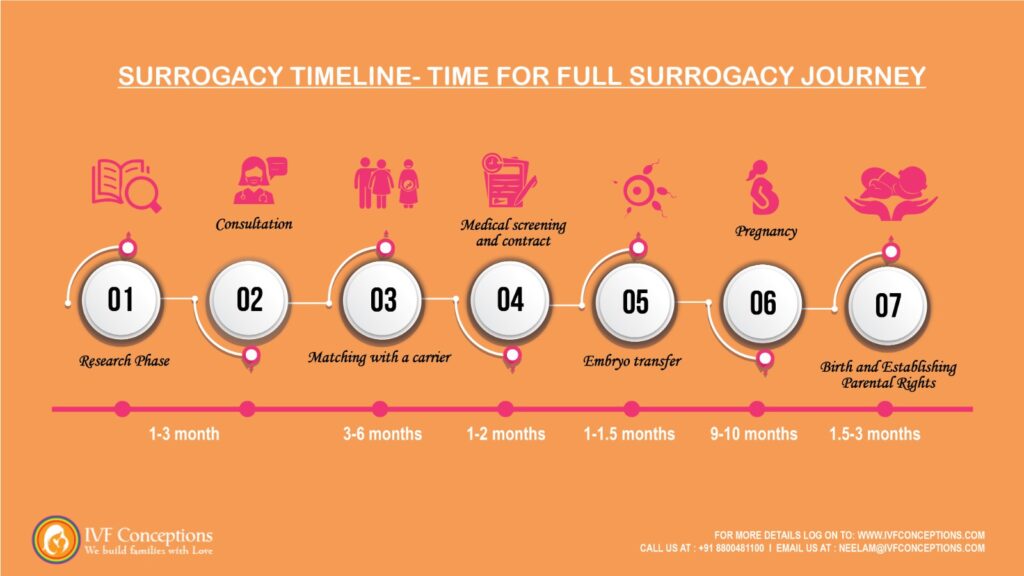
Creating life through third-party reproduction involves precise coordination between medical teams and agencies. This journey typically spans 12-24 months, with timing influenced by donor availability, clinic schedules, and legal preparations.
Steps Involved in Egg Donation and Embryo Creation
The process begins with selecting a screened donor through agency databases or fertility clinics. Medical teams then synchronize cycles:
- Donors undergo 10-14 days of hormone injections before egg retrieval
- Retrieved eggs are fertilized with sperm in lab settings
- Resulting embryos undergo genetic testing over 5-7 days
Successful embryos are frozen for future use. Clinics report 65% survival rates after thawing, making this step crucial for timing flexibility.
Timeline for Matching with Donors and Surrogates
Matching a gestational carrier often takes 6-12 months—twice as long as donor matching (2-4 months). Agencies prioritize:
- Medical compatibility between the carrier and embryo
- Legal clearances in the carrier’s home state
- Psychological evaluations for all parties
One coordinator explains: “Starting donor processes first lets families create embryos while searching for the right carrier.” Frozen embryos remain viable for years, allowing couples to pause between stages if needed.
Regular check-ins with your team help manage expectations. Clinics recommend allowing 3-6 months for contract finalization before medical procedures begin. This structured approach reduces stress while safeguarding everyone’s interests.
Factors Influencing Your Decision
Choosing the right path to parenthood involves balancing personal priorities, medical realities, and practical constraints. Three core areas—emotional readiness, health factors, and financial planning—shape this deeply personal choice. Consulting professionals early helps align expectations with achievable outcomes.
- Emotional preparedness for shared decision-making with a surrogate or donor
- Family dynamics and long-term relationships with involved parties
- Cultural or ethical views on genetic connections
Medical evaluations play a pivotal role. Fertility clinics assess embryo viability, donor health histories, and carrier suitability through rigorous screening. One study found 78% of intended parents prioritize genetic testing results when selecting donated material.
Financial planning often determines feasibility. Average costs break down as:
- Agency fees: $30,000-$50,000
- IVF treatments: $12,000-$20,000 per cycle
- Legal contracts: $5,000-$15,000
“Budgeting for unexpected expenses—like multiple embryo transfers—reduces stress later,” advises financial counselor Lisa Monroe.
State laws significantly impact options. While California enforces pre-birth orders nationwide, states like Michigan restrict compensated arrangements. Legal experts recommend reviewing local statutes before selecting a surrogate or donor.
Consider Sarah and Mark’s journey: after genetic testing revealed inheritable health risks, they opted for donor eggs paired with a gestational carrier. Their team helped navigate medical protocols while addressing concerns about bonding with their child.
Prospective parents should weigh these elements through open dialogue with their healthcare team, legal advisors, and mental health professionals. Structured decision-making frameworks often clarify the optimal path forward.
Additional Resources to read:
IVF with Egg Donation in Ukraine
Egg Donor Surrogacy in Ukraine
Conclusion
Building a family through modern reproductive methods requires balancing hope with practical considerations. Traditional and donor-assisted approaches each offer unique paths, shaped by genetic connections, medical protocols, and legal safeguards. While one method preserves biological ties, the other prioritizes embryo quality through rigorous fertility evaluations.
Medical timelines span 12-24 months, involving synchronized IVF cycles and thorough agency screenings. Legal contracts remain non-negotiable—especially when using donor material—to establish parental rights across state lines. Emotional preparedness proves equally vital, with counseling helping all parties navigate this transformative process.
Every journey demands collaboration between medical experts, attorneys, and support networks. Reputable professionals guide couples through ethical practices while addressing individual needs. Whether prioritizing genetic links or optimizing pregnancy success rates, informed choices stem from understanding each option’s realities.
As reproductive law specialist Dr. Amy Lee notes: “Knowledge transforms uncertainty into actionable hope.” By combining compassionate guidance with cutting-edge science, families can confidently pursue paths aligning with their values—turning aspirations of parenthood into achievable futures.

FAQ for Surrogacy vs Egg Donor Surrogacy
What’s the difference between traditional and gestational surrogacy?
Traditional surrogacy involves a carrier who uses their own eggs, making them the biological parent. Gestational carriers, however, carry embryos created through IVF using eggs from a donor or intended parent, eliminating genetic ties to the child.
How does a sperm donor factor into egg donor surrogacy?
Sperm donors provide genetic material to fertilize donated eggs via IVF. The resulting embryo is transferred to a gestational carrier, who carries the pregnancy without biological connection to the child.
What screenings are required for donors and carriers?
Both undergo medical, genetic, and psychological evaluations. Fertility clinics assess reproductive health, infectious diseases, and mental readiness to ensure safety and compatibility for all parties.
Can same-sex couples use egg donor surrogacy?
Yes. Same-sex male couples often pair donated eggs with one partner’s sperm (or a donor’s) to create embryos. A gestational carrier then carries the pregnancy, allowing both partners to become legal parents.
How long does matching with a donor or surrogate take?
Matching timelines vary. Agencies typically take 3–12 months, depending on preferences, availability, and legal agreements. Thorough screening and mutual consent ensure ethical alignment.
Are there emotional risks for donors or carriers?
Yes. Donors may face complex feelings about genetic offspring, while carriers might bond with the child. Counseling and support teams help navigate these emotions throughout the process.
What legal steps protect intended parents?
Pre-birth orders establish parental rights in many states. Contracts outline financial responsibilities, health protocols, and consent terms. Legal experts specializing in reproductive law are essential.
Does insurance cover fertility treatments for surrogacy?
Coverage varies. Some plans exclude IVF or donor-related costs. Intended parents often pay out-of-pocket or use financing programs. Consult your provider and clinic for detailed options.

Highly esteemed, authoritative, and trusted professional with a 14-year of experience in international surrogacy. Advocate for Secure, Legal, and Affordable International Surrogacy.
Neelam Chhagani, MA (Counselling Psychology) and Holistic Infertility and Third-Party Reproduction Consultant.
Member of European Fertility Society, Best Surrogacy Blogger of 2020, with 300 dedicated blogs, and top contributor on Quora for Surrogacy.
Add Your Comment