


Surrogacy in India for NRI refers to the legal framework and eligibility rules governing how non-resident Indians can pursue surrogacy, and it’s important to understand that commercial and international surrogacy are currently not permitted in India. Under the Surrogacy (Regulation) Act, only altruistic surrogacy is allowed, and it is restricted to Indian married heterosexual couples who meet specific medical and age criteria; foreigners, NRI/OCI/PIO couples residing abroad, single parents, and same-sex couples are not eligible to pursue surrogacy within India.
As a result, many NRIs who want to build their families through surrogacy must now look to international destinations with clear, supportive laws for foreign intended parents, such as Georgia, Mexico (select states), Colombia, or the United States, while being prepared to manage legal, medical, and citizenship requirements in both countries.
Key Takeaways
- India offers gestational and rare traditional surrogacy types—gestational is most common.
- Eligibility under current law affects NRI, OCI, and PIO applicants—verify requirements early.
- The surrogacy process in India includes IVF, matching, monitoring, and legal approvals.
- Altruistic-only rules govern surrogacy in India for NRI—commercial payments are prohibited.
- Plan for cross-border paperwork: parental orders, birth registration, and U.S. travel documents.
📞 Get in Touch for a Free Surrogacy Consultation
📱 +91-8800481100 (WhatsApp | LINE | Viber)
📧 neelam@ivfconceptions.com
🌐 www.ukrainesurrogacyagency.com

Why Many NRIs Choose India for Surrogacy
India is a top choice for NRIs looking into surrogacy. They find it affordable, with experienced teams and a wide range of services. The culture and language are familiar, making visits easier for families from India.
Cost advantages and estimated surrogacy cost in India
One big reason is the lower cost. Surrogacy in India is cheaper than in the US, UK, or Australia. For Indians, the starting cost is around $45,000, not including legal and travel costs. NRIs need to budget for more, including clinic, lawyer, travel, and extra fees.
Prices vary by location and complexity. Get a detailed quote to compare. Look for clear billing that breaks down costs for medication, lab work, and more.
High-quality IVF clinics and the best surrogacy clinics in India
India has modern IVF clinics with international standards. Many share success rates and are accredited. Choosing a top clinic means better care and legal support.
Check the clinic’s credentials and success rates. Make sure they work with a good lawyer for NRIs.
Availability of experienced fertility specialists and gestational surrogacy services
Gestational surrogacy is common in India, where the surrogate has no genetic link. Fertility teams handle everything from IVF to delivery at approved hospitals.
Teams include experts in fertility, embryology, and maternal-fetal medicine. This team approach ensures quality care and clear communication.
| Factor | What to ask | How it helps NRIs |
|---|---|---|
| Price transparency | Request an itemized estimate and payment schedule | Allows accurate budgeting for surrogacy cost for nris and avoids surprise expenses |
| Clinic accreditation | Confirm ART registration, success rates, and facility audits | Identifies the best surrogacy clinics in india and reliable ivf clinics in india |
| Clinical services | Check availability of IVF, donor programs, and neonatal care | Ensures full gestational surrogacy india pathways are available under one roof |
| Legal coordination | Ask whether the clinic works with surrogacy lawyers experienced with NRIs | Streamlines approvals, parental orders, and travel paperwork |
| Cultural and language support | Confirm staff fluent in English and regional languages | Reduces stress and improves communication during treatment |
Surrogacy in India for NRI
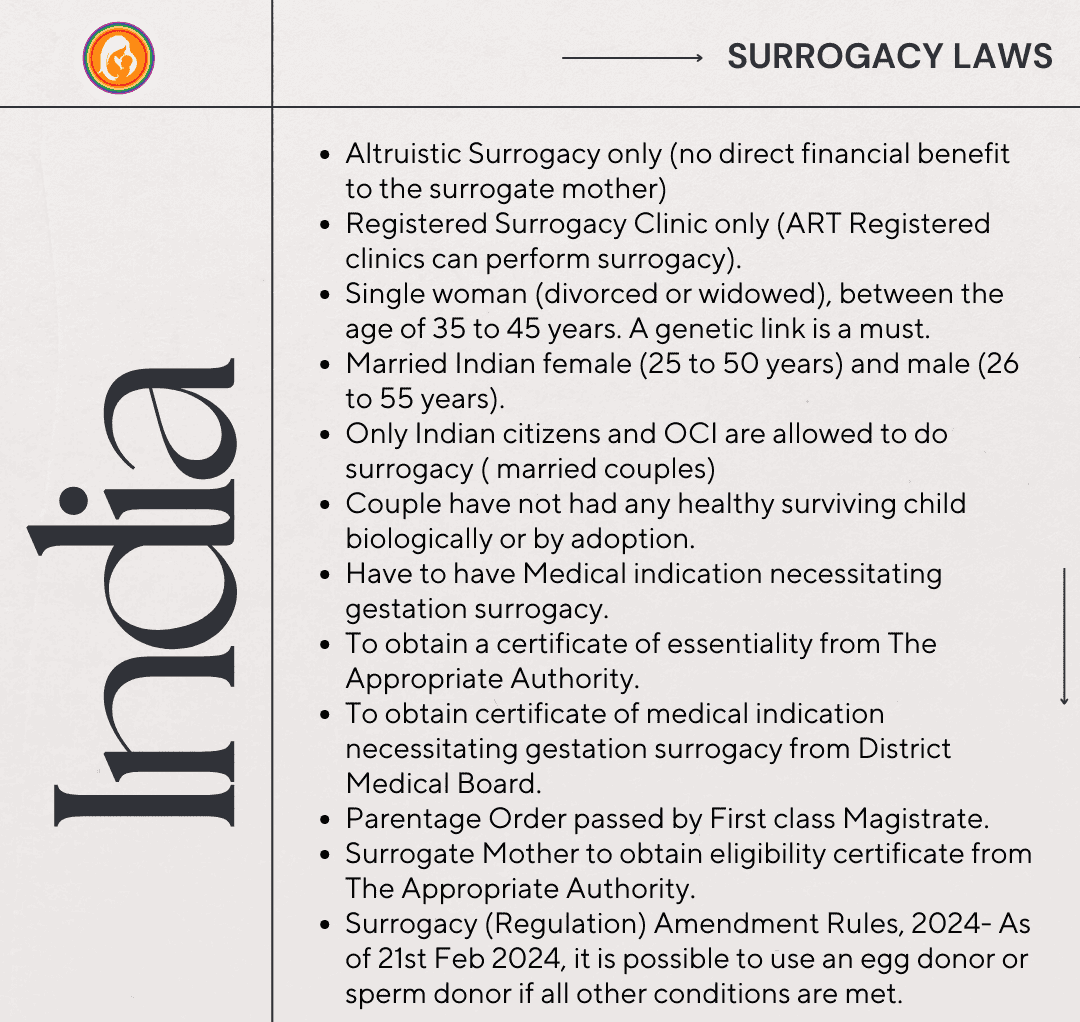
This section explains who can pursue surrogacy in India and the rules they must follow. It covers who can apply, what checks are needed, and how the process differs for different groups. Knowing this helps you choose the right path before you start.
Who qualifies as an NRI, OCI, or PIO under Indian rules
An NRI has an Indian passport and lives abroad. An OCI has long-term benefits but not full citizenship. Anyone with a PIO should switch to OCI for easier permissions.
NRIs and OCI holders can explore surrogacy in India, following the Surrogacy Act and its updates. But, foreign nationals without Indian citizenship or OCI status usually can’t. Some might need embassy letters and strict visa rules.
Eligibility criteria: marriage duration, age limits, and medical indications
Marriage length is a key factor. Authorities often require several years of marriage. Typically, five years is the standard, but check with legal advisors and surrogacy boards.
Age limits apply to intended parents. Women should be between early 20s and 50, and men between mid-20s and mid-50s. Always check the latest rules under surrogacy laws for NRIs in India.
Medical reasons must be proven with official reports. Reasons include infertility, failed IVF, no uterus, or pregnancy risks. Donor gametes might be allowed for legitimate medical reasons in gestational surrogacy.
Differences between Indian citizens, NRIs, and foreign nationals seeking surrogacy
Indian citizens have a clearer path and fewer diplomatic issues. NRIs, with an Indian passport but living abroad, need to show they live overseas and meet surrogacy board requirements.
OCI holders have access to NRI surrogacy options but might need special permissions. They must ensure the child’s nationality and travel rights are recognized by their home country.
Foreign nationals without OCI are usually not allowed in surrogacy in India. Exceptions are rare and involve complex embassy and court processes, strict visa rules, and parental orders.
Legal framework and indian surrogacy laws affecting NRIs
The laws for surrogacy in India are based on the Surrogacy (Regulation) Act 2021 and the Surrogacy (Regulation) Amendment Rules 2024. These laws set rules for clinics, protect the health of surrogates, and decide who can use these services. You will need to provide detailed documents, register, and get approval from national and state bodies for international arrangements.
Key provisions of the Surrogacy (Regulation) Act, 2021, and Amendment Rules, 2024
The Surrogacy (Regulation) Act 2021 only allows altruistic surrogacy and requires clinics to register. The Amendment Rules 2024 make it easier to check who can use surrogacy, simplify some steps, and ensure the surrogate gets medical care and insurance.
The National Surrogacy Board, State Boards, and Appropriate Authorities manage the process. They check if clinics are following the rules and keep records. The rules also cover health insurance for the surrogate for a long time after the baby is born.
Altruistic surrogacy only: what it means for intended parents and the surrogate mother in India
Altruistic surrogacy means you can only pay for medical costs and insurance, not for the surrogacy itself. Intended parents must agree to this when planning with the surrogate.
The surrogate must be a relative, have had a child before, and meet certain health and marital standards. Counseling, informed consent, and medical necessity are key to protecting both the surrogate and the intended parents.
Required approvals: eligibility certificates, essentiality certificate, and parental order
Intended parents and the surrogate need to get eligibility certificates from the Appropriate Authority or State Board. A doctor must also give an essentiality certificate to show why surrogacy is needed.
After the baby is born, a parental order is needed to legally establish the intended parents as the child’s parents. NRIs might need to do extra steps, like get permission from the embassy or FRRO, before leaving India with the child. It’s wise to have a lawyer who knows about international surrogacy to help with these legal steps.
Surrogacy process step by step for NRI couples
The journey of surrogacy for NRI couples starts with careful planning and choosing the right partners. Look for clinics that follow Indian ART rules and have clear steps for each stage. Good communication between the IVF team, legal advisors, and the surrogate’s care team helps avoid delays and keeps documents in line with immigration rules.
First, find surrogacy clinics for NRIs that are registered with ICMR and recognized by state authorities. Ask for proof of ART registration, clinic licensing, and success rates. Also, ask about their protocols for embryo storage, donor gamete use, and surrogate care before signing any agreement.
Medical procedures and clinical flow
The journey through surrogacy is well-planned. It starts with medical and psychological checks for the intended parents and the surrogate. Then, the IVF cycle begins: ovarian stimulation, egg retrieval if using the intended mother’s eggs, fertilization in the lab, and growing the embryo.
When the embryos are ready, the surrogate starts a hormonal protocol. The embryo transfer is done carefully. After, pregnancy is confirmed with blood tests and ultrasound. Clinics that offer gestational surrogacy services keep up with regular check-ups to watch over the health of the mother and the baby.
Matching and surrogate health screenings
Matching is done after checking if the surrogate meets legal requirements. The surrogate must have the right marital and obstetric history and give informed consent. The clinic will document the surrogate’s medical history, infectious disease tests, and mental health assessments. Counseling and insurance details should be documented before the transfer.
Pregnancy monitoring, delivery, and postnatal care
Once pregnant, the surrogate gets regular prenatal care at a top surrogacy clinic in India or its obstetric partner. The baby is born at a hospital with neonatal services. After birth, the surrogate signs the necessary documents, and the clinic works with legal counsel to start the parental order process.
Practical notes for NRIs
NRIs should expect to visit India several times: for the initial assessment, embryo transfer, court hearings, and after the baby is born. Sometimes, embassies provide letters that recognize the surrogacy arrangement. Keeping open communication between the clinic, agency, and legal team is key to completing the surrogacy process in India and handling immigration formalities smoothly.
| Step | What to verify | Who is involved | Typical timing |
|---|---|---|---|
| Clinic selection | ICMR/State registration, success rates, and written protocols | Intended parents, clinic admin, legal counsel | 2–4 weeks |
| Eligibility & screening | Medical, psychological, and surrogate infectious disease tests | Fertility specialist, psychologist, surrogate coordinator | 3–6 weeks |
| IVF and embryo culture | Stimulation protocol, lab fertilization method, embryo grading | Reproductive endocrinologist, embryologist | 4–8 weeks |
| Surrogate preparation & transfer | Hormonal regimen, consent forms, transfer protocol | Obstetrician, IVF team, surrogate | 2–4 weeks |
| Pregnancy monitoring | Ultrasounds, blood tests, prenatal visits, and insurance | OB/GYN, neonatal team, clinic coordinator | Throughout pregnancy |
| Delivery & legal follow-up | Authorized hospital delivery, NOC, birth record, parental order | Hospital, legal counsel, FRRO liaison | Birth + 2–8 weeks |
Documentation, court orders, and immigration steps for returning to the USA
NRIs should start preparing documents early in the surrogacy process. This helps avoid delays after the baby is born. Make sure all paperwork is clear, certified, and organized for everyone involved.
Documents NRIs/OCIs need before and during the process
You’ll need a valid passport or OCI card, a notarized marriage certificate, and medical certificates from a recognized IVF clinic. A signed surrogacy agreement is also required. Power of attorney and embassy letters confirming surrogacy recognition are key.
Keep multiple certified copies of your documents. Hospitals will need ID and medical clearances. Courts might ask for affidavits and detailed medical reports for parental orders. Always have a lawyer review your documents before submitting them.
Parental orders, birth registration india, and exit permission FRRO
Parental orders legally name the intended parents as the child’s guardians. Get these orders from the right court or magistrate, as the Surrogacy (Regulation) Act and local rules require.
After the baby is born, register the birth in India quickly. The hospital will give you the first certificate. State registers will list parents based on the parental order. Keep certified copies of the birth certificate and court orders for immigration.
Before leaving India with the newborn, you need exit permission from FRRO. FRRO checks if you have all necessary clearances. Include the birth certificate, passport and OCI/PIO details, parental orders, and the surrogate’s NOC when applying.
How to secure the child’s U.S. citizenship or travel documents after birth
Securing the child’s U.S. citizenship depends on U.S. immigration laws and the parents’ status. Contact the U.S. consulate right after birth for guidance on CRBA and passport applications.
Prepare a package for the consulate: parental orders, the child’s birth certificate, parents’ passports, marriage certificate, and embassy letters. Be ready to provide DNA evidence if needed. An experienced lawyer can help with this package.
Timing is important. The CRBA and U.S. passport process can take weeks. Plan for possible repeat visits to India for hearings or more paperwork. Work closely with your attorney and clinic to avoid surprises and make the return smoother.
- Organize certified copies of all key documents
- Secure parental orders before finalizing birth registration india
- Apply early for exit permission from FRRO to prevent travel delays
- Contact the U.S. consulate immediately to begin the process of how to secure the child’s U.S. citizenship
Costs, agencies, and choosing the best surrogacy agency in India

Choosing a surrogacy agency in India is key. It affects your budget, how long it takes, and how easy it is legally. You need to know the costs, check if the agency is trustworthy, and plan for travel and legal paperwork.
Clinic and IVF fees include many things like making eggs grow, getting eggs, mixing sperm and eggs, freezing embryos, and putting embryos in the uterus. These costs change based on the clinic, where it is, and how many times you need to try.
Medical care for the surrogate includes visits before the baby is born, the birth, hospital stay, and any care for the baby after birth. Legal fees are for making agreements, going to court, and working with immigration offices. Agency or service fees cover finding a surrogate, managing everything, translating, and helping with your case. You also need to think about travel and staying somewhere for the parents. Other things include fees for donor eggs or sperm, insurance, and money for extra tries or longer hospital stays.
Surrogacy agencies for NRI: vetting and trust
Look for agencies that work only with clinics that are licensed and registered. They should have happy clients and be willing to give you references. Make sure they are clear about their fees, have written contracts, and take good care of the surrogate. Also, check if they help with legal paperwork, getting out of the country, and talking to the embassy.
Comparing the cost for NRIs and citizens
Surrogacy in India can cost less for citizens because they don’t have to travel or deal with international legal stuff. NRIs pay more because of travel, getting residency or dealing with the embassy, and more legal work. NRIs should ask for a detailed breakdown of costs to compare what they will pay for clinics, legal stuff, agency services, and travel.
| Expense category | Typical range (USD) | Notes affecting price |
|---|---|---|
| Clinic/IVF fees | $8,000–$20,000 | Depends on the number of cycles and clinic’s reputation |
| Surrogate medical care | $3,000–$12,000 | Includes prenatal, delivery, and neonatal care |
| Legal and court fees | $2,000–$8,000 | Parental orders, filings, and appeals can raise costs |
| Agency/service fees | $2,000–$10,000 | Case management, matching, and coordination services |
| Travel & accommodation | $2,500–$10,000 | Multiple visits for assessments, transfers, and court steps |
| Insurance & contingencies | $1,000–$5,000 | Surrogate insurance, donor gamete fees, extra cycles |
| Total typical range (citizen baseline) | $18,500–$65,000 | Lower end often cited around $45,000 before some legal costs |
| Total typical range (NRIs) | $25,000–$85,000 | Higher due to travel and extra legal/administrative steps |
Finding the best surrogacy agency in India
Look for agencies that are open about their contracts and work with licensed clinics. Choose ones that care about the surrogate and follow the rules of altruistic surrogacy. Make sure they can help with embassy or FRRO stuff for NRIs. Also, check if they have clear policies on counseling, insurance, and what to do if things don’t go as planned.
Practical tips for NRIs
- Request an itemized quote covering clinic, legal, agency, travel, and insurance.
- Compare at least three agencies and check independent reviews and references.
- Confirm that the agency and clinic are registered with Indian health authorities.
- Build a contingency fund for unexpected IVF attempts or legal delays.
- Ensure all agreements reflect altruistic surrogacy rules and surrogate welfare measures.
When comparing surrogacy agencies for NRI, look beyond the cost. Consider the services, legal help, and how they protect the surrogate. A detailed plan helps avoid surprises in the cost of surrogacy in India. It helps you pick the best surrogacy agency in India for your family.
Risks, ethical concerns, and success rates
Surrogacy offers hope for those wanting to become parents. But, it comes with many choices and risks. It’s important to consider the health of the surrogate mother and legal aspects before starting.
The success of surrogacy in India varies. Factors like clinic standards, embryo quality, and the surrogate’s health play a role. Clinics like Apollo Fertility and Cloudnine provide different success rates based on patient profiles.
Ask about your specific situation. This includes your age, use of donor gametes, and past IVF experiences.
Lab quality and how embryos are handled are key. Donor eggs, the mother’s age, and past IVF cycles affect success rates. Look for live birth rates, not just pregnancy rates, when comparing clinics.
Ethical best practices: consent, health insurance for the surrogate, and avoiding exploitation
Ethical surrogacy in India means informed consent and protecting surrogate women. Consent must be given before any medical steps. Counseling is needed for both the surrogate and the intended parents.
Ensure the surrogate has medical insurance and postnatal care. This should cover up to 36 months after delivery. This protects the surrogate from financial issues. State and national boards help prevent exploitation by ensuring records are transparent.
Common legal and practical challenges for NRIs and how to mitigate them
NRIs face legal hurdles like getting parental orders and embassy confirmations. These steps can delay travel and affect the child’s documents. Be prepared for delays that may last over a year.
Missing or wrong paperwork can cause delays. It’s hard to find a surrogate under altruistic rules. Plan ahead to avoid surprises.
| Challenge | Impact | Mitigation |
|---|---|---|
| Unverified clinic success claims | Misleading expectations; wasted time and money | Request clinic-specific live birth rates and patient profiles; verify ART registry |
| Incomplete legal approvals | Exit delays; parentage disputes with immigration | Hire an Indian lawyer experienced in cross-border surrogacy; obtain parental orders early |
| Surrogate welfare gaps | Health complications or financial hardship for surrogate | Provide complete health insurance and counseling; confirm state board oversight |
| Timeline variability | Extended stays in India; higher travel costs | Build contingency budgets and flexible travel plans; get embassy guidance |
| Eligibility pitfalls | Application rejection or delays | Verify marriage duration and documentation before starting; pre-check by agency and lawyer |
Work with licensed clinics and agencies that follow ethical surrogacy practices. Keep detailed records for authorities. This reduces risks and increases the chance of a successful outcome.
Consult a trusted and experienced surrogacy consultant to avoid costly mistakes

Cross-border surrogacy involves medical, legal, and immigration steps. It’s important to work with experienced surrogacy consultants in India. They know the Surrogacy (Regulation) Act, 2021 and the 2024 Amendment Rules well.
A good consultant starts with a detailed pre-assessment. They check if you meet age and marriage requirements. They also make a list of documents you need to avoid delays.
Choosing the right clinic is key. Trusted consultants check if clinics are registered and compare their success rates. This helps match your medical needs with the clinic’s strengths.
They also manage your schedule. A case manager plans IVF cycles and embryo transfers. This reduces the chance of failed attempts and saves money.
Practical tip: work with both an Indian consultant and a U.S.-based attorney. This ensures compliance and makes travel easier for the newborn.
| Service Area | What a Consultant Provides | Why it Matters to NRIs |
|---|---|---|
| Eligibility Assessment | Review of marriage, age, medical records; document checklist | Prevents application rejections and saves time |
| Clinic Matching | Verify ART registration; compare success rates and packages | Improves clinical outcomes and cost transparency |
| Medical Coordination | Schedule IVF cycles; manage embryo transfers and monitoring | Reduces delays and aligns care across teams |
| Legal Liaison | Draft agreements; obtain eligibility and essentiality certificates; secure parental orders | Ensures legal parentage and smooth exit procedures |
| Consular Support | Prepare CRBA and passport documents; liaison with the embassy when needed | Speeds the issuance of travel documents for the child |
| Surrogate Safeguards | Insurance, counseling, and postnatal follow-up | Protects health and reduces ethical risk |
| Transparency & Vetting | Written fees, references, and NRI case history | Builds trust and avoids fraudulent offers |
Additional Resources to Read:
What Are the Hidden Costs of Altruistic Surrogacy in India?
Surrogacy in India: Legal, Ethical, and Practical Considerations
Altruistic Surrogacy in India for Australian OCI Citizens
Altruistic Surrogacy in India for USA OCI Citizens
Conclusion
Surrogacy in India is a good option for NRI couples wanting to have a child. They must meet certain rules and follow the altruistic model. The Surrogacy (Regulation) Act, 2021 and Amendment Rules, 2024 outline these rules.
To start, check your NRI/OCI/PIO status and gather needed documents. These include your passport or OCI, marriage certificate, and medical reports. It’s also important to choose licensed ART clinics and reputable agencies.
Ask for detailed costs and success rates. Getting help from experienced legal counsel in India and U.S. immigration is key. This makes the surrogacy process smoother and avoids delays.
Make sure the surrogate’s well-being is a top priority. This includes informed consent, medical insurance, and counseling. Agreements should follow India’s altruistic model.
The journey to having a child through surrogacy can take months to over a year. With careful planning and the right team, NRI couples can build their families. This approach ensures health and legal safety.
💫 Why Intended Parents Choose Complete Surrogacy for a Safe, Smooth & Successful Surrogacy Journey:
🌍 Access to multiple surrogacy destinations with 15+ years of international experience
🏥 Partnerships with top-tier fertility clinics and agencies, backed by references from past clients
👩🦱 Diverse egg donor options: Asian, Caucasian, African, Oriental, and more
💸 Transparent and affordable pricing—direct payments with no extra agency fees
🔒 No hidden costs—all charges are agreed upon upfront
🤝 Dedicated case manager for personalized support
📲 Fast, honest, and clear communication throughout
📑 Full legal support for visas, documentation, and baby exit processes
🚚 Assistance with frozen sperm/embryo shipment logistics

FAQ: Surrogacy in India for NRI
What is gestational surrogacy and how does it differ from traditional surrogacy in India?
Gestational surrogacy uses an embryo created via IVF. This means the surrogate has no genetic link to the baby. Traditional surrogacy, on the other hand, uses the surrogate’s own egg. It is rare and legally complex in India.
Who can commission surrogacy in India—are NRIs, OCI, and PIO holders eligible?
Indian citizens living abroad (NRIs) and OCI cardholders are generally eligible. They must meet the Surrogacy (Regulation) Act, 2021 and Amendment Rules, 2024 criteria. PIO cardholders are advised to convert to OCI before applying.
What are the basic eligibility criteria for intended parents (age, marriage duration, medical indications)?
Eligibility includes a minimum marriage duration (practices often require up to five years—verify case-specific rules). Age thresholds are typical ranges of about 23–50 for the female partner and 26–55 for the male partner.
What does “altruistic surrogacy” mean for payments and agreements?
Altruistic surrogacy means that commercial payment to a surrogate is prohibited. Only reimbursement for reasonable medical expenses, insurance, and statutory allowances (where permitted) are allowed.
Which approvals and legal steps are required before and after the child’s birth?
Required steps include eligibility certificates for intended parents and the surrogate from the appropriate authority/state board. An essentiality certificate from an IVF physician is also needed.
How do NRIs obtain exit permission from India for the newborn?
NRIs must present eligibility certificates, parental order (or pending order as required locally), the child’s birth certificate, the surrogate’s NOC, clinic certificates, and parents’ passports/OCI cards to the FRRO.
What documents should NRIs gather before starting the process?
Essential documents include Indian passport (for NRI) or OCI card, notarized marriage certificate, medical reports proving infertility/essentiality certificate from an IVF physician, affidavits/power of attorney as needed, the surrogacy agreement, and any embassy or foreign ministry letters confirming recognition of surrogacy for the intended parents’ home country.
How much does surrogacy in India cost for NRIs and citizens?
Costs vary widely. For Indian citizens, third-party sources cite a typical baseline near $45,000 excluding legal fees. NRIs should expect higher totals due to travel, legal complexity, and additional clinic or agency fees.
How do intended parents choose the best surrogacy clinic or agency in India?
Choose licensed ART clinics registered with ICMR/appropriate authority and listed with state/national boards. Review clinic success rates for comparable profiles, written protocols for embryo handling and surrogate care, neonatal partnerships, and transparent itemized cost estimates.
What clinical steps are involved—IVF, embryo transfer, and monitoring?
The medical flow typically includes initial consultations and psychological assessment, IVF ovarian stimulation and oocyte retrieval (if using intended mother’s eggs), fertilization (IVF/ICSI) and embryo culture, embryo transfer to the gestational surrogate after her endometrial preparation, pregnancy confirmation (beta hCG, ultrasound) and routine antenatal monitoring, delivery at an authorized hospital, and neonatal care as needed.
How are surrogate mothers screened and matched under India’s altruistic rules?
Surrogates must be willing, usually a close relative under many programs, meet legal criteria (marital status, previously given birth), and pass extensive medical and mental-health screenings. Clinics document infectious-disease testing, obstetric history, informed consent, and arrange mandatory counseling and insurance.
What protections are required for surrogate mothers in India?
Laws emphasize surrogate welfare: informed consent, mandatory medical screening, counseling, and health insurance covering pregnancy and defined postnatal periods (some guidance mentions up to 36 months). Clinics and agencies must document coverage, antenatal care, and discharge procedures, and ensure the surrogate’s rights are respected throughout the process.
How does a child born via surrogacy in India obtain U.S. citizenship or travel documents?
U.S. citizenship depends on the nationality and status of the intended parent(s) under U.S. law. Parents should contact the U.S. consulate immediately after birth to apply for a Consular Report of Birth Abroad (CRBA) if eligible, and for the child’s passport. Legal documents commonly required include the parental order, birth certificate, parents’ passports/OCI, and sometimes DNA evidence.
What are common delays or legal challenges NRIs face and how can they be avoided?
Delays often arise from incomplete eligibility documentation, unclear marriage-duration criteria, court processing for parental orders, or FRRO exit formalities. Mitigation: retain experienced Indian counsel and a U.S. immigration attorney early, confirm documentary requirements, obtain embassy or home-country undertakings where needed, and build flexible travel and financial plans to accommodate legal timelines.
What are realistic success rates for surrogacy in India and what affects outcomes?
Success rates vary by clinic, embryo quality, surrogate health, and use of donor gametes. Clinics with high volumes and transparent reporting can provide comparable success metrics. Factors lowering or raising success include maternal age at egg retrieval, embryo grading, prior IVF history, and surrogate obstetric health.
Are donor gametes permitted and when are they used?
Donor gametes are permitted for legitimate medical reasons (e.g., poor ovarian reserve, genetic risks) when properly documented. Clinics should provide clear consent processes and legal documentation for donor use, and intended parents must ensure treatments follow ICMR/appropriate authority regulations and clinic protocols.
How should NRIs budget for legal and agency fees alongside clinical costs?
In addition to clinic and surrogate medical costs, budget for legal drafting and filings (eligibility certificates, parental orders), agency or consultant case-management fees, FRRO and embassy liaison, travel and accommodation for multiple trips, insurance premiums for the surrogate, and contingency funds for additional IVF cycles or unexpected neonatal care.

Highly esteemed, authoritative, and trusted professional with a 14-year of experience in international surrogacy. Advocate for Secure, Legal, and Affordable International Surrogacy.
Neelam Chhagani, MA (Counselling Psychology) and Holistic Infertility and Third-Party Reproduction Consultant.
Member of European Fertility Society, Best Surrogacy Blogger of 2020, with 300 dedicated blogs, and top contributor on Quora for Surrogacy.
Add Your Comment